Why this page exists
Low-voltage installation for warehouses is shaped by how the space is used, not just by the service itself. Warehouses bring their own operating constraints, and this page pairs what low-voltage installation actually involves with what that environment changes about it.
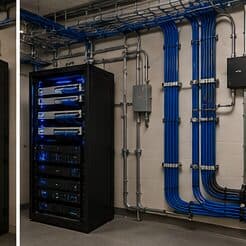
Low-voltage work covers the systems that run on cable rather than mains power: data, wireless, cameras, door access, intercoms, and audio-visual. In a new build or a fit-out these systems share pathways, share an equipment position, and increasingly share a network — so planning them together during rough-in costs far less than adding each one separately after the walls close.
The building changes its own radio environment
A warehouse surveyed empty and a warehouse full of stock are different radio environments. Metal racking reflects, palletised inventory absorbs, and coverage that measured well across an open floor can disappear once the aisles fill. Any design based on an empty-building survey should be treated as provisional.
The second defining feature is distance. Warehouse footprints regularly exceed what a single equipment room can serve within the 100-metre copper limit, which means either intermediate equipment positions connected by fiber or a deliberately distributed design.
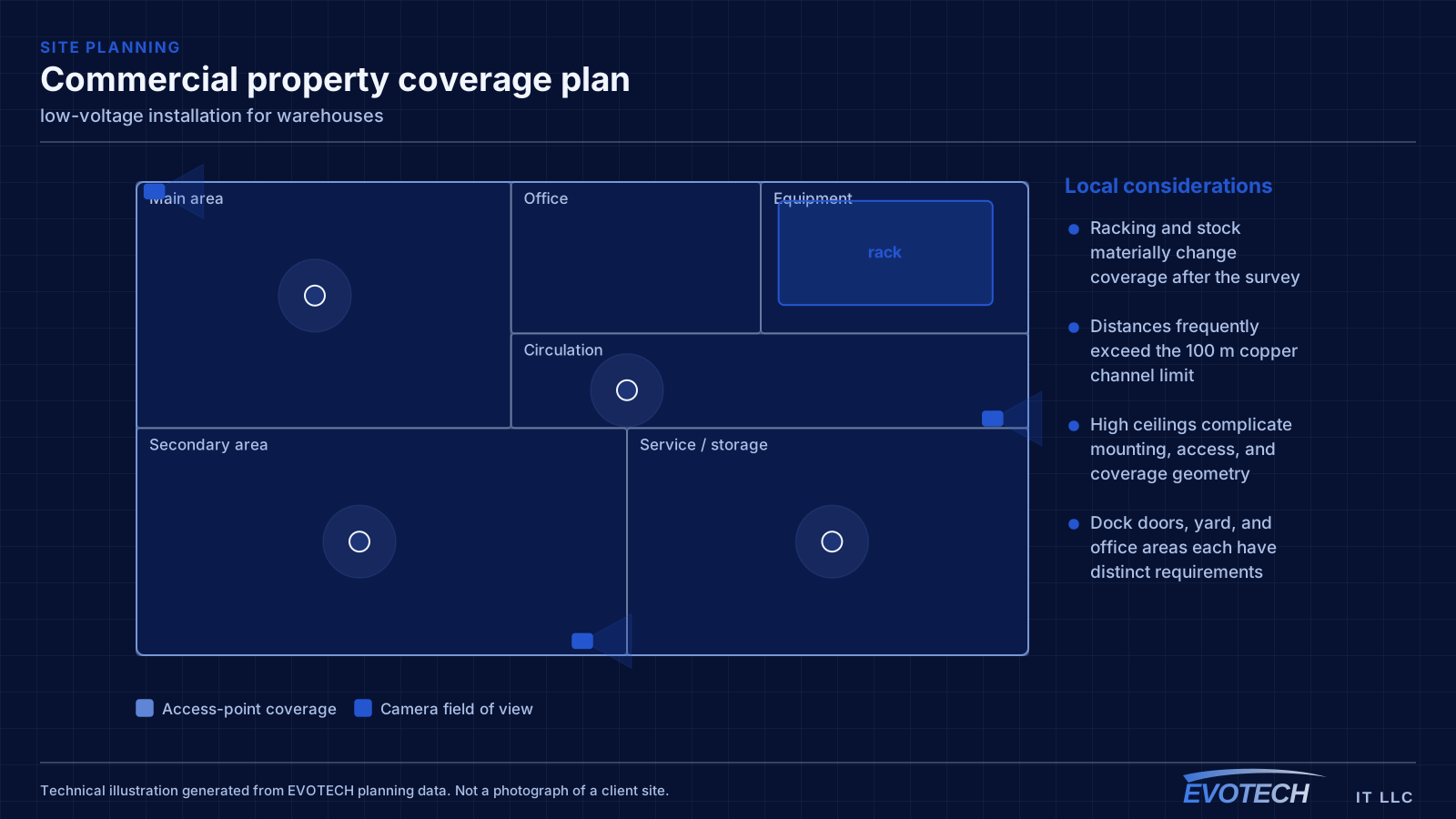
- Racking and stock materially change coverage after the survey
- Distances frequently exceed the 100 m copper channel limit
- High ceilings complicate mounting, access, and coverage geometry
- Dock doors, yard, and office areas each have distinct requirements
What low-voltage installation usually involves
The characteristic problem is systems planned in isolation. Cameras get specified after the ceiling closes, so their cable runs surface-mount. The access-control panel arrives with no allocated space in the equipment room. The AV system needs a run to a wall the network design never considered. Each individually is a small compromise; together they produce a building where nothing is quite where it should be.
The second problem is pathway conflict. Low voltage shares ceiling space with mechanical, electrical, plumbing, and fire protection, and the low-voltage trade is usually last in. Pathways claimed early are pathways available; pathways assumed are frequently full by the time anyone arrives.
- Systems specified at different times, each retrofitting around the last
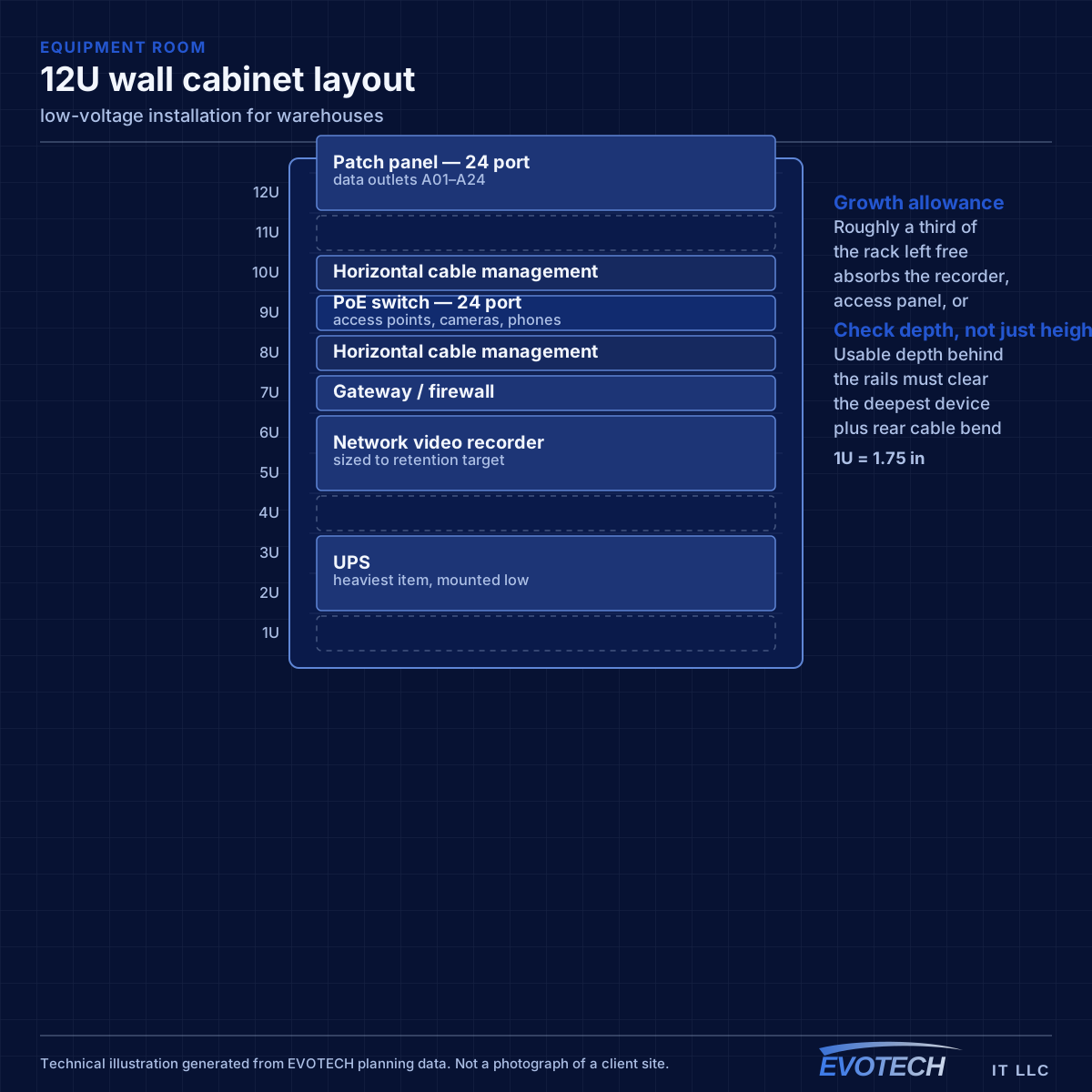
- Equipment room sized for the network and not for recorders, access panels, and AV
- Pathway congestion because low voltage was scheduled after the other trades
- Device locations unresolved at rough-in, forcing best guesses that get moved later
- Fire-rated penetrations made without proper sleeving and firestopping
- Rough-in complete but the finish scope unscheduled, leaving cable coiled in walls for months
Topology, mounting height, and roaming for handhelds
Where a building exceeds copper reach from a single position, the usual answer is one or more intermediate distribution points fed by fiber, each serving its area with copper within the limit. This is standard structured-cabling practice and it is far more reliable than attempting to stretch copper or bridge wirelessly across the building.
Access-point mounting height is a genuine design decision in high-ceiling spaces, not a default. Mounting at the roof deck maximises line of sight but puts the access point far from the devices and often above the racking, where the signal has to travel down through stock. Mounting lower — at or just above racking height, aimed along the aisles — frequently produces better coverage where the scanners actually are.
Roaming matters because the primary clients are mobile. A forklift-mounted or handheld scanner moving down an aisle needs clean handoffs between cells. That is a function of overlap and channel planning, and it is best validated by walking the aisles with the racking loaded.
- Fiber to intermediate distribution points where distance exceeds copper limits
- Mounting height chosen deliberately rather than defaulting to the roof deck
- Coverage designed along aisles, with directional antennas where useful
- Roaming validated by walking loaded aisles, not an empty floor
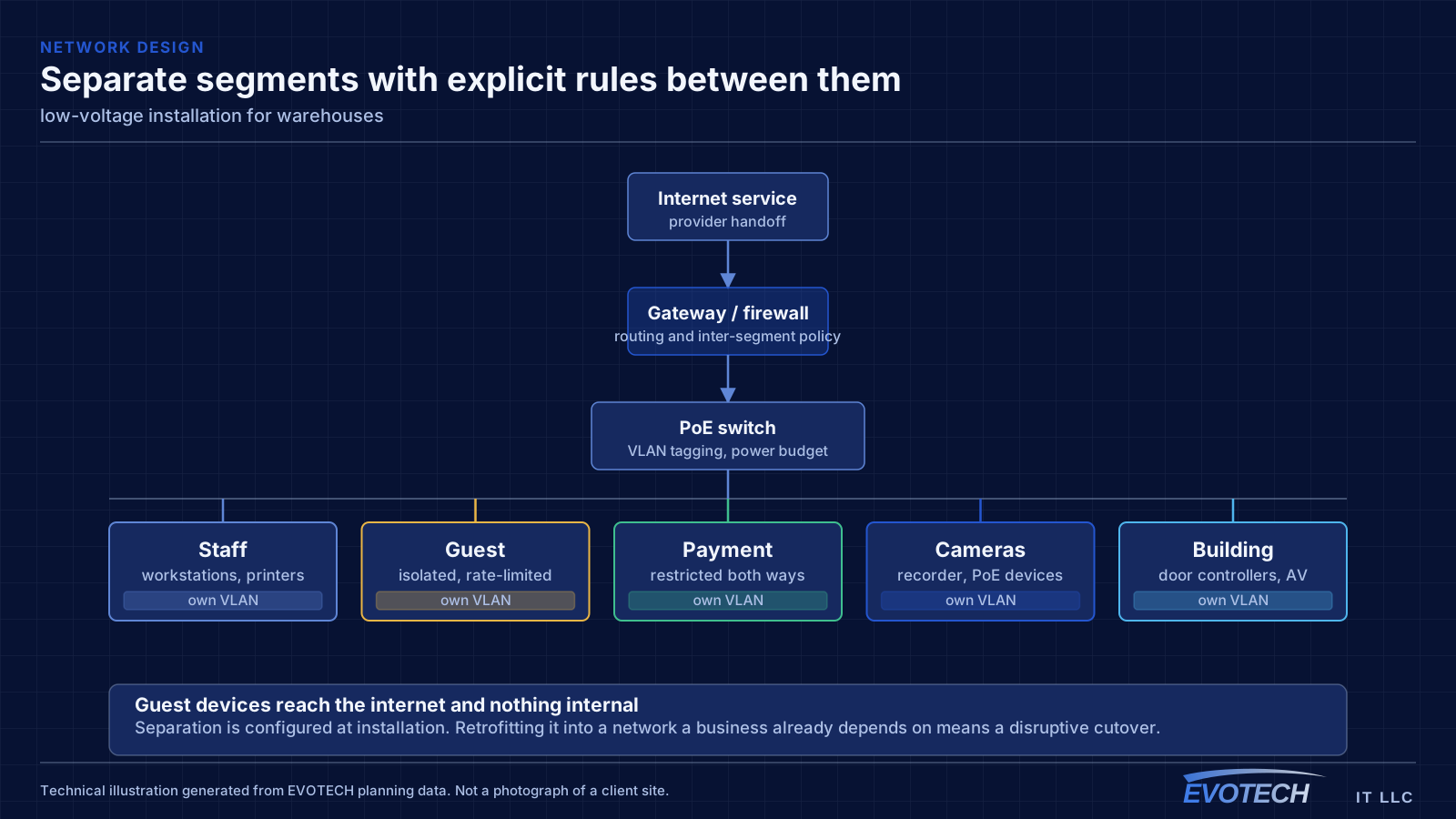
- Office, operations, and building-system traffic segmented
Pathways, separation, and coordinating with the other trades
Pathway planning is the core technical activity. Low-voltage cable needs continuous support — tray, J-hooks, or conduit — at regular intervals, routed to keep separation from parallel electrical runs and to cross them at right angles where they must meet. Penetrations through fire-rated walls and floors need proper sleeves and firestopping, which is a coordination item and not an afterthought.
- Continuous pathway with support at regular intervals
- Separation from parallel electrical, crossing at right angles where needed
- Proper sleeving and firestopping at rated penetrations
- Rough-in between electrical and drywall; finish after paint and ceiling
- Cable protected and identified during the gap between rough-in and finish
- Equipment room sized for every system, not only the network
Frequently asked questions
What changes about low-voltage installation in warehouses?
The operating environment does. Warehouses bring specific constraints — how the space is used, when work can happen, and what has to keep running — and those shape the low-voltage installation plan as much as the service's own technical requirements.
When should low-voltage work happen in a construction schedule?
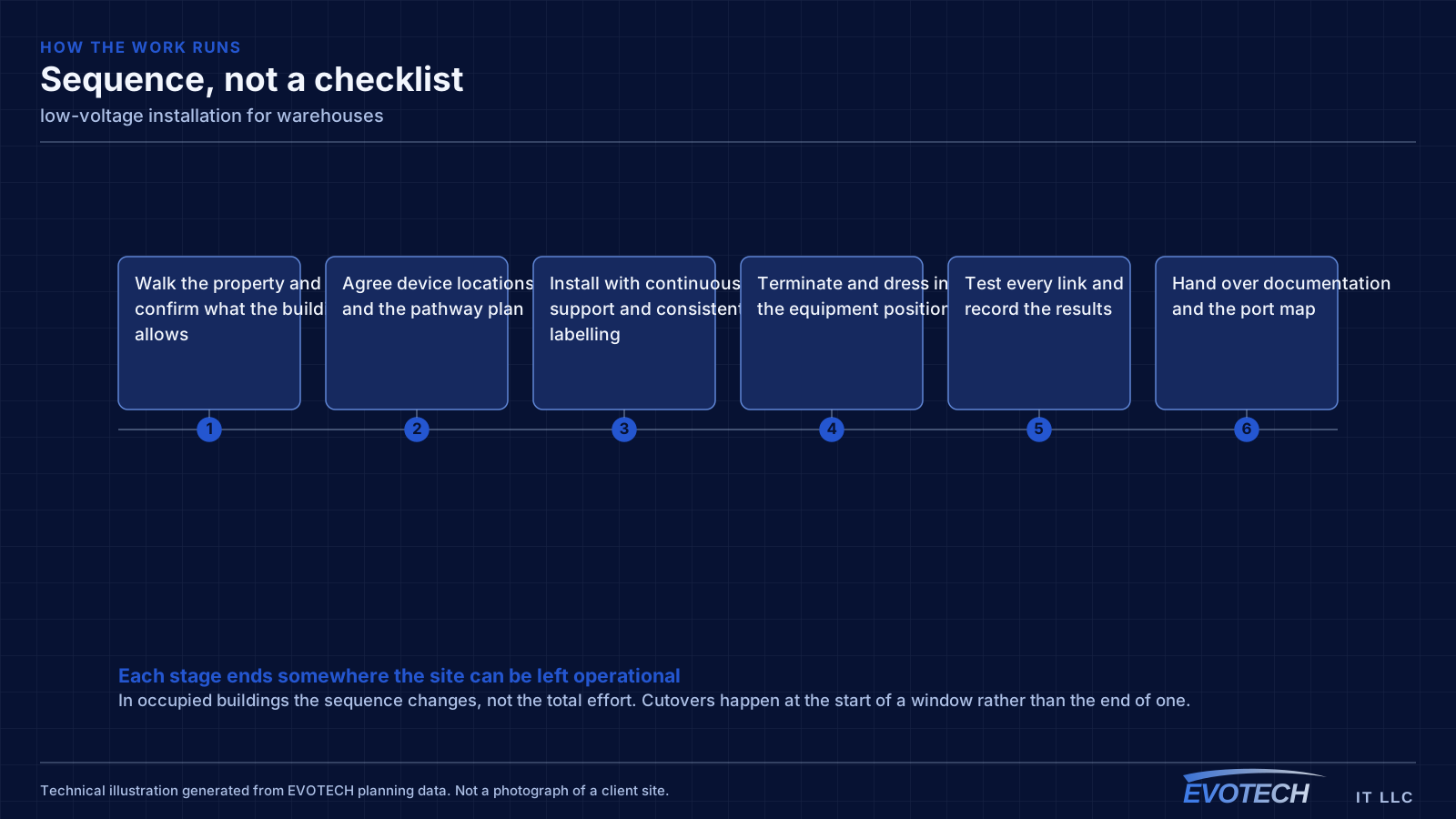
Rough-in sits after electrical and framing and before insulation and drywall. Finish work — terminations, device mounting, and commissioning — happens after paint and ceilings. The risk is that upstream delays compress the rough-in window, so having device locations and pathway plans settled in advance is what keeps that window usable.
Why did warehouse Wi-Fi get worse after the racking was stocked?
Because the stock changed the radio environment. Metal racking reflects and palletised goods absorb, so coverage measured across an open floor no longer applies. This is why warehouse designs should assume loaded conditions and why validation should happen with the aisles full.