Fiber-optic cabling for warehouses, in Friendswood
Fiber-optic cabling for warehouses in Friendswood is a three-part question: what fiber-optic cabling involves, what warehouses need from it, and what Friendswood changes about the install. Established suburban homes on larger lots with mature landscaping.
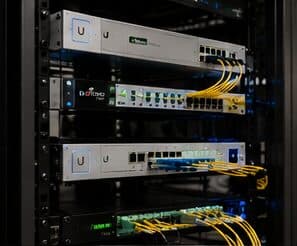
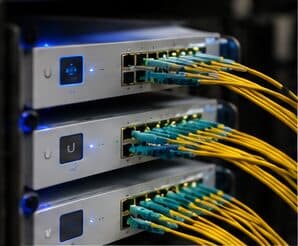
Fiber gets specified for reasons copper cannot address. The first is distance — multimode carries 10 gigabit a few hundred metres and single-mode carries it far further, while copper stops at 100 metres. The second is electrical isolation: a link between two separate buildings should not be a copper conductor, because the two structures can sit at different ground potentials and a lightning event has to go somewhere.
Cover the aisles, reach the far end, watch the docks
Warehouse projects come down to three things: wireless that works down the aisles with stock in place, a network topology that reaches the far end of the building properly, and camera coverage at the points where goods and vehicles move.
Office areas within the warehouse are comparatively ordinary and are usually the easiest part of the project.
- Access points positioned to cover along aisles rather than across them
- Intermediate equipment positions linked by fiber where distance requires
- Dock doors, receiving, and yard gates covered by cameras
- Scanner and handheld roaming validated with stock in place
- Equipment protected from dust and temperature in unconditioned areas
What changes fiber-optic cabling from job to job
Fiber scope varies mostly with route difficulty and strand count.
- Distance and whether the route is indoor, outdoor, or both
- Fiber type and strand count, including spares
- Termination method and connector count
- Enclosure and splice-tray hardware at each end
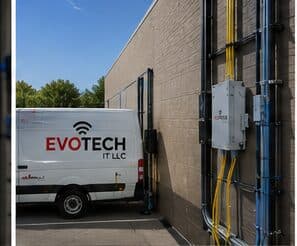
- Outdoor path construction: aerial, direct burial, or in conduit
- Transceiver selection at each switch
- Testing depth requested, from loss testing to trace analysis
Friendswood: what the location changes
Established suburban homes on larger lots with mature landscaping. In Friendswood, that is where the plan begins, because it changes cable paths, device placement, and access-point counts before anything else does. Wider and multi-storey plans needing multiple wired access points. Slab-foundation construction with attic-to-interior-wall retrofit routing. None of these are generic checklist items — each moves the design in a direction a citywide assumption would miss, and the honest recommendation always depends on what this particular property allows.
- Established suburban homes on larger lots with mature landscaping
- Wider and multi-storey plans needing multiple wired access points
- Slab-foundation construction with attic-to-interior-wall retrofit routing
- Detached structures and outdoor areas needing dedicated coverage
- Mature trees affecting outdoor wireless and camera framing
Getting it done in Friendswood
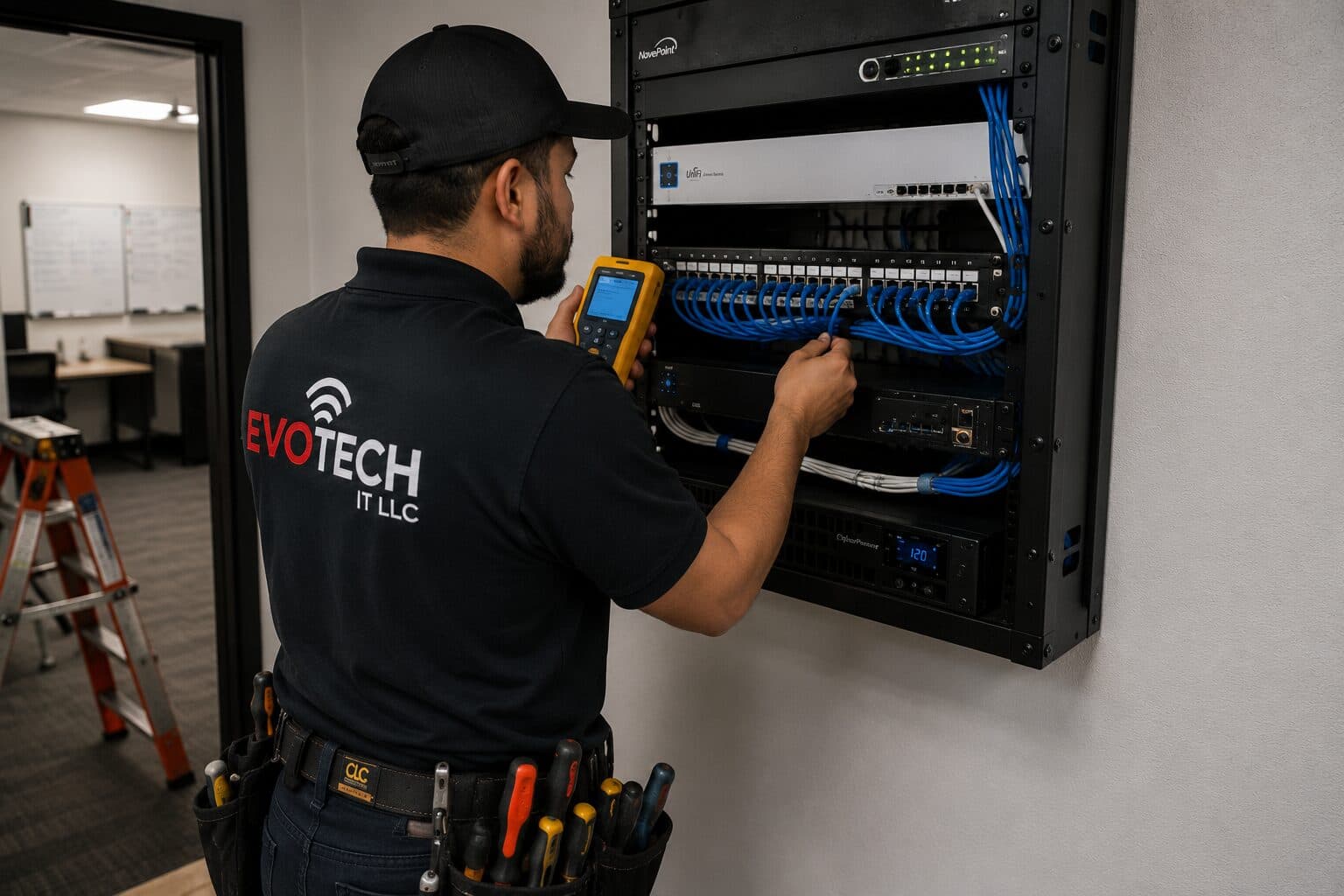
The baseline test is an insertion-loss measurement across the installed link, compared against the calculated budget for that distance and connector count. A link that passes with margin is a link that will tolerate a future re-patch.
Warehouse camera coverage concentrates where goods and vehicles move: dock doors, receiving and shipping areas, yard gates, and the boundary between operational and office space. These views answer the questions warehouse footage is actually asked — what arrived, what left, and when.
Getting Friendswood work done means planning around the site as it actually is. Detached structures and outdoor areas needing dedicated coverage. Mature trees affecting outdoor wireless and camera framing. Both matter as much as the design to how and when the work happens. The scope is drawn from the real property, the coverage is stated as a service area rather than an office, and unverifiable specifics about Friendswood are kept off the page on purpose.
Popular services nearby
Frequently searched near this area — the pages people look for most.
Frequently asked questions
Is fiber-optic cabling for warehouses different in Friendswood?
The sector needs stay the same, but the install changes with the place. In Friendswood, the conditions above — not the warehouses label — decide routes, mounting, and equipment placement, which is why this page pairs all three.
When is fiber necessary rather than optional?
Two situations make it necessary rather than a preference. First, distance: past the 100-metre copper channel limit there is no compliant copper answer. Second, links between separate buildings, where a copper conductor creates a path for surge and ground-potential differences. Inside those two cases fiber is not an upgrade — it is the correct method.