Cat6A cabling for schools and educational facilities, in League City
Cat6A cabling for schools and educational facilities in League City is a three-part question: what cat6a cabling involves, what schools and educational facilities need from it, and what League City changes about the install. Coastal proximity raising the weight on exterior sealing, rated housings, and surge protection.
The practical decision is not whether Cat6A is better. It plainly is. The decision is which runs need it, because a Cat6A cable is noticeably thicker and stiffer, fills pathway faster, takes longer to dress into a rack, and takes longer again to terminate if it is shielded. On a large project those minutes multiply.
Density in bursts, across a campus
A classroom with thirty students on devices is one of the densest wireless environments in any building type, and it happens simultaneously in every classroom on a bell schedule. That is a capacity problem of a specific shape: predictable, synchronised, and concentrated.
The campus dimension compounds it. Multiple buildings, outdoor circulation, portable classrooms, gymnasiums, and administrative areas each need coverage, and the distances involved usually exceed what copper alone can serve from one position.
- Classroom device density peaking simultaneously across the campus
- Multiple buildings and outdoor areas requiring distributed infrastructure
- Portable and temporary classrooms with their own connectivity needs
- Entry control and visitor management as standing requirements
What drives the cost of cat6a cabling here
Cat6A raises cost in three places at once — material, pathway, and labour — which is why selective specification usually beats blanket specification.
- Cable and component cost per run
- Pathway modifications where fill limits are exceeded
- Termination time, especially for shielded constructions
- Rack space and cable management to dress larger cable cleanly
- Test time at the higher frequency range
League City: what the location changes
What separates a League City scope from the rest of the city is concrete and local. Coastal proximity raising the weight on exterior sealing, rated housings, and surge protection. Storm-season resilience planning, favouring UPS and failover where uptime matters. Newer suburban slab-foundation homes with multi-room coverage needs. That short list is what actually drives the design in this pocket, and it is why photographs or a brief site visit beat a floor plan — the plan follows the building's real constraints, not the neighborhood name on the map.
- Coastal proximity raising the weight on exterior sealing, rated housings, and surge protection
- Storm-season resilience planning, favouring UPS and failover where uptime matters
- Newer suburban slab-foundation homes with multi-room coverage needs
- Growing medical and retail commercial space
- Gulf Coast humidity and driven-rain events as a routine design factor
Getting it done in League City
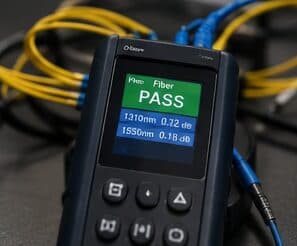
Certification to Cat6A runs the same parameter set as Cat6 but across the full 500 MHz range, where margins are naturally tighter. Passing at 250 MHz says nothing about behaviour at 500 MHz, so the test configuration has to match the intended rating.
Classroom wireless is a capacity design. A single access point serving a full class of devices needs adequate spectrum, and neighbouring classrooms on the same channel will contend with each other through the wall. That makes the channel plan across a corridor of classrooms as important as the access-point count — a plan that ignores the neighbours produces a corridor where every room is slow.
Getting League City work done means planning around the site as it actually is. Growing medical and retail commercial space. Gulf Coast humidity and driven-rain events as a routine design factor. Both matter as much as the design to how and when the work happens. The scope is drawn from the real property, the coverage is stated as a service area rather than an office, and unverifiable specifics about League City are kept off the page on purpose.
Frequently asked questions
Is cat6a cabling for schools and educational facilities different in League City?
The sector needs stay the same, but the install changes with the place. In League City, the conditions above — not the schools and educational facilities label — decide routes, mounting, and equipment placement, which is why this page pairs all three.
Is Cat6A worth it if nothing today runs 10 gigabit?
Sometimes. The argument for it is that reopening a ceiling is far more expensive than the cable premium, so runs that are hard to reach and likely to matter later are good candidates. The argument against blanket use is pathway fill and labour. A common middle path is Cat6A on uplinks, dense areas, and inaccessible runs, with Cat6 elsewhere.