Fiber-optic cabling for schools and educational facilities, in Conroe
Fiber-optic cabling for schools and educational facilities in Conroe is a three-part question: what fiber-optic cabling involves, what schools and educational facilities need from it, and what Conroe changes about the install. Fast commercial and medical growth with newer buildouts and tenant-improvement conditions.
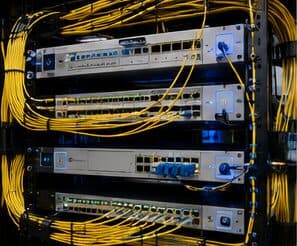
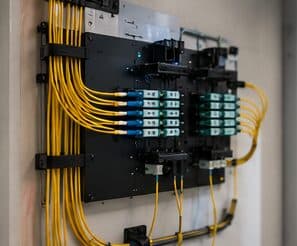
Inside a single building, fiber typically appears as a backbone between the main equipment room and intermediate closets, with copper handling the horizontal runs from those closets out to devices. That split is the standard structured-cabling shape and it exists because each medium is doing what it is good at.
Per-classroom capacity and controlled entry
Two priorities dominate: enough wireless capacity in each classroom to serve a full class simultaneously, and controlled entry at the points where people come into the campus.
Both benefit from being designed at a campus level rather than building by building, because the addressing, segmentation, and management overhead of a piecemeal approach grows quickly.
- Access-point capacity planned per classroom, not per building area
- Fiber backbone between buildings and to distribution points
- Controlled entry at main and secondary access points
- Separate segments for student, staff, administrative, and building systems
- Coverage extended to gymnasiums, libraries, and outdoor gathering areas
Where fiber-optic cabling goes wrong — and how it's avoided
Fiber punishes shortcuts more visibly than copper does.
- Mating connectors without inspecting and cleaning end faces
- Installing exactly the strand count needed with no spares
- Violating bend radius inside enclosures where slack is coiled
- Pulling on the fibers rather than the cable's strength member
- Running copper between separate buildings to save on fiber
- Leaving unused connectors uncapped in a dusty environment
Conroe: what the location changes
The starting point for any Conroe job is one local fact. Fast commercial and medical growth with newer buildouts and tenant-improvement conditions. That single condition shapes where cable can run, where equipment can sit, and how coverage is laid out — more than any spec sheet does. Two more conditions weigh on it. Older commercial stock needing pathway remediation. Larger residential properties, including lake-area homes with outbuildings. Together they make the route specific to this pocket, which is why a short walkthrough or a few clear photos settle the scope faster than a floor plan can.
- Fast commercial and medical growth with newer buildouts and tenant-improvement conditions
- Older commercial stock needing pathway remediation
- Larger residential properties, including lake-area homes with outbuildings
- Detached structures and longer runs raising distance considerations
- Ongoing new construction where prewire is the high-value decision
Getting it done in Conroe
The baseline test is an insertion-loss measurement across the installed link, compared against the calculated budget for that distance and connector count. A link that passes with margin is a link that will tolerate a future re-patch.
Camera coverage on a school campus concentrates on entrances, circulation between buildings, parking and drop-off areas, and the perimeter. Corridors are common; classrooms are not, and that boundary is agreed at design.
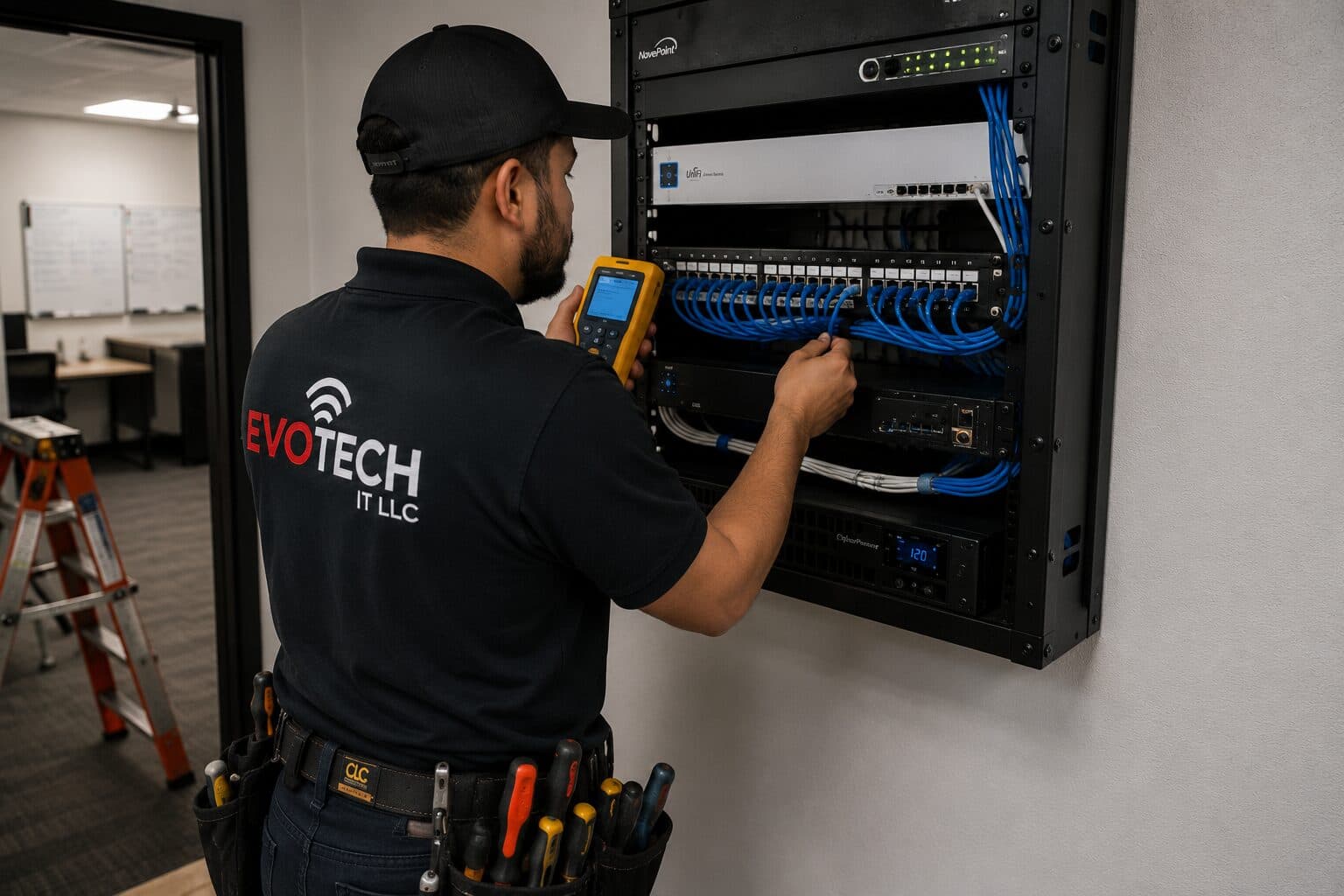
Execution in Conroe is planned around real conditions, not a template. Detached structures and longer runs raising distance considerations. Ongoing new construction where prewire is the high-value decision. These decide the sequence, the access, and the method as much as the design does. EVOTECH describes Conroe as coverage rather than a place it occupies, and omits any area detail it cannot confirm — building and site conditions only, no invented landmarks or promised arrival times.
Popular services nearby
Frequently searched near this area — the pages people look for most.
Frequently asked questions
Is fiber-optic cabling for schools and educational facilities different in Conroe?
The sector needs stay the same, but the install changes with the place. In Conroe, the conditions above — not the schools and educational facilities label — decide routes, mounting, and equipment placement, which is why this page pairs all three.
When is fiber necessary rather than optional?
Two situations make it necessary rather than a preference. First, distance: past the 100-metre copper channel limit there is no compliant copper answer. Second, links between separate buildings, where a copper conductor creates a path for surge and ground-potential differences. Inside those two cases fiber is not an upgrade — it is the correct method.