Security-camera installation for retail stores, in Richmond
Security-camera installation for retail stores in Richmond is a three-part question: what security-camera installation involves, what retail stores need from it, and what Richmond changes about the install. High proportion of new residential and commercial construction, making rough-in timing the dominant scheduling factor.
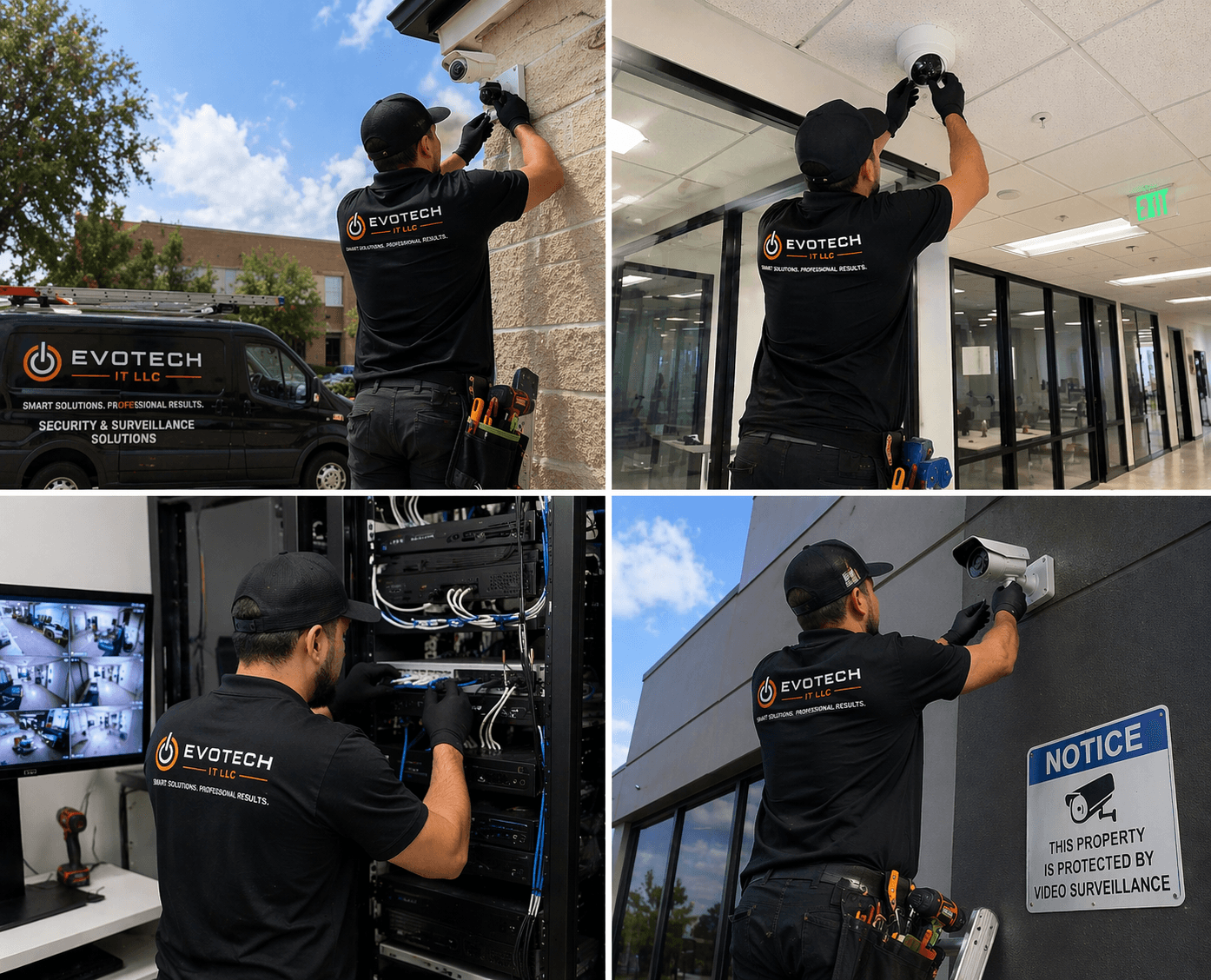
The useful design question is not how many cameras a property needs. It is what each camera has to accomplish. Detecting that a person is present, recognising someone you already know, and identifying a stranger from footage are three different requirements, and they need increasing pixel density on the subject. Planning guidance commonly cited from industry standards puts detection in the region of ten pixels per foot of subject, recognition around forty, and identification around eighty.
The floor plan is not permanent
Retail interiors get reset. Fixtures move, register positions shift for seasonal layouts, and a stockroom gets reorganised around whatever the current inventory demands. A network installed as if the layout were fixed becomes an obstacle within a couple of resets.
That argues for a specific design posture: more outlets than currently needed at likely fixture positions, ceiling access points placed to cover zones rather than aimed at current register locations, and a rack with spare capacity because the device count only ever goes up.
- Fixture and register positions change with seasonal resets
- Stockroom and receiving areas need connectivity that survives reorganisation
- Customer-facing technology increases the device count over time
- Coverage has to work with shelving in place, not in an empty store
What drives the cost of security-camera installation here
Camera cost is driven by positions and cable routes, with storage the other major line.
- Camera count and the type each objective requires
- Cable run difficulty, particularly exterior and high-level runs
- Recorder capacity sized to the retention target
- Mounting hardware, junction boxes, and weather-appropriate housings
- Lift or scaffold access for elevated positions
- Network and PoE switching capacity
- Configuration of remote access and user permissions
Richmond: what the location changes
In Richmond, the plan is built outward from the conditions that are actually here. High proportion of new residential and commercial construction, making rough-in timing the dominant scheduling factor. Larger lots producing long runs to gates, outbuildings, and driveway camera positions that approach or exceed copper distance limits. Slab-on-grade construction with the rough-in window falling between electrical and drywall. Each one changes where cable can run, where equipment can sit, and how coverage is shaped, which is why a walkthrough settles a Richmond scope faster than any generic estimate.
- High proportion of new residential and commercial construction, making rough-in timing the dominant scheduling factor
- Larger lots producing long runs to gates, outbuildings, and driveway camera positions that approach or exceed copper distance limits
- Slab-on-grade construction with the rough-in window falling between electrical and drywall
- Conduit and sleeve decisions made during rough-in determining what is possible for the following decade
- Detached structures common enough that between-building links are a routine design question rather than an exception
Getting it done in Richmond
A camera system is commissioned by looking at its recordings, not its live view. Live video on a monitor at midday tells you very little about what the recorded file will show at nine in the evening.
Payment systems sit on their own segment for the same reasons they do in food service. What differs in retail is the number of mobile devices: handheld scanners, mobile checkout tablets, and inventory devices that move continuously across the floor and depend on clean roaming between access points.
On site, the schedule and working method turn on conditions like these. Conduit and sleeve decisions made during rough-in determining what is possible for the following decade. Detached structures common enough that between-building links are a routine design question rather than an exception. Both shape how and when a crew can actually operate, which is why EVOTECH scopes each Richmond job from the property itself rather than assuming one approach fits every address. Coverage is stated as a service area, never an office claim, and anything about Richmond that cannot be verified is left out instead of invented.
Popular services nearby
Frequently searched near this area — the pages people look for most.
Frequently asked questions
Is security-camera installation for retail stores different in Richmond?
The sector needs stay the same, but the install changes with the place. In Richmond, the conditions above — not the retail stores label — decide routes, mounting, and equipment placement, which is why this page pairs all three.
How many cameras does a property need?
Count objectives, not walls. Each area needs a stated purpose — detect activity, recognise a known person, or identify a stranger — and the camera serving it is chosen for that purpose. A property with four well-framed cameras at the points that matter usually produces more useful footage than one with twelve wide shots covering everything approximately.