Why this page exists
Fiber-optic cabling for retail stores is shaped by how the space is used, not just by the service itself. Retail stores bring their own operating constraints, and this page pairs what fiber-optic cabling actually involves with what that environment changes about it.
Fiber gets specified for reasons copper cannot address. The first is distance — multimode carries 10 gigabit a few hundred metres and single-mode carries it far further, while copper stops at 100 metres. The second is electrical isolation: a link between two separate buildings should not be a copper conductor, because the two structures can sit at different ground potentials and a lightning event has to go somewhere.
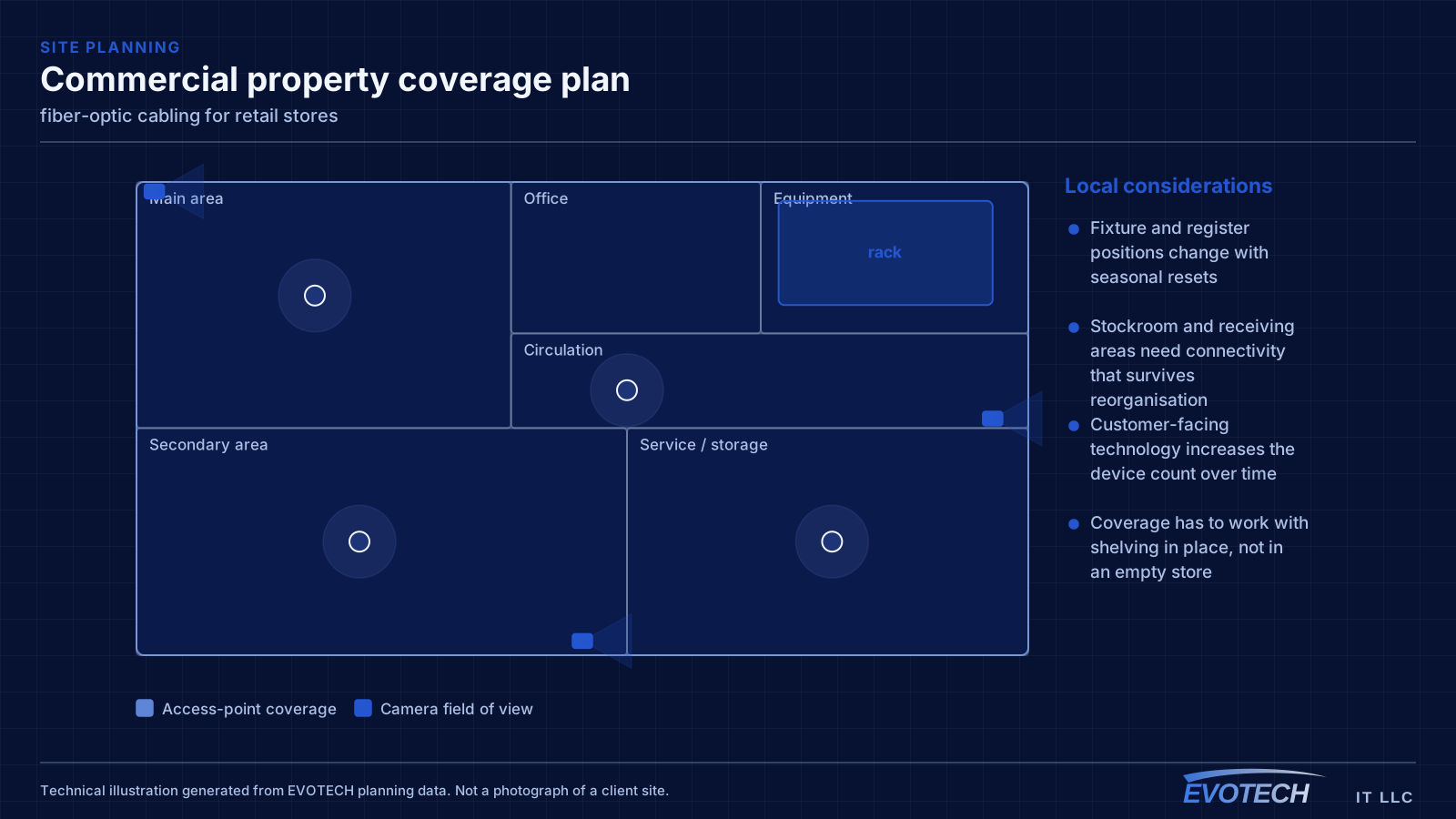
The floor plan is not permanent
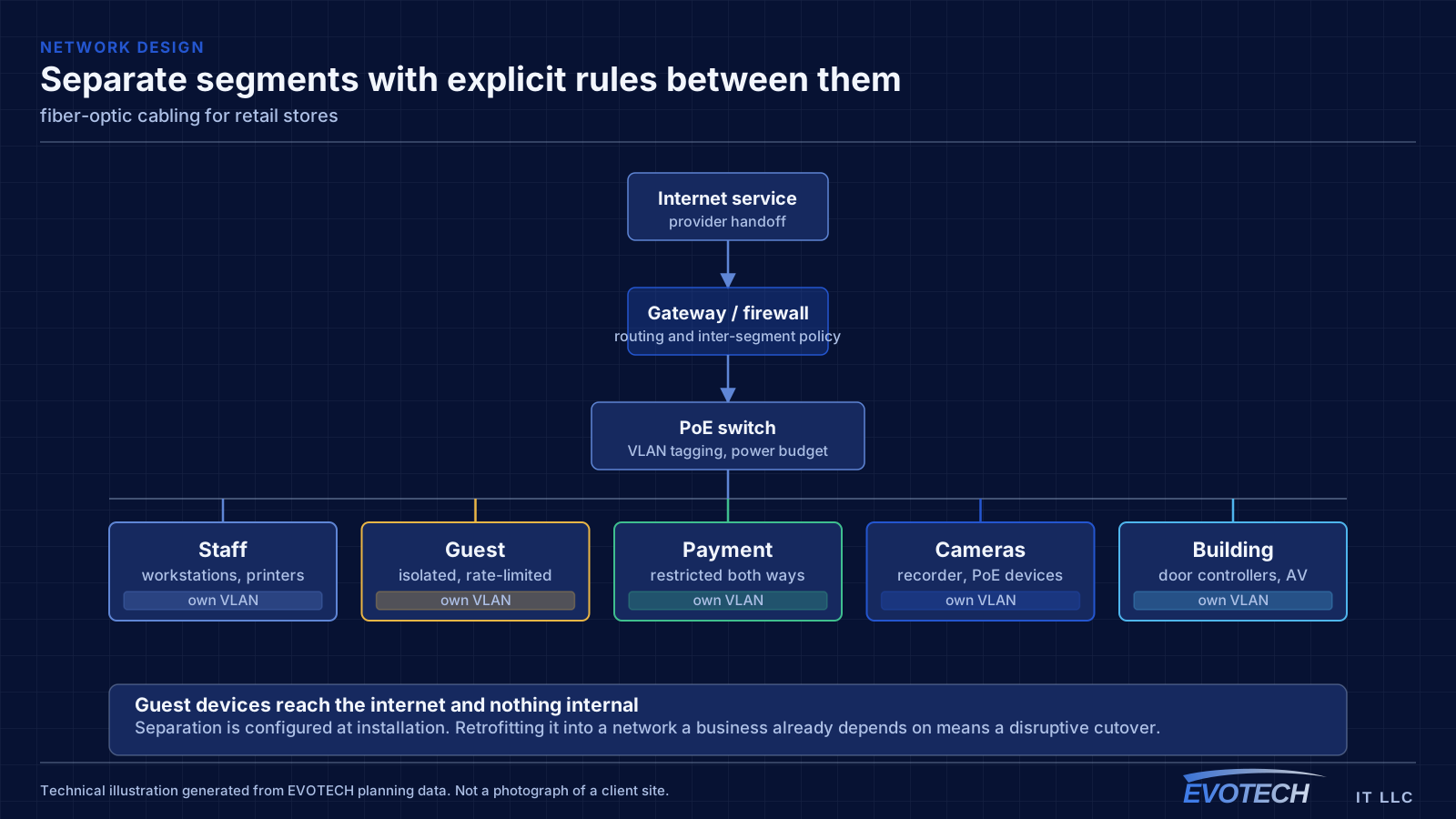
Retail interiors get reset. Fixtures move, register positions shift for seasonal layouts, and a stockroom gets reorganised around whatever the current inventory demands. A network installed as if the layout were fixed becomes an obstacle within a couple of resets.
That argues for a specific design posture: more outlets than currently needed at likely fixture positions, ceiling access points placed to cover zones rather than aimed at current register locations, and a rack with spare capacity because the device count only ever goes up.
- Fixture and register positions change with seasonal resets
- Stockroom and receiving areas need connectivity that survives reorganisation
- Customer-facing technology increases the device count over time
- Coverage has to work with shelving in place, not in an empty store
What fiber-optic cabling usually involves
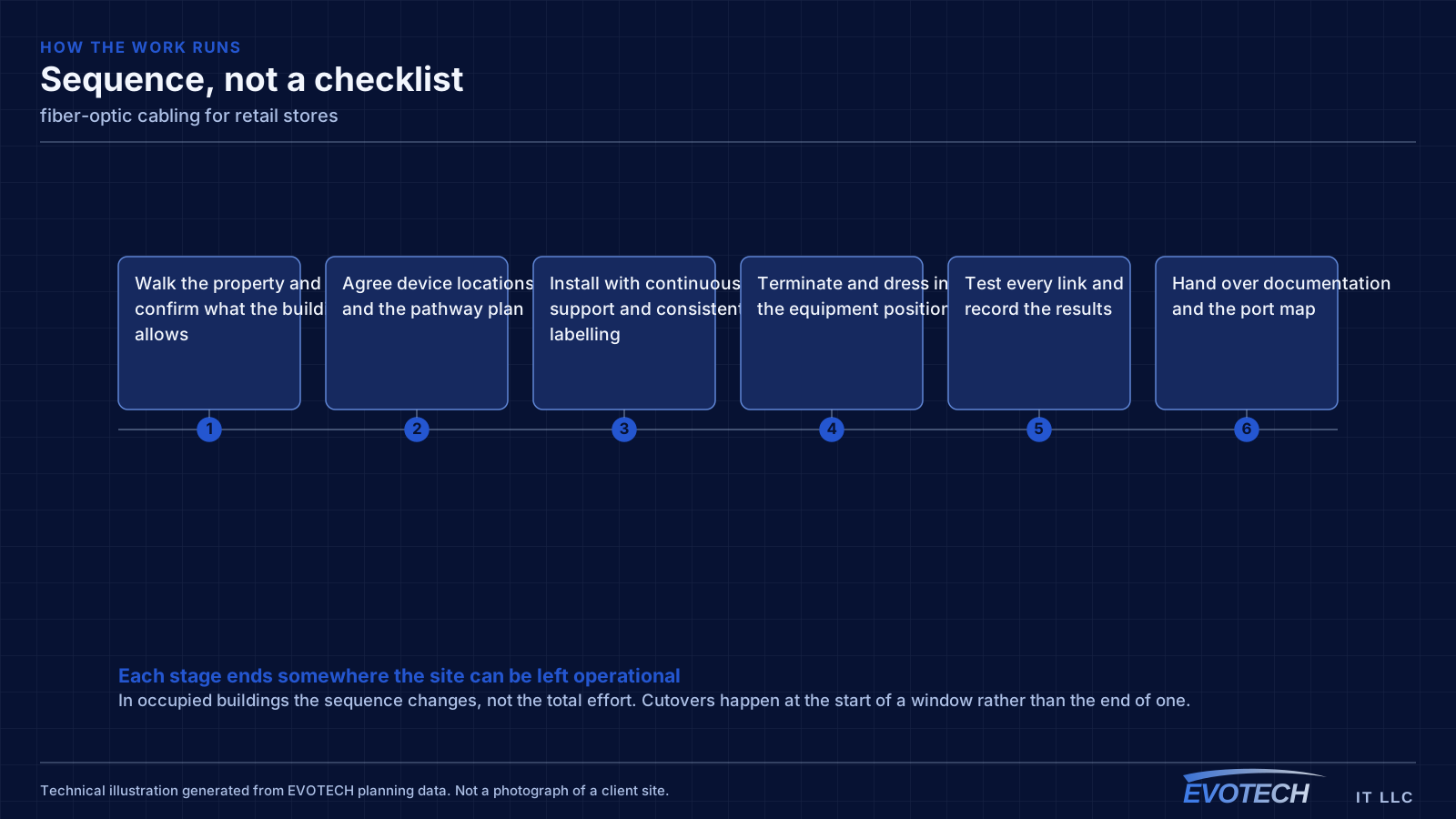
Fiber problems are almost always contamination or handling. A connector end face with a single particle of dust on it can add loss well beyond the link budget, and the particle is invisible without a scope. Inspect-before-connect exists because the failure is so common and so easy to prevent.
The other failures are mechanical: a bend tighter than the cable's minimum radius causing macrobending loss, a pull that exceeded the cable's tension rating and stressed the fibers, and a mismatch between fiber types where a multimode patch cord ends up on a single-mode link.
- Contaminated connector end faces adding loss invisible to the naked eye
- Bend radius violations in enclosures, trays, and at wall entries
- Excess pulling tension damaging fibers inside an intact jacket
- Multimode and single-mode components mixed on one link
- Unprotected splice trays with no strain relief or slack storage
Registers, handhelds, and the guest question
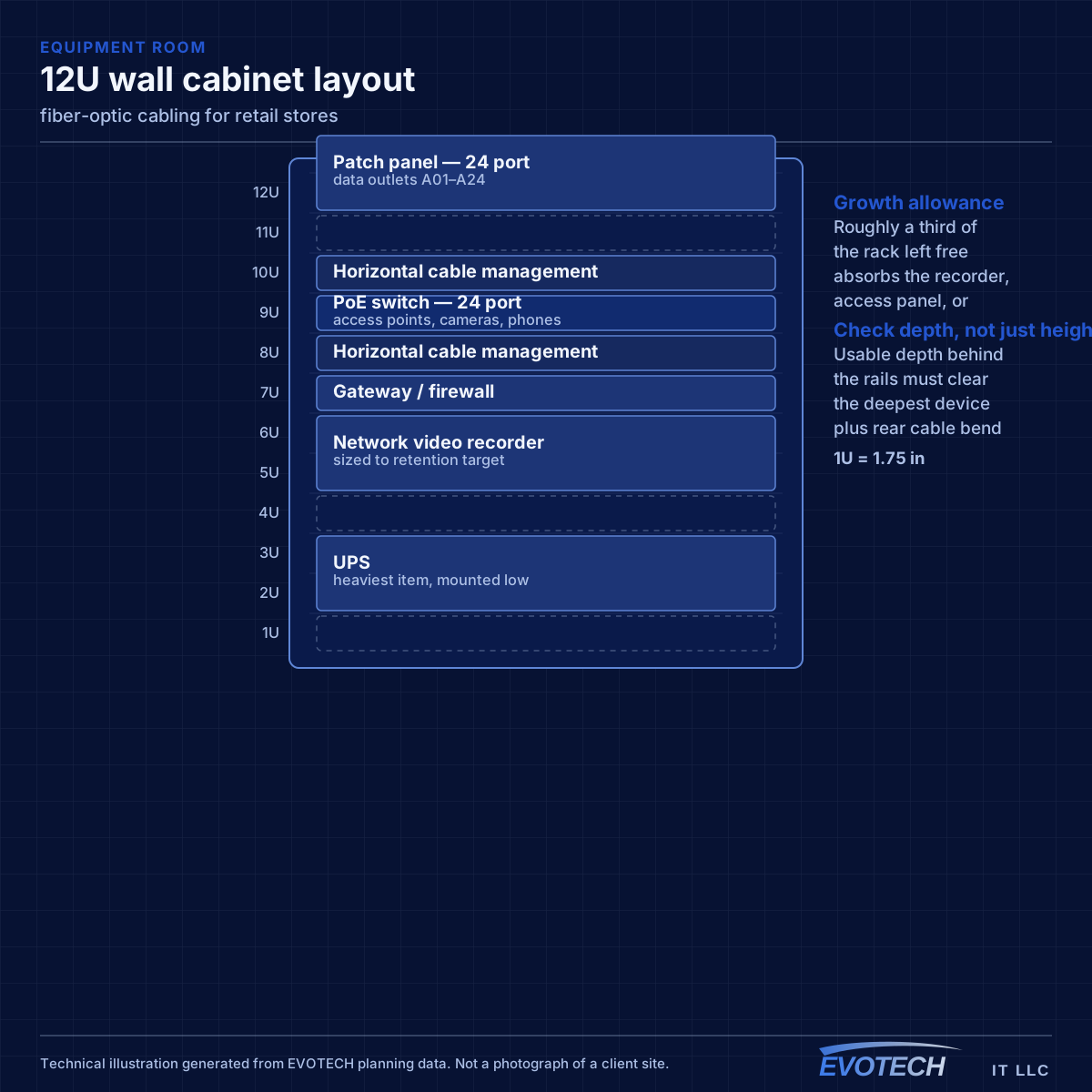
Payment systems sit on their own segment for the same reasons they do in food service. What differs in retail is the number of mobile devices: handheld scanners, mobile checkout tablets, and inventory devices that move continuously across the floor and depend on clean roaming between access points.
Roaming is therefore a first-class design concern rather than an afterthought. A scanner that drops its session walking from the sales floor into the stockroom generates a support call every day. That means coverage areas need to overlap enough for a clean handoff, with a channel plan that keeps adjacent cells from contending.
Guest Wi-Fi in retail is a marketing decision as much as a technical one. Where it exists, it needs isolation and a bandwidth cap. Where it does not, saying so plainly is better than an open network nobody maintains.
- Payment systems on a dedicated segment
- Coverage designed for clean roaming across the sales floor and into the stockroom
- Handheld and mobile checkout devices treated as the primary wireless clients
- Guest access isolated and rate-limited where offered
- Back-office and inventory systems separated from customer-facing traffic
Fiber type, splice method, and the link budget
Multimode fiber — OM3 and OM4 in current installations — is the usual choice for in-building backbones. OM3 supports 10 gigabit to roughly 300 metres and OM4 to roughly 400 metres, which covers almost any single building. Single-mode fiber carries far greater distances and is the correct choice for building-to-building links and anything with a long horizon.
- OM3 to roughly 300 m and OM4 to roughly 400 m at 10 gigabit
- Single-mode for building-to-building and long-horizon links
- Fusion splicing for lowest and most consistent loss
- Every connector and splice consumes part of the link budget
- Transceiver type must match the fiber type at both ends
Popular services nearby
Frequently searched near this area — the pages people look for most.
Frequently asked questions
What changes about fiber-optic cabling in retail stores?
The operating environment does. Retail stores bring specific constraints — how the space is used, when work can happen, and what has to keep running — and those shape the fiber-optic cabling plan as much as the service's own technical requirements.
When is fiber necessary rather than optional?
Two situations make it necessary rather than a preference. First, distance: past the 100-metre copper channel limit there is no compliant copper answer. Second, links between separate buildings, where a copper conductor creates a path for surge and ground-potential differences. Inside those two cases fiber is not an upgrade — it is the correct method.
How many network outlets should a retail space have?
More than the current fixture plan suggests. Retail layouts get reset, and adding a run while the ceiling is open costs a fraction of retrofitting one across a finished sales floor. Terminated spare runs at likely register and fixture positions are among the cheapest insurance in a retail fit-out.