Why this page exists
Access-control installation for retail stores is shaped by how the space is used, not just by the service itself. Retail stores bring their own operating constraints, and this page pairs what access-control installation actually involves with what that environment changes about it.
An access-control system manages who may open which door and when, and records each attempt. The immediate operational benefit over keys is revocation: a lost credential is disabled in seconds instead of prompting a rekey. The secondary benefit is the audit record, which turns 'who was here on Saturday' into a query rather than a guess.
The floor plan is not permanent
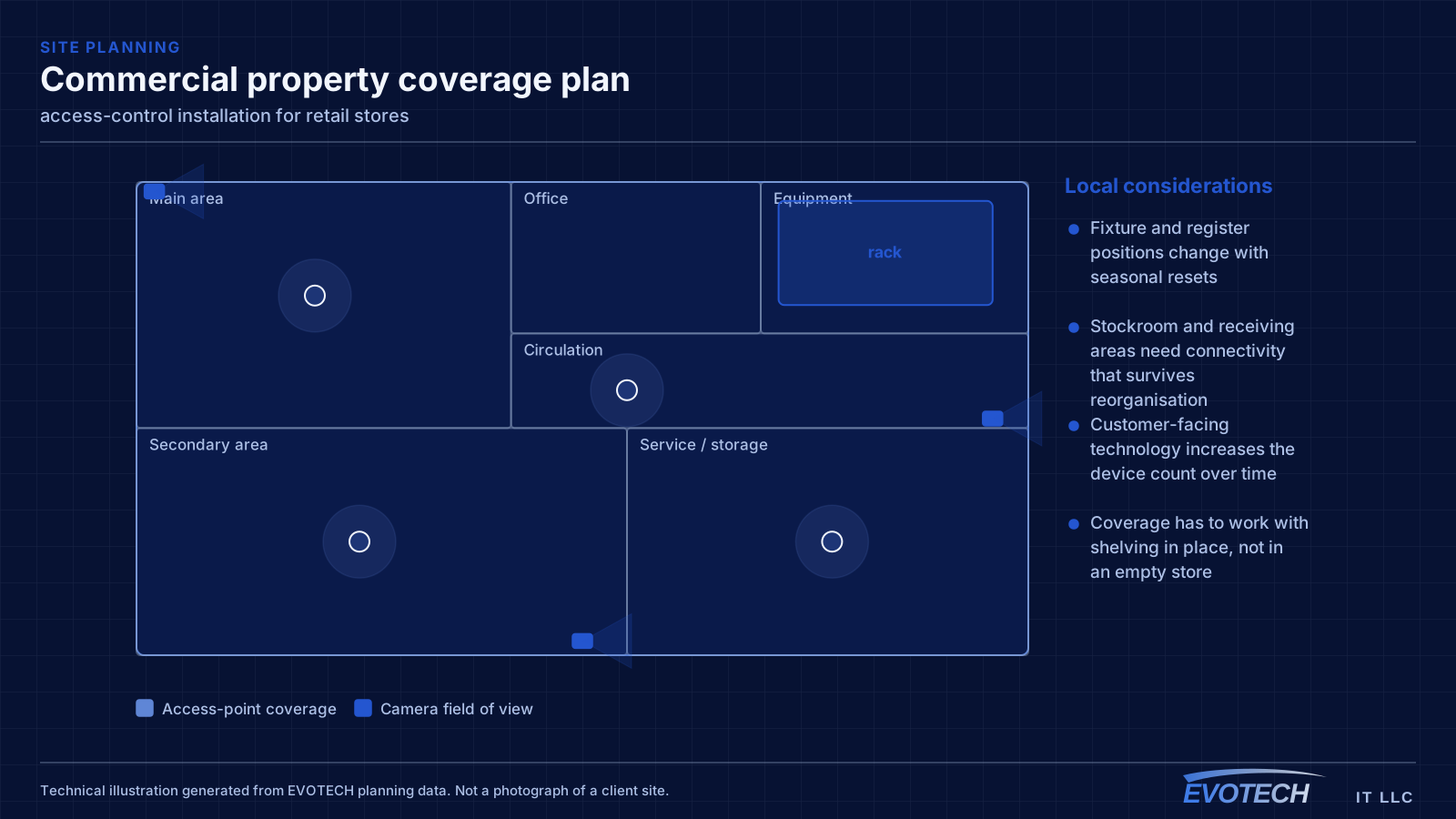
Retail interiors get reset. Fixtures move, register positions shift for seasonal layouts, and a stockroom gets reorganised around whatever the current inventory demands. A network installed as if the layout were fixed becomes an obstacle within a couple of resets.
That argues for a specific design posture: more outlets than currently needed at likely fixture positions, ceiling access points placed to cover zones rather than aimed at current register locations, and a rack with spare capacity because the device count only ever goes up.
- Fixture and register positions change with seasonal resets
- Stockroom and receiving areas need connectivity that survives reorganisation
- Customer-facing technology increases the device count over time
- Coverage has to work with shelving in place, not in an empty store
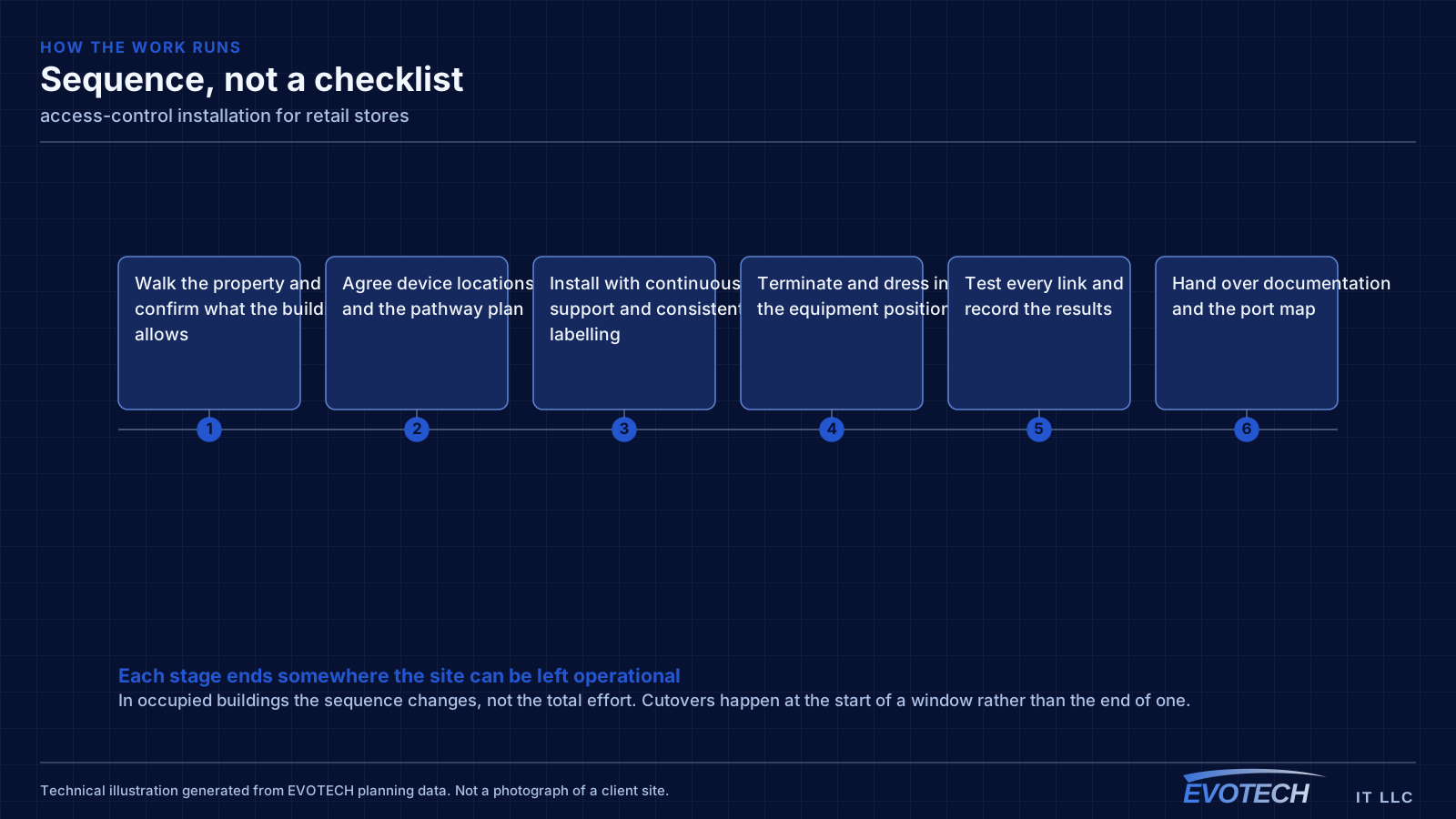
What access-control installation usually involves
Most operational access-control problems come from doors, not from software. A door that does not close fully leaves a held-open alarm that people learn to ignore. A misaligned strike causes intermittent failures that get blamed on credentials. A magnetic lock installed without correct release arrangements is a genuine safety issue rather than an inconvenience.
The second cluster is administrative. Credentials issued to people who left, shared credentials that make the audit log meaningless, and no defined process for issuing or revoking access all erode the value the system was installed to provide.
- Door closers and alignment causing intermittent latch failures
- Held-open alarms so frequent they get ignored
- Credentials never revoked when someone leaves
- Shared credentials making the audit trail unusable
- Request-to-exit devices missing, misaligned, or not covering the approach
- Controllers installed on the unsecured side of the door they control
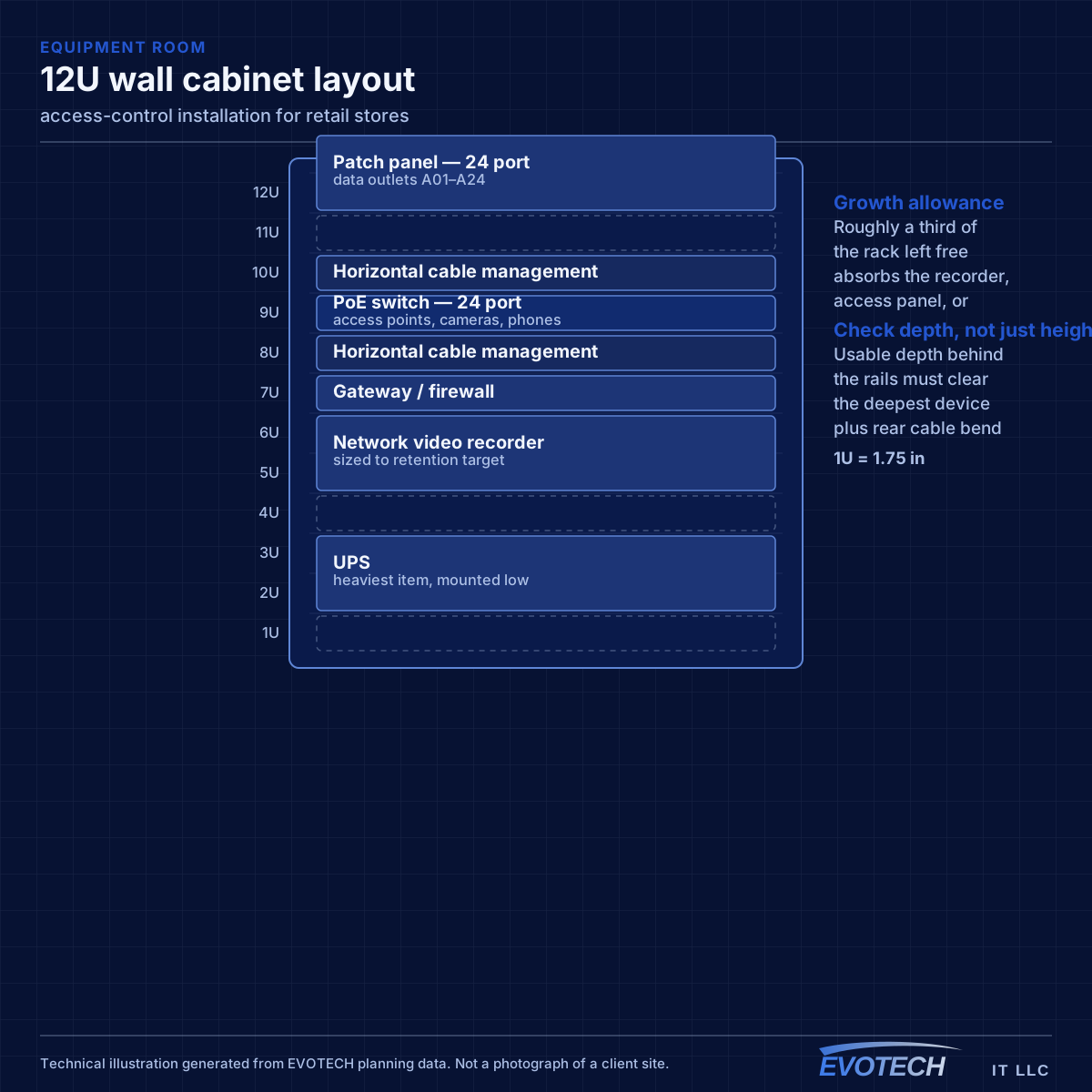
Registers, handhelds, and the guest question
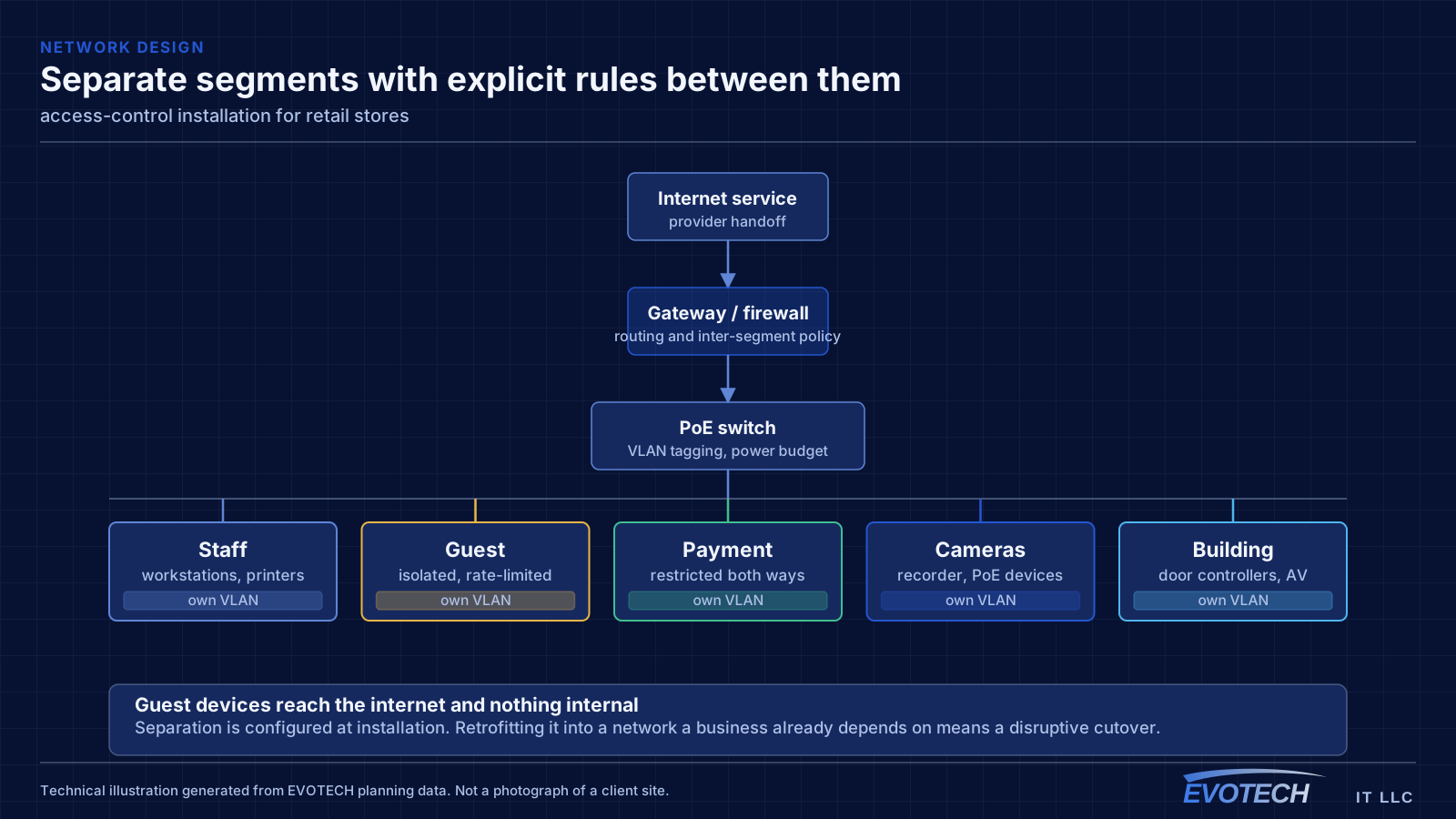
Payment systems sit on their own segment for the same reasons they do in food service. What differs in retail is the number of mobile devices: handheld scanners, mobile checkout tablets, and inventory devices that move continuously across the floor and depend on clean roaming between access points.
Roaming is therefore a first-class design concern rather than an afterthought. A scanner that drops its session walking from the sales floor into the stockroom generates a support call every day. That means coverage areas need to overlap enough for a clean handoff, with a channel plan that keeps adjacent cells from contending.
Guest Wi-Fi in retail is a marketing decision as much as a technical one. Where it exists, it needs isolation and a bandwidth cap. Where it does not, saying so plainly is better than an open network nobody maintains.
- Payment systems on a dedicated segment
- Coverage designed for clean roaming across the sales floor and into the stockroom
- Handheld and mobile checkout devices treated as the primary wireless clients
- Guest access isolated and rate-limited where offered
- Back-office and inventory systems separated from customer-facing traffic
Locks, egress, and where the controller belongs
Electric strikes and magnetic locks behave oppositely on power loss. A magnetic lock is fail-safe — it releases when power is removed, so the door is passable during an outage or alarm. A standard electric strike is typically fail-secure — it stays locked without power, though the door can still be opened from the inside by its mechanical hardware. Which is appropriate depends on the door's role and on the applicable life-safety requirements, and it is not an interchangeable preference.
- Magnetic locks fail safe on power loss; standard electric strikes fail secure
- Free egress must be preserved by mechanical hardware and request-to-exit devices
- Fire-alarm interface required where controlled doors must release on alarm
- Controller and wiring on the secured side of the door
- Prefer modern encrypted or mobile credentials over legacy proximity formats
- Door position sensors to detect held-open and forced conditions
Popular services nearby
Frequently searched near this area — the pages people look for most.
Frequently asked questions
What changes about access-control installation in retail stores?
The operating environment does. Retail stores bring specific constraints — how the space is used, when work can happen, and what has to keep running — and those shape the access-control installation plan as much as the service's own technical requirements.
What is the difference between fail-safe and fail-secure?
It describes what happens when power is lost. Fail-safe hardware — typically a magnetic lock — releases and the door becomes passable. Fail-secure hardware — typically a standard electric strike — stays locked, though the door can still be opened from the inside by its mechanical hardware. Which is correct for a given opening depends on its role and on applicable life-safety requirements, so it is a design decision rather than a preference.
How many network outlets should a retail space have?
More than the current fixture plan suggests. Retail layouts get reset, and adding a run while the ceiling is open costs a fraction of retrofitting one across a finished sales floor. Terminated spare runs at likely register and fixture positions are among the cheapest insurance in a retail fit-out.