Cat6 cabling for restaurants, in Pearland
Cat6 cabling for restaurants in Pearland is a three-part question: what cat6 cabling involves, what restaurants need from it, and what Pearland changes about the install. Newer residential subdivisions with wide floor plans and builder-installed structured cable of variable quality.
So the honest framing is this: specify Cat6 when the device locations need gigabit and the building is unlikely to push 10G to the desk. Specify Cat6A when a run has to support 10G at full distance, when the cable will sit in a dense bundle, or when the location feeds equipment that already asks for more than gigabit.
Where cameras earn their place
Restaurant camera coverage tends to concentrate on a small number of high-value views rather than blanketing the space. The point-of-sale line, the safe or cash-handling area, the back door, and the dry and walk-in storage entrances answer most of the questions that get asked of restaurant footage.
Framing matters more than count. A camera at the register needs enough pixel density to show what was on the screen and in the drawer; a camera on the back door needs to identify who came through it. A wide shot of the whole dining room satisfies neither and is the most commonly installed view.
Ambient lighting in a dining room is deliberately low, which is the other complication. Cameras selected for a brightly lit retail floor often perform poorly in restaurant lighting, and this is worth checking against recorded footage in actual service conditions rather than a live view during setup.
- Register and cash-handling views framed tightly enough to be useful
- Back door and delivery entrance framed for identification
- Storage and walk-in entrances for inventory questions
- Camera selection checked against real dining-room light levels
- Retention long enough to cover the delay before an issue is noticed
What drives the cost of cat6 cabling here
Cable is a small share of an installed run. The spread between a cheap and an expensive Cat6 project comes from access and count, with component quality a distant third.
- Number of runs and their average length
- Ceiling and wall construction along the pathway
- Whether Cat6A is specified for some or all runs
- Shielded versus unshielded construction and the extra termination time shielding adds
- Certification depth and documentation format
Pearland: what the location changes
The starting point for any Pearland job is one local fact. Newer residential subdivisions with wide floor plans and builder-installed structured cable of variable quality. That single condition shapes where cable can run, where equipment can sit, and how coverage is laid out — more than any spec sheet does. Two more conditions weigh on it. Expanding medical office space with controlled-area access requirements and clinical scheduling constraints. Food-service commercial space with kitchen environments and narrow after-hours working windows. Together they make the route specific to this pocket, which is why a short walkthrough or a few clear photos settle the scope faster than a floor plan can.
- Newer residential subdivisions with wide floor plans and builder-installed structured cable of variable quality
- Expanding medical office space with controlled-area access requirements and clinical scheduling constraints
- Food-service commercial space with kitchen environments and narrow after-hours working windows
- Slab-on-grade residential foundations making attic routing the standard retrofit path
- Newer commercial construction generally offering suspended-grid ceilings and usable pathway
Getting it done in Pearland
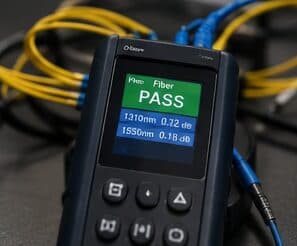
Certification for a Cat6 link measures the parameters that define the category: insertion loss, near-end and far-end crosstalk, return loss, and propagation delay skew across the frequency range up to 250 MHz. A pass means the link meets the standard's limits with margin recorded.
Restaurant networks do not carry much data. What makes them difficult is everything else: heat and grease near the kitchen, wash-down areas, a guest population that will connect anything to anything, payment systems that must not share a network with either, and an operating schedule that leaves a narrow window for anyone to work.
Getting Pearland work done means planning around the site as it actually is. Slab-on-grade residential foundations making attic routing the standard retrofit path. Newer commercial construction generally offering suspended-grid ceilings and usable pathway. Both matter as much as the design to how and when the work happens. The scope is drawn from the real property, the coverage is stated as a service area rather than an office, and unverifiable specifics about Pearland are kept off the page on purpose.
Popular services nearby
Frequently searched near this area — the pages people look for most.
Frequently asked questions
Is cat6 cabling for restaurants different in Pearland?
The sector needs stay the same, but the install changes with the place. In Pearland, the conditions above — not the restaurants label — decide routes, mounting, and equipment placement, which is why this page pairs all three.
Is Cat6 enough, or should everything be Cat6A?
For most device locations Cat6 is enough, because most devices need gigabit and will for a long time. Cat6A earns its place on runs that must carry 10G at distance, runs sitting in dense bundles, and uplinks between equipment positions. Specifying Cat6A for the whole building is rarely wrong technically, but it costs pathway space and termination time that a mixed design keeps.