Ubiquiti UniFi installation for restaurants, in Humble
Ubiquiti UniFi installation for restaurants in Humble is a three-part question: what ubiquiti unifi installation involves, what restaurants need from it, and what Humble changes about the install. A retail and commercial hub with a broad mix of building ages.
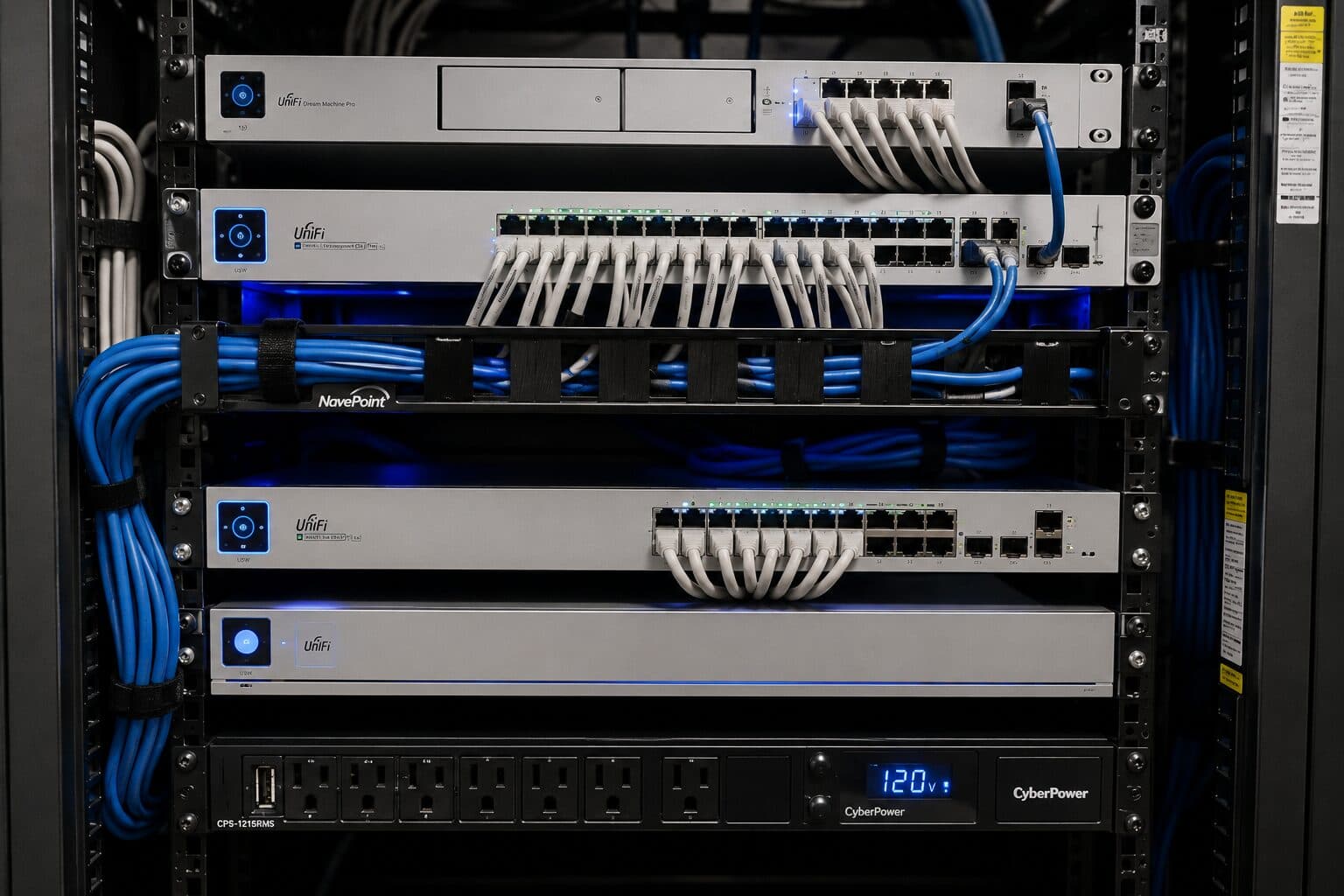
The tradeoff is ecosystem commitment. Mixed-vendor networks give more freedom to choose the best component for each role; single-vendor networks give a more coherent day-to-day experience and simpler support. Neither is universally correct, and it is worth deciding deliberately rather than by default.
What to get right first
In order of consequence: keep the payment systems isolated, put the equipment somewhere it will survive, cover the dining room and patio properly, and place cameras where they answer real questions.
The ordering matters because the failure modes differ. A congested guest network is an annoyance. A payment terminal on a shared flat network is a genuine exposure. Equipment cooked in a hot back room is a recurring replacement cost.
- Segment payment, operations, and guest traffic onto distinct networks
- Locate the rack away from kitchen heat, steam, and wash-down zones
- Rate-limit guest access so it cannot saturate the circuit at peak
- Cover the patio deliberately rather than hoping indoor access points reach
- Put the network equipment and recorder on a UPS
Where ubiquiti unifi installation goes wrong — and how it's avoided
The recurring UniFi mistakes are configuration mistakes, not hardware mistakes.
- Adopting everything and leaving default settings in place
- Choosing a switch on port count and running out of PoE budget
- Running the controller on a workstation that gets shut down
- Never backing up the controller configuration
- Sizing camera storage for the resolution but not the retention period
- Leaving wireless entirely automatic in a dense multi-tenant building
Humble: what the location changes
What separates a Humble scope from the rest of the city is concrete and local. A retail and commercial hub with a broad mix of building ages. Warehousing and distribution requiring aisle coverage and longer runs. Older commercial stock needing pathway remediation and rack cleanup. That short list is what actually drives the design in this pocket, and it is why photographs or a brief site visit beat a floor plan — the plan follows the building's real constraints, not the neighborhood name on the map.
- A retail and commercial hub with a broad mix of building ages
- Warehousing and distribution requiring aisle coverage and longer runs
- Older commercial stock needing pathway remediation and rack cleanup
- Retail point-of-sale environments requiring network segmentation
- Slab-foundation residential across established and newer neighbourhoods
Getting it done in Humble
Validation covers the network design as well as the radio coverage, because segmentation that was configured but not tested is not yet segmentation.
Restaurant camera coverage tends to concentrate on a small number of high-value views rather than blanketing the space. The point-of-sale line, the safe or cash-handling area, the back door, and the dry and walk-in storage entrances answer most of the questions that get asked of restaurant footage.
Getting Humble work done means planning around the site as it actually is. Retail point-of-sale environments requiring network segmentation. Slab-foundation residential across established and newer neighbourhoods. Both matter as much as the design to how and when the work happens. The scope is drawn from the real property, the coverage is stated as a service area rather than an office, and unverifiable specifics about Humble are kept off the page on purpose.
Popular services nearby
Frequently searched near this area — the pages people look for most.
Frequently asked questions
Is ubiquiti unifi installation for restaurants different in Humble?
The sector needs stay the same, but the install changes with the place. In Humble, the conditions above — not the restaurants label — decide routes, mounting, and equipment placement, which is why this page pairs all three.
Is UniFi the right choice for a small business?
It suits sites that want proper segmentation, decent wireless, and cameras under one interface without employing a network administrator. The tradeoff is committing to one vendor's ecosystem. A mixed-vendor design gives more freedom to pick the best component for each role; the single-vendor version is easier to live with day to day. Both are defensible — it is worth choosing on purpose.