Floodlight camera installation for restaurants, in Cypress
Floodlight camera installation for restaurants in Cypress is a three-part question: what floodlight camera installation involves, what restaurants need from it, and what Cypress changes about the install. Large newer residential floor plans that exceed single-position wireless coverage.
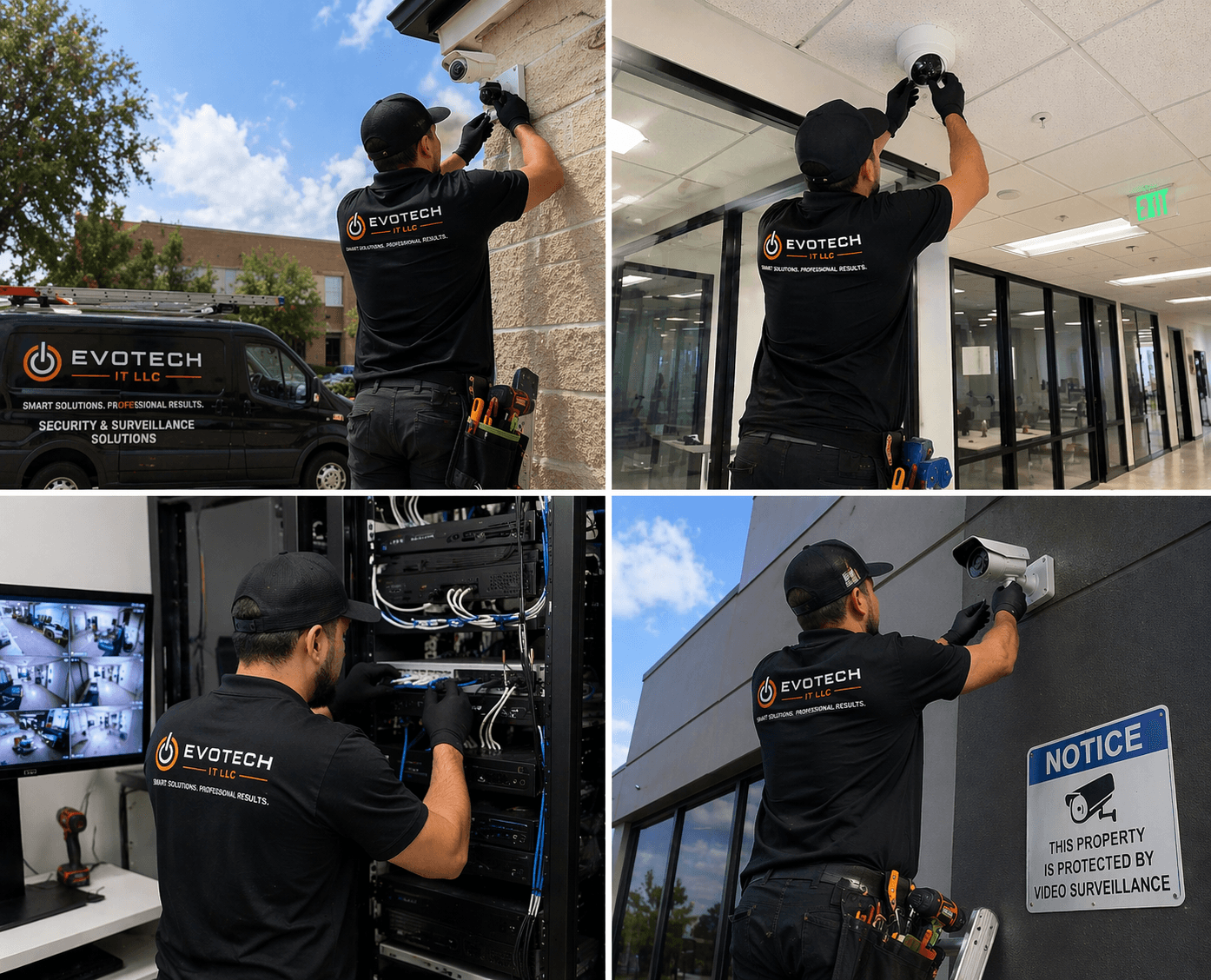
Getting it right is about height, angle, and zones. Mounted too low it is easy to tamper with and lights straight into the lens's near field; too high and it lights a large area weakly and captures tops of heads. The motion zones are tuned to the approach that matters, and — for reliability — a wired power and data connection beats depending on batteries and Wi-Fi for a device meant to be watching.
The environment is harder on equipment than the traffic is
Restaurant networks do not carry much data. What makes them difficult is everything else: heat and grease near the kitchen, wash-down areas, a guest population that will connect anything to anything, payment systems that must not share a network with either, and an operating schedule that leaves a narrow window for anyone to work.
The result is that restaurant technology projects are planned around constraints rather than capacity. Where equipment can physically live, how it stays clean and cool, what has to stay isolated, and when a technician is allowed on a ladder are the questions that shape the design.
- Kitchen heat, grease, and moisture degrade equipment placed without protection
- Payment systems require separation from guest and general operations traffic
- Guest Wi-Fi demand is unpredictable and must not consume the whole circuit
- Work windows are narrow — before opening, after closing, or on a closure day
Where floodlight camera installation goes wrong — and how it's avoided
Floodlight cameras fail on glare, triggering, and power.
- Letting the floodlight wash out the near field or reflect into the lens
- Aiming wide and triggering on every car and branch
- Mounting too low for reach and angle
- Relying on battery and Wi-Fi for an always-watch device
- Casting hard shadows that hide the subject
- Reviewing only the daytime live view, not night footage
Cypress: what the location changes
The starting point for any Cypress job is one local fact. Large newer residential floor plans that exceed single-position wireless coverage. That single condition shapes where cable can run, where equipment can sit, and how coverage is laid out — more than any spec sheet does. Two more conditions weigh on it. Community and worship facilities with large main spaces and high ceilings requiring distributed coverage. Retail centres with substantial footprints and mixed ceiling construction between units. Together they make the route specific to this pocket, which is why a short walkthrough or a few clear photos settle the scope faster than a floor plan can.
- Large newer residential floor plans that exceed single-position wireless coverage
- Community and worship facilities with large main spaces and high ceilings requiring distributed coverage
- Retail centres with substantial footprints and mixed ceiling construction between units
- Renovation and remodel work common, with pathway discovery a genuine part of the project rather than a formality
- Slab foundations with attic access as the standard residential retrofit route
Getting it done in Cypress
A floodlight camera is judged by its footage at night, not its live view by day.
The payment environment should sit on its own network segment with restricted access to and from everything else. That is standard practice, it simplifies any compliance conversation the operator has with their payment provider, and it means a compromised guest device cannot reach a terminal. Building it in at installation is straightforward; retrofitting it into a flat network during business hours is not.
Execution in Cypress is planned around real conditions, not a template. Renovation and remodel work common, with pathway discovery a genuine part of the project rather than a formality. Slab foundations with attic access as the standard residential retrofit route. These decide the sequence, the access, and the method as much as the design does. EVOTECH describes Cypress as coverage rather than a place it occupies, and omits any area detail it cannot confirm — building and site conditions only, no invented landmarks or promised arrival times.
Popular services nearby
Frequently searched near this area — the pages people look for most.
Frequently asked questions
Is floodlight camera installation for restaurants different in Cypress?
The sector needs stay the same, but the install changes with the place. In Cypress, the conditions above — not the restaurants label — decide routes, mounting, and equipment placement, which is why this page pairs all three.
Why is my floodlight camera's footage washed out at night?
The camera is fighting its own light. If the floodlight blows out the near field or reflects off a nearby wall or soffit back into the lens, the footage is worse than a plain camera would give. Aiming the light onto the scene and off the lens's immediate foreground — and away from reflective surfaces — is what fixes it.