Wireless bridge (point-to-point) for professional offices, in West University Place
Wireless bridge (point-to-point) for professional offices in West University Place is a three-part question: what wireless bridge (point-to-point) involves, what professional offices need from it, and what West University Place changes about the install. Dense established homes on small residential lots.
The engineering is about the path, not the hardware. The two radios need clear line of sight and a clear Fresnel zone (the football-shaped space around the direct line that also has to stay unobstructed), precise alignment so the narrow beams actually meet, and realistic expectations that throughput falls with distance and obstruction. Where those conditions hold, a bridge is reliable; where they don't, no radio fixes it.
Capacity, segmentation, and the wired positions worth keeping
Wireless capacity should be planned from peak simultaneous use in each area. A floor with several meeting rooms in constant use needs more cells concentrated around them than its square footage would suggest, and those cells need a channel plan that stops them contending with each other.
Segmentation in an office is usually simpler than in retail or clinical settings but still worth doing: staff devices, guest and visitor access, building systems such as cameras and door controllers, and any dedicated systems. Guests should reach the internet and nothing else.
Some positions are still worth wiring even in a wireless-first office. Meeting-room equipment, printers, desk phones, ceiling access points, and any position handling large files all benefit from cable, and the incremental cost during a fit-out is small.
- Capacity planned from peak simultaneous devices per area
- Staff, guest, and building-system traffic separated
- Meeting-room equipment, printers, and access points wired
- Channel plan set deliberately in multi-tenant buildings
- Switch PoE budget sized for access points, phones, and cameras together
Where wireless bridge (point-to-point) goes wrong — and how it's avoided
Wireless bridges fail on the path and on expectations.
- Planning a link without confirming Fresnel-zone clearance
- Mounting too low, so ground and foliage intrude on the path
- Ignoring seasonal foliage that fills in and degrades the link
- Misaligning the narrow beams
- Promising wired speed regardless of distance and obstruction
- Choosing a congested band without checking interference
West University Place: what the location changes
What separates a West University Place scope from the rest of the city is concrete and local. Dense established homes on small residential lots. Continuous teardown-and-rebuild activity, making prewire valuable. High finish expectations with limited space for equipment positions. That short list is what actually drives the design in this pocket, and it is why photographs or a brief site visit beat a floor plan — the plan follows the building's real constraints, not the neighborhood name on the map.
- Dense established homes on small residential lots
- Continuous teardown-and-rebuild activity, making prewire valuable
- High finish expectations with limited space for equipment positions
- Slab foundations with attic-to-interior-wall retrofit routing
- Compact footprints keeping runs short but concealment demanding
Getting it done in West University Place
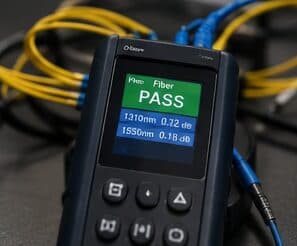
A bridge is commissioned on signal, throughput, and stability.
The easiest time to do office low-voltage work is during a fit-out, when ceilings are open and the space is empty. Work in an occupied office is entirely feasible but slower, with furniture protection, containment, and noise consideration all adding time.
Execution in West University Place is planned around real conditions, not a template. Slab foundations with attic-to-interior-wall retrofit routing. Compact footprints keeping runs short but concealment demanding. These decide the sequence, the access, and the method as much as the design does. EVOTECH describes West University Place as coverage rather than a place it occupies, and omits any area detail it cannot confirm — building and site conditions only, no invented landmarks or promised arrival times.
Popular services nearby
Frequently searched near this area — the pages people look for most.
Frequently asked questions
Is wireless bridge (point-to-point) for professional offices different in West University Place?
The sector needs stay the same, but the install changes with the place. In West University Place, the conditions above — not the professional offices label — decide routes, mounting, and equipment placement, which is why this page pairs all three.
When should I use a wireless bridge instead of running cable?
When a physical run is genuinely impractical — a road, a parking lot, or a distance that would mean major trenching between two buildings. Where a cable can reasonably go, especially fiber between separately grounded structures, it is more reliable. A bridge is the right tool specifically when the gap can't be crossed physically and there is clear line of sight.