Business phone & VoIP for new construction, in Rosenberg
Business phone & VoIP for new construction in Rosenberg is a three-part question: what business phone & voip involves, what new construction need from it, and what Rosenberg changes about the install. Warehousing and light-industrial buildings along the highway corridor, with metal construction that reflects wireless signal and needs proper cable support.
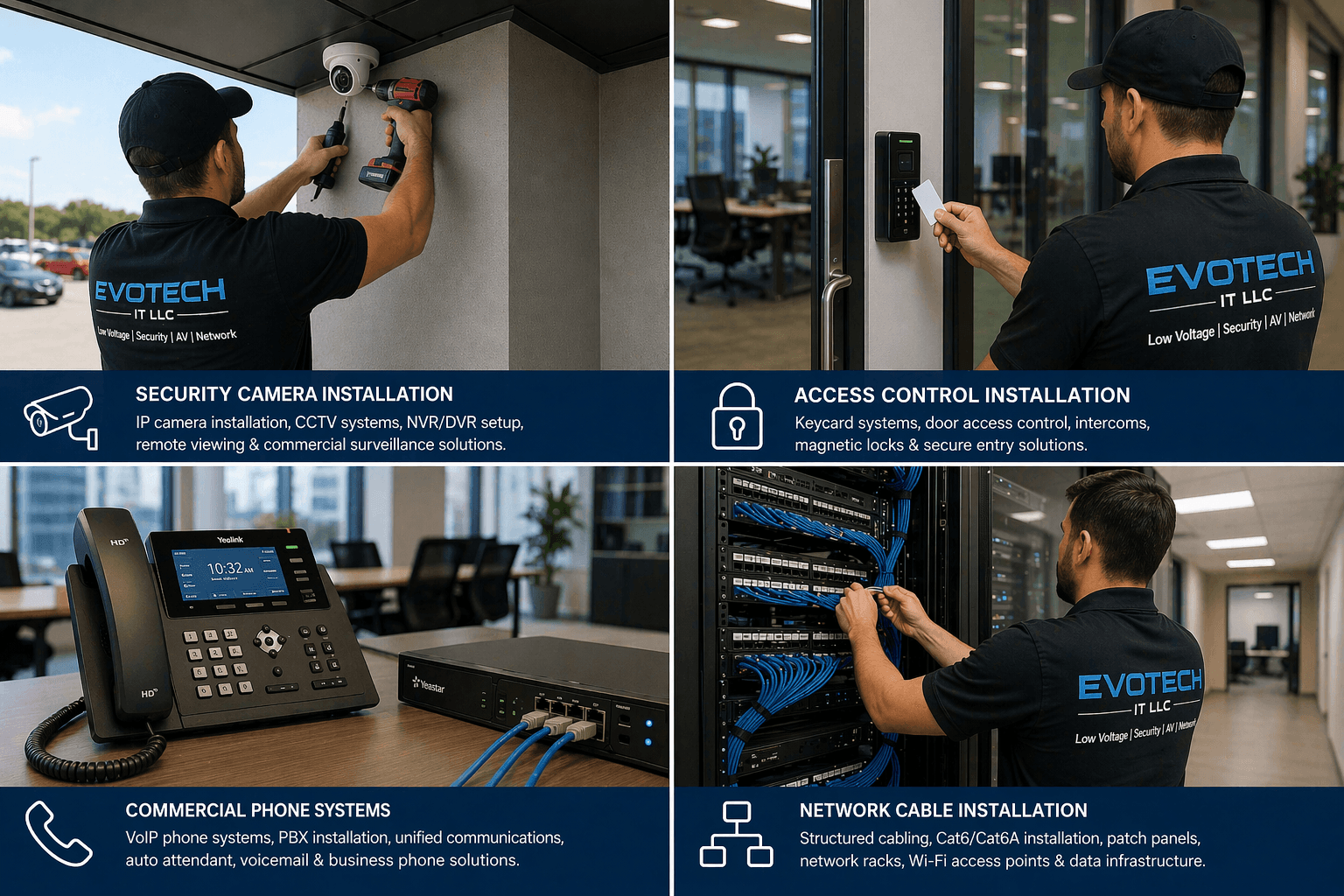
Modern business phones run over the data network — VoIP handsets plug into the same switches as everything else and draw their power from PoE. That is the appeal: one cabling system, central management, and features like auto-attendant, voicemail-to-email, call groups, and remote extensions that older key systems could not offer. The decision that shapes the rest is on-premise versus cloud: an on-site call server you own and maintain, or a hosted service where the provider runs the platform and the site just needs handsets, power, and a good circuit.
Working inside somebody else's schedule
Low voltage is scheduled against a construction programme it does not control. Delays upstream compress the window; a compressed window means either additional mobilisations or work done under pressure. Being ready in advance — decisions made, materials on site, pathway plan settled — is the main defence.
The gap between rough-in and finish is its own risk. Cable sitting in walls for months needs protecting and identifying clearly, or the finish crew spends the first day working out which coil goes where. Documenting as-built positions before the walls close is what makes the return visit efficient.
- Readiness before the window opens, since it will not extend
- Additional mobilisations where the schedule fragments
- Cable protected and clearly identified during the gap
- As-built documentation completed before walls close
- Coordination with electrical, mechanical, and fire-protection trades on pathway
What drives the cost of business phone & voip here
Handsets are visible; the network readiness and porting usually decide the total.
- Number of handsets and specialty endpoints
- On-premise server versus hosted subscription model
- Network work: voice segment, prioritisation, and PoE capacity
- UPS provision
- Number porting and any temporary overlap of old and new service
- Configuration depth for routing and after-hours behaviour
Rosenberg: what the location changes
In Rosenberg, the plan is built outward from the conditions that are actually here. Warehousing and light-industrial buildings along the highway corridor, with metal construction that reflects wireless signal and needs proper cable support. An older rail-town commercial core with masonry buildings and limited existing pathway. Newer suburban subdivisions on slab foundations following the regional attic-routing pattern. Each one changes where cable can run, where equipment can sit, and how coverage is shaped, which is why a walkthrough settles a Rosenberg scope faster than any generic estimate.
- Warehousing and light-industrial buildings along the highway corridor, with metal construction that reflects wireless signal and needs proper cable support
- An older rail-town commercial core with masonry buildings and limited existing pathway
- Newer suburban subdivisions on slab foundations following the regional attic-routing pattern
- Dust exposure in industrial and distribution environments, affecting rack and equipment placement
- Gulf Coast humidity and driven-rain events requiring rated exterior housings and sealed penetrations
Getting it done in Rosenberg
Phones are commissioned by making real calls under real conditions, not by confirming the handsets register.
Three things matter more than everything else combined: agreeing device locations before rough-in, claiming pathway before the other trades fill the ceiling, and running more capacity than the current plan requires.
On site, the schedule and working method turn on conditions like these. Dust exposure in industrial and distribution environments, affecting rack and equipment placement. Gulf Coast humidity and driven-rain events requiring rated exterior housings and sealed penetrations. Both shape how and when a crew can actually operate, which is why EVOTECH scopes each Rosenberg job from the property itself rather than assuming one approach fits every address. Coverage is stated as a service area, never an office claim, and anything about Rosenberg that cannot be verified is left out instead of invented.
Frequently asked questions
Is business phone & voip for new construction different in Rosenberg?
The sector needs stay the same, but the install changes with the place. In Rosenberg, the conditions above — not the new construction label — decide routes, mounting, and equipment placement, which is why this page pairs all three.
Why do our VoIP calls sound choppy when the internet seems fine?
Almost always jitter or contention rather than raw bandwidth. Voice packets are time-sensitive, and on a network that treats them the same as a backup or a large upload they get delayed or dropped whenever the network is busy. A dedicated voice segment with quality-of-service prioritisation fixes the majority of these cases without changing the internet plan.