Commercial IT solutions for new construction, in Jersey Village
Commercial IT solutions for new construction in Jersey Village is a three-part question: what commercial it solutions involves, what new construction need from it, and what Jersey Village changes about the install. Established mid-century residential stock predating structured wiring.
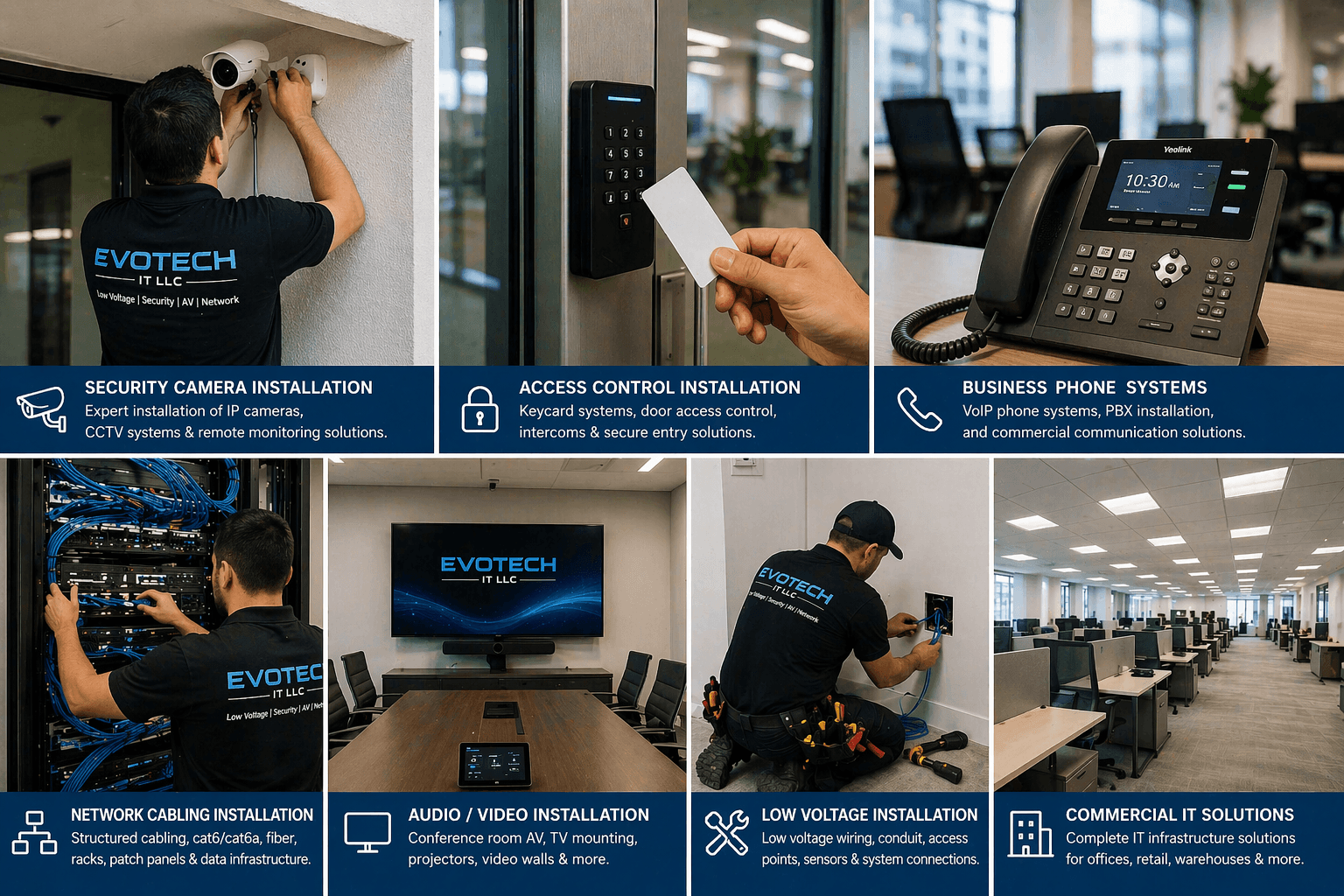
The value is in the coordination. Systems bought piecemeal end up on one flat network with no segmentation, with cabling that suits none of them well, and with nobody able to say why something does not work because each vendor points at the others. A coordinated design puts them on shared, properly segmented infrastructure and gives the business one number to call.
Decide locations, claim pathways, leave capacity
Three things matter more than everything else combined: agreeing device locations before rough-in, claiming pathway before the other trades fill the ceiling, and running more capacity than the current plan requires.
The third is the one most often skipped and most often regretted. An extra run to a likely future access point, camera, or display position costs very little while the walls are open.
- Device locations agreed and marked before rough-in begins
- Pathway claimed early, since low voltage is usually last into the ceiling
- Spare runs to likely future positions while walls are open
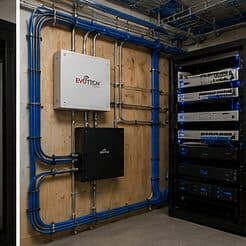
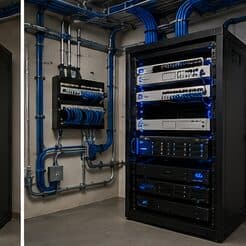
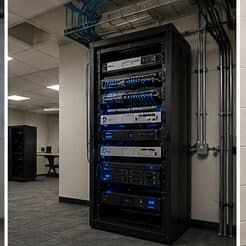
- Equipment room sized for every system, with power and ventilation
- Rated penetrations sleeved and firestopped properly
What drives the cost of commercial it solutions here
Breadth, site count, and continuity requirements drive the cost more than any single system.
- Number of systems and the integration between them
- Site size and count
- Continuity provision: UPS, failover, and equipment-room build
- Growth headroom designed in
- Migration of existing systems versus new build
- Whether ongoing management is included
Jersey Village: what the location changes
The starting point for any Jersey Village job is one local fact. Established mid-century residential stock predating structured wiring. That single condition shapes where cable can run, where equipment can sit, and how coverage is laid out — more than any spec sheet does. Two more conditions weigh on it. Compact small-commercial and office buildings suited to single-visit work. Slab-foundation homes with attic-to-interior-wall retrofit routing. Together they make the route specific to this pocket, which is why a short walkthrough or a few clear photos settle the scope faster than a floor plan can.
- Established mid-century residential stock predating structured wiring
- Compact small-commercial and office buildings suited to single-visit work
- Slab-foundation homes with attic-to-interior-wall retrofit routing
- Built-out character meaning mostly retrofit and remediation, not new construction
- Gulf Coast humidity requiring rated exterior housings
Getting it done in Jersey Village
A coordinated system is verified as a whole, not one component at a time.
Camera positions are among the cheapest things to prewire and among the most annoying to retrofit, because they are usually exterior, high, and behind finished soffit. Running cable to likely positions during rough-in preserves the option at almost no cost.
Execution in Jersey Village is planned around real conditions, not a template. Built-out character meaning mostly retrofit and remediation, not new construction. Gulf Coast humidity requiring rated exterior housings. These decide the sequence, the access, and the method as much as the design does. EVOTECH describes Jersey Village as coverage rather than a place it occupies, and omits any area detail it cannot confirm — building and site conditions only, no invented landmarks or promised arrival times.
Popular services nearby
Frequently searched near this area — the pages people look for most.
Frequently asked questions
Is commercial it solutions for new construction different in Jersey Village?
The sector needs stay the same, but the install changes with the place. In Jersey Village, the conditions above — not the new construction label — decide routes, mounting, and equipment placement, which is why this page pairs all three.
How is this different from just hiring separate installers?
Coordination and accountability. Separate installers each optimise their own system, which is how a business ends up with everything on one flat network, cabling that suits nobody, and no one able to say why something does not work. A coordinated design puts every system on shared, segmented infrastructure and gives you one party accountable for the whole thing working — which is usually cheaper over the life of the fit-out, not just simpler.