Digital signage for new construction, in Humble
Digital signage for new construction in Humble is a three-part question: what digital signage involves, what new construction need from it, and what Humble changes about the install. A retail and commercial hub with a broad mix of building ages.
A digital sign is not a television. It runs many hours a day, often near a window in bright ambient light, and it has to show scheduled content on its own without anyone touching it. That means a display rated for commercial duty cycle and adequate brightness, a content player that drives it reliably, and a way to change what it shows remotely — so a menu, a promotion, or a directory can be updated from a desk rather than a step-ladder.
What to rough in even without a final design
Full system design is often not finished when the rough-in window arrives. That is normal, and it is not a reason to skip the pathway. Running conduit or sleeves to likely positions preserves the option cheaply even when the eventual equipment is undecided.
For a commercial building, the reliable rough-in set is: cable to every likely device outlet, ceiling positions for access points spaced for the intended coverage, camera positions at entries and approaches, door positions with cable to the controller location, and pathway to any likely display or AV position. Plus, in every case, a properly located equipment room.
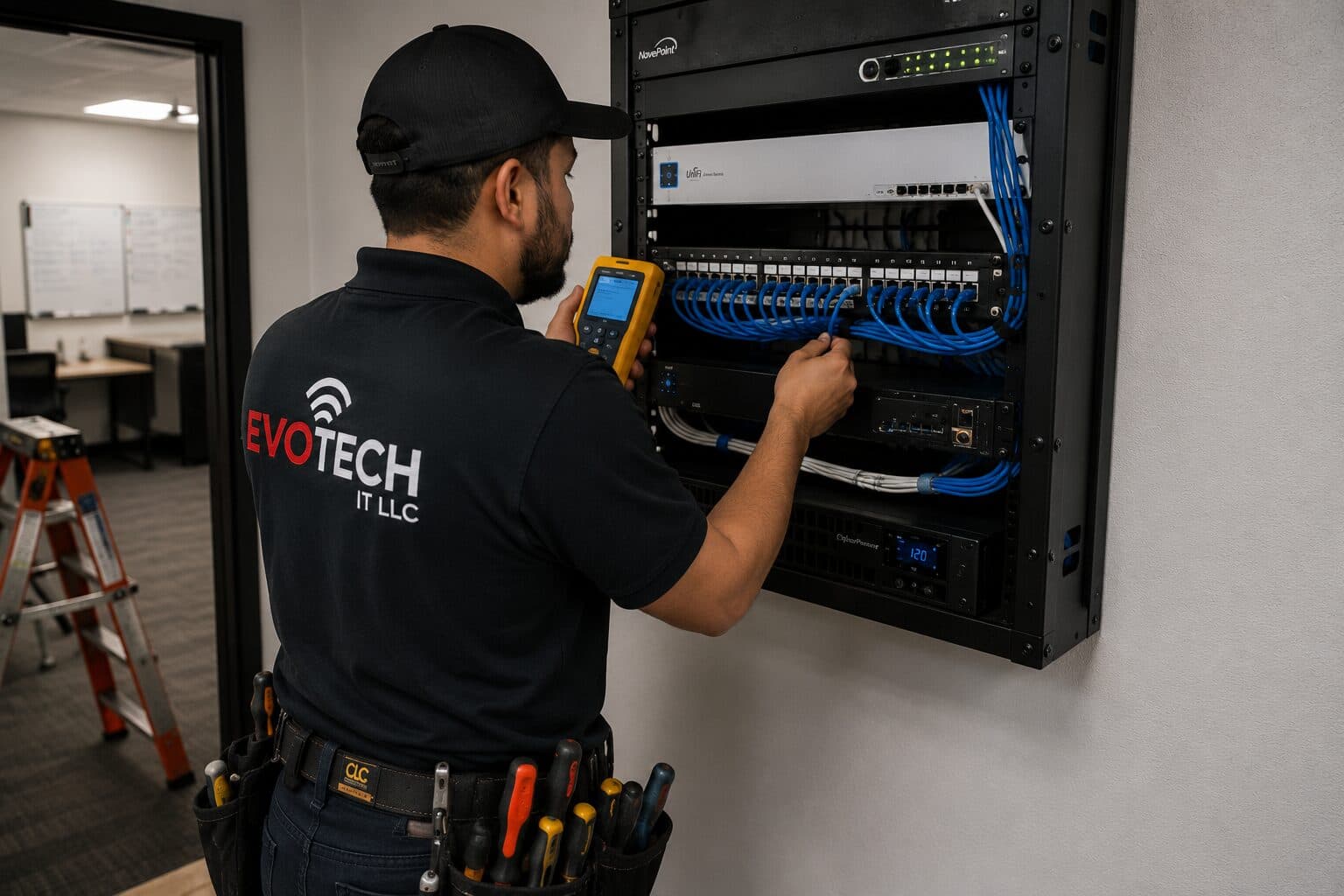
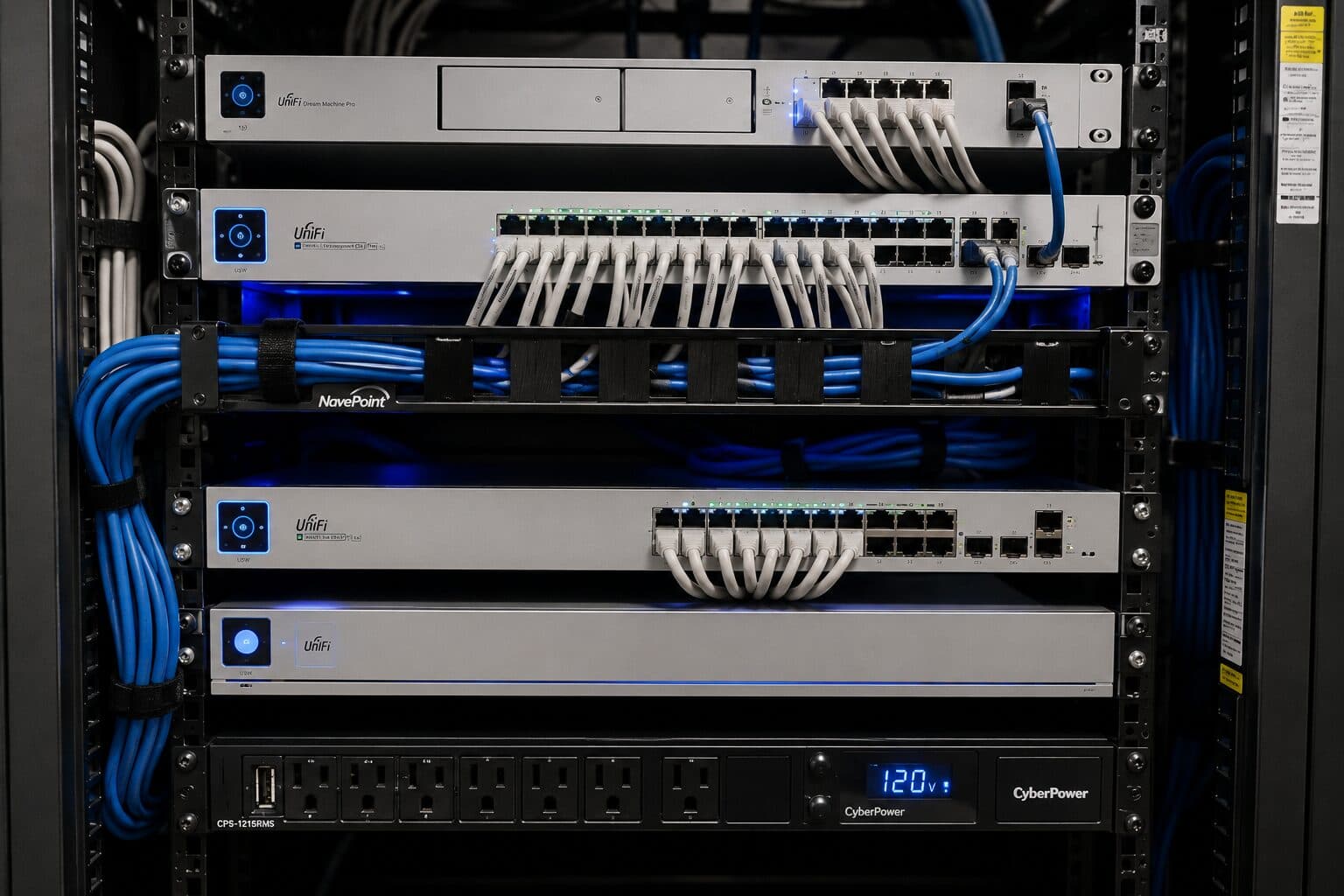
The equipment room deserves particular emphasis because it is the most commonly under-provisioned item. It has to hold the network rack, camera recorder, access-control panel, and any AV equipment, with dedicated power, ventilation, and clearance to work. Sizing it from the network alone is a decision that gets discovered eighteen months later.
- Sleeves and conduit to likely positions even before final design
- Ceiling access-point positions spaced for the intended coverage
- Camera positions at entries, approaches, and service areas
- Cable from every controlled door to the controller position
- Equipment room with dedicated power, ventilation, and working clearance
What changes digital signage from job to job
Signage scope is driven by display count, environment, and content complexity.
- Number of displays and whether any form a video wall
- Ambient light and required brightness
- Orientation, size, and viewing distance
- Content player and management platform
- Mounting height and access for service
- Network and power provision at each position
Humble: what the location changes
A retail and commercial hub with a broad mix of building ages. In Humble, that is where the plan begins, because it changes cable paths, device placement, and access-point counts before anything else does. Warehousing and distribution requiring aisle coverage and longer runs. Older commercial stock needing pathway remediation and rack cleanup. None of these are generic checklist items — each moves the design in a direction a citywide assumption would miss, and the honest recommendation always depends on what this particular property allows.
- A retail and commercial hub with a broad mix of building ages
- Warehousing and distribution requiring aisle coverage and longer runs
- Older commercial stock needing pathway remediation and rack cleanup
- Retail point-of-sale environments requiring network segmentation
- Slab-foundation residential across established and newer neighbourhoods
Getting it done in Humble
Signage is commissioned by confirming it reads correctly and runs unattended.
Low voltage is scheduled against a construction programme it does not control. Delays upstream compress the window; a compressed window means either additional mobilisations or work done under pressure. Being ready in advance — decisions made, materials on site, pathway plan settled — is the main defence.
On site, the schedule and working method turn on conditions like these. Retail point-of-sale environments requiring network segmentation. Slab-foundation residential across established and newer neighbourhoods. Both shape how and when a crew can actually operate, which is why EVOTECH scopes each Humble job from the property itself rather than assuming one approach fits every address. Coverage is stated as a service area, never an office claim, and anything about Humble that cannot be verified is left out instead of invented.
Frequently asked questions
Is digital signage for new construction different in Humble?
The sector needs stay the same, but the install changes with the place. In Humble, the conditions above — not the new construction label — decide routes, mounting, and equipment placement, which is why this page pairs all three.
Can we just use a regular TV for a menu board?
For a few hours a day, maybe. For open-to-close operation it is a false economy — consumer televisions are not rated for that duty cycle and fail earlier, and they are often too dim to read against daylight. A commercial display rated for the hours and the brightness costs more up front and far less over its life in a signage role.