Why this page exists
Business phone & VoIP for new construction is shaped by how the space is used, not just by the service itself. New construction bring their own operating constraints, and this page pairs what business phone & voip actually involves with what that environment changes about it.
Modern business phones run over the data network — VoIP handsets plug into the same switches as everything else and draw their power from PoE. That is the appeal: one cabling system, central management, and features like auto-attendant, voicemail-to-email, call groups, and remote extensions that older key systems could not offer. The decision that shapes the rest is on-premise versus cloud: an on-site call server you own and maintain, or a hosted service where the provider runs the platform and the site just needs handsets, power, and a good circuit.
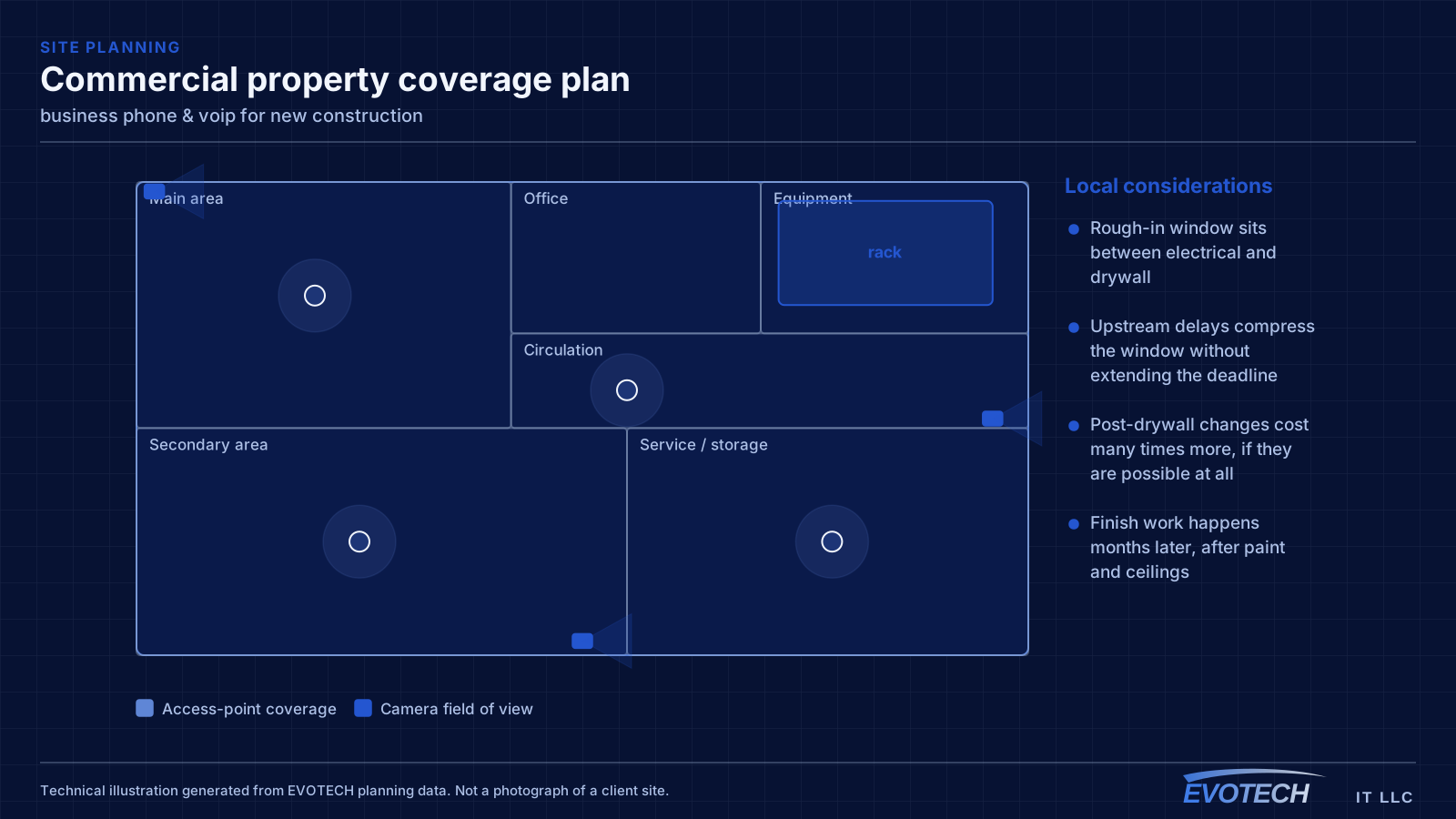
One window, and it does not reopen
Low-voltage rough-in happens in a specific slot: after framing and electrical, before insulation and drywall. Inside that window, running a cable anywhere is straightforward. Once drywall goes up, the same cable costs many times more and sometimes cannot be run at all.
The asymmetry is the whole story of new-construction low voltage. Decisions made cheaply during rough-in become expensive or impossible afterwards, which is why the pre-rough-in planning conversation is worth more than any equipment choice made later.
- Rough-in window sits between electrical and drywall
- Upstream delays compress the window without extending the deadline
- Post-drywall changes cost many times more, if they are possible at all
- Finish work happens months later, after paint and ceilings
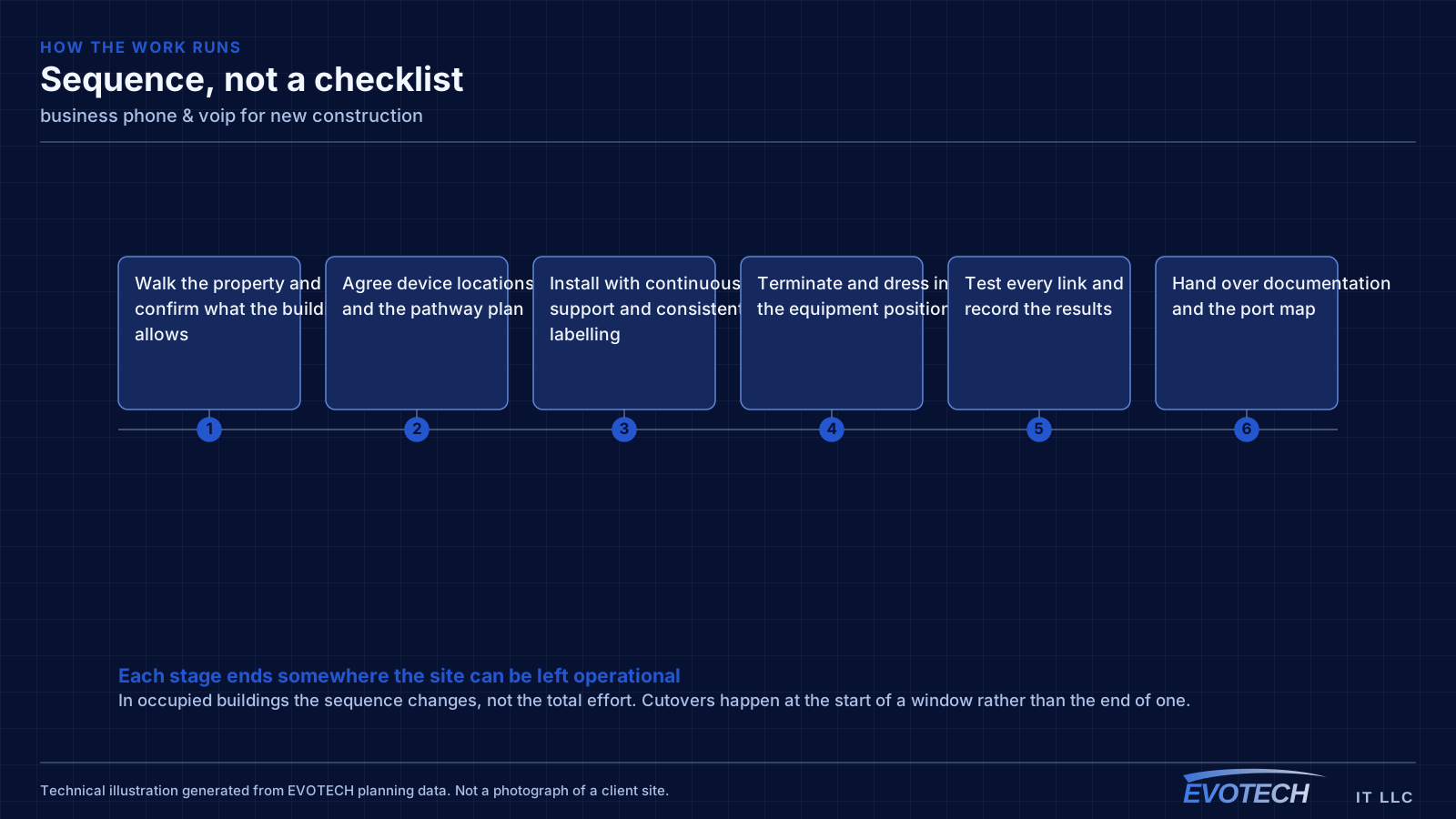
What business phone & voip usually involves
The defining VoIP problem is call quality on a network that was never prepared for voice. Jitter — variation in packet timing — makes speech robotic; packet loss clips words; and both get worse when a backup or a large upload competes for the same uplink. Voice needs to be prioritised over other traffic, and its own segment, or it inherits every congestion event on the network.
The second problem is power. PoE handsets, a PoE switch, and the call server all have to stay up for phones to work, and a site that puts its phones on an unprotected switch loses its phones with every brief outage — including the ability to call for help.
- Jitter and packet loss on an unprioritised network clipping and dropping calls
- Voice traffic sharing a congested uplink with backups and uploads
- PoE budget exhausted when handsets are added to an existing switch
- No UPS on the phone equipment, so an outage takes the phones down
- Insufficient internet upload bandwidth for the number of simultaneous calls
- Number porting scheduled without a cutover plan, risking dead lines
What to rough in even without a final design
Full system design is often not finished when the rough-in window arrives. That is normal, and it is not a reason to skip the pathway. Running conduit or sleeves to likely positions preserves the option cheaply even when the eventual equipment is undecided.
For a commercial building, the reliable rough-in set is: cable to every likely device outlet, ceiling positions for access points spaced for the intended coverage, camera positions at entries and approaches, door positions with cable to the controller location, and pathway to any likely display or AV position. Plus, in every case, a properly located equipment room.
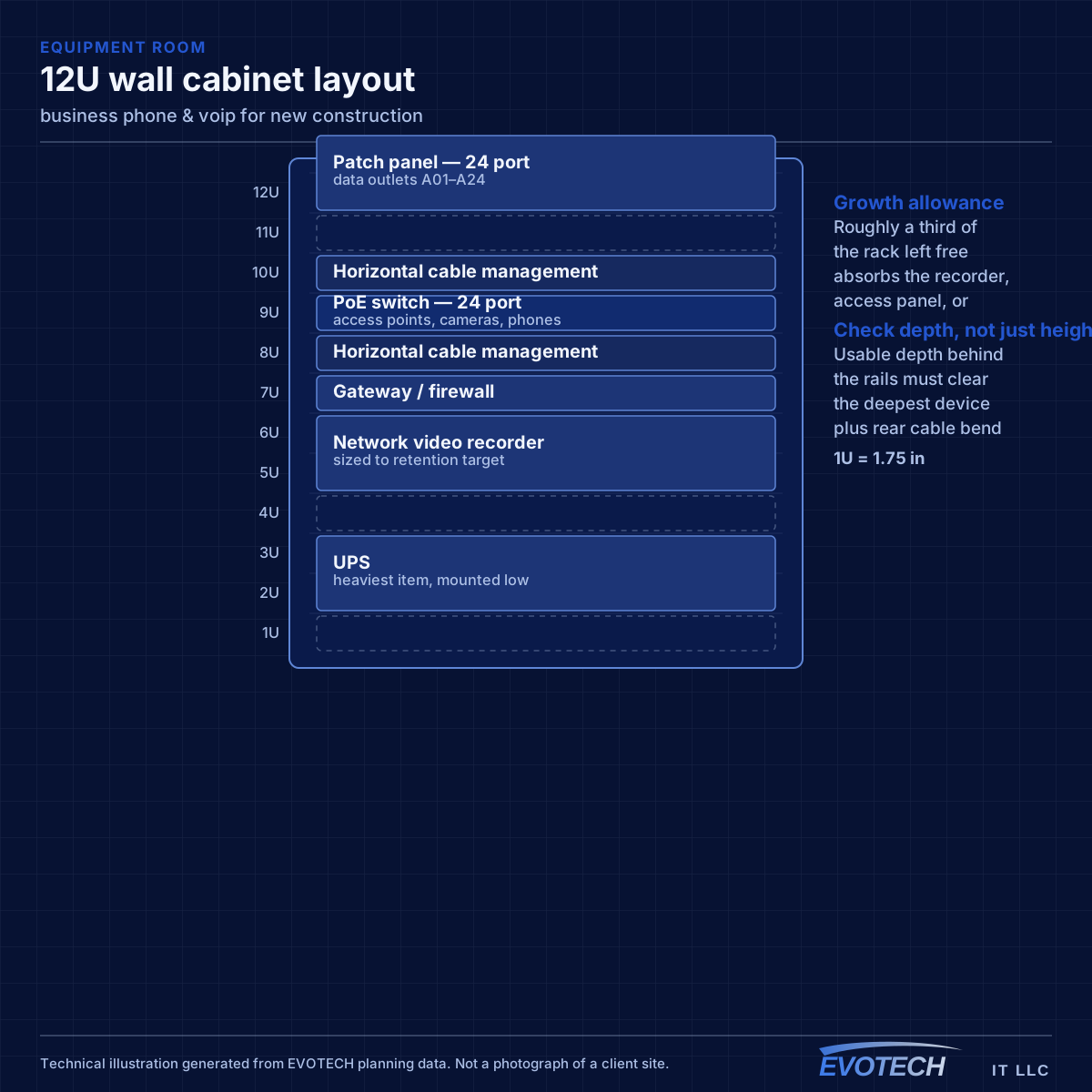
The equipment room deserves particular emphasis because it is the most commonly under-provisioned item. It has to hold the network rack, camera recorder, access-control panel, and any AV equipment, with dedicated power, ventilation, and clearance to work. Sizing it from the network alone is a decision that gets discovered eighteen months later.
- Sleeves and conduit to likely positions even before final design
- Ceiling access-point positions spaced for the intended coverage
- Camera positions at entries, approaches, and service areas
- Cable from every controlled door to the controller position
- Equipment room with dedicated power, ventilation, and working clearance
Prioritisation, power, and how many calls the circuit carries
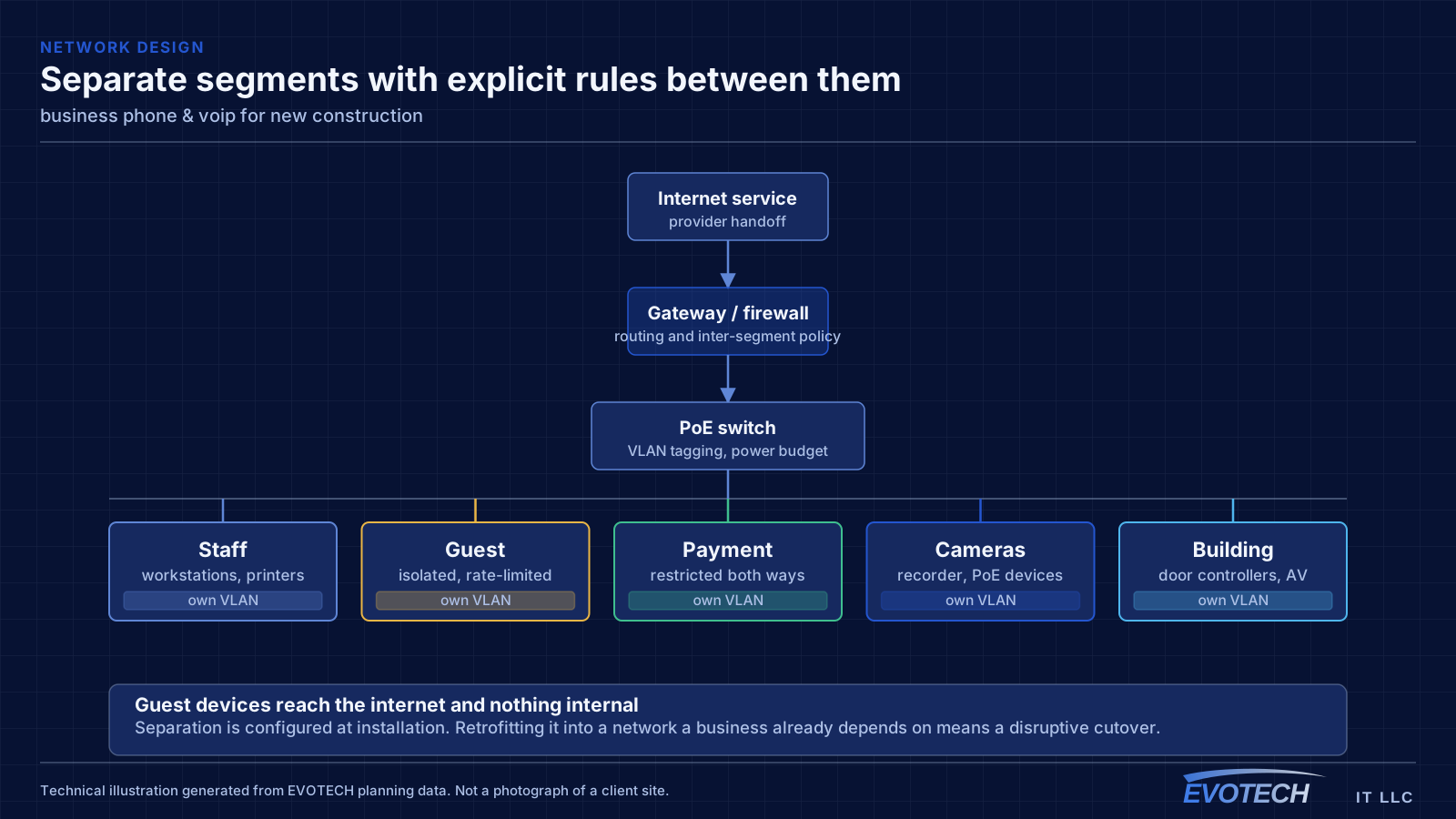
Voice quality is protected by keeping voice traffic separate and prioritised. A dedicated voice network segment, with quality-of-service marking so switches and the gateway send voice packets ahead of bulk data, is what keeps calls clean when the network is busy. Without it, a call and a large file transfer compete as equals, and the call loses.
- A dedicated voice segment with quality-of-service prioritisation
- Concurrent-call capacity bounded by upload bandwidth and codec
- PoE budget sized for every handset with headroom
- Call server and switch on a UPS
- On-premise versus hosted decided on who maintains the platform
Frequently asked questions
What changes about business phone & voip in new construction?
The operating environment does. New construction bring specific constraints — how the space is used, when work can happen, and what has to keep running — and those shape the business phone & voip plan as much as the service's own technical requirements.
Why do our VoIP calls sound choppy when the internet seems fine?
Almost always jitter or contention rather than raw bandwidth. Voice packets are time-sensitive, and on a network that treats them the same as a backup or a large upload they get delayed or dropped whenever the network is busy. A dedicated voice segment with quality-of-service prioritisation fixes the majority of these cases without changing the internet plan.
What has to be decided before rough-in?
Device locations, the equipment room position, and the pathway plan. Equipment selection can wait — you can run cable to a position without knowing which camera or access point will go there. What cannot wait is the decision about where things go, because that is what determines where cable is pulled while the walls are open.