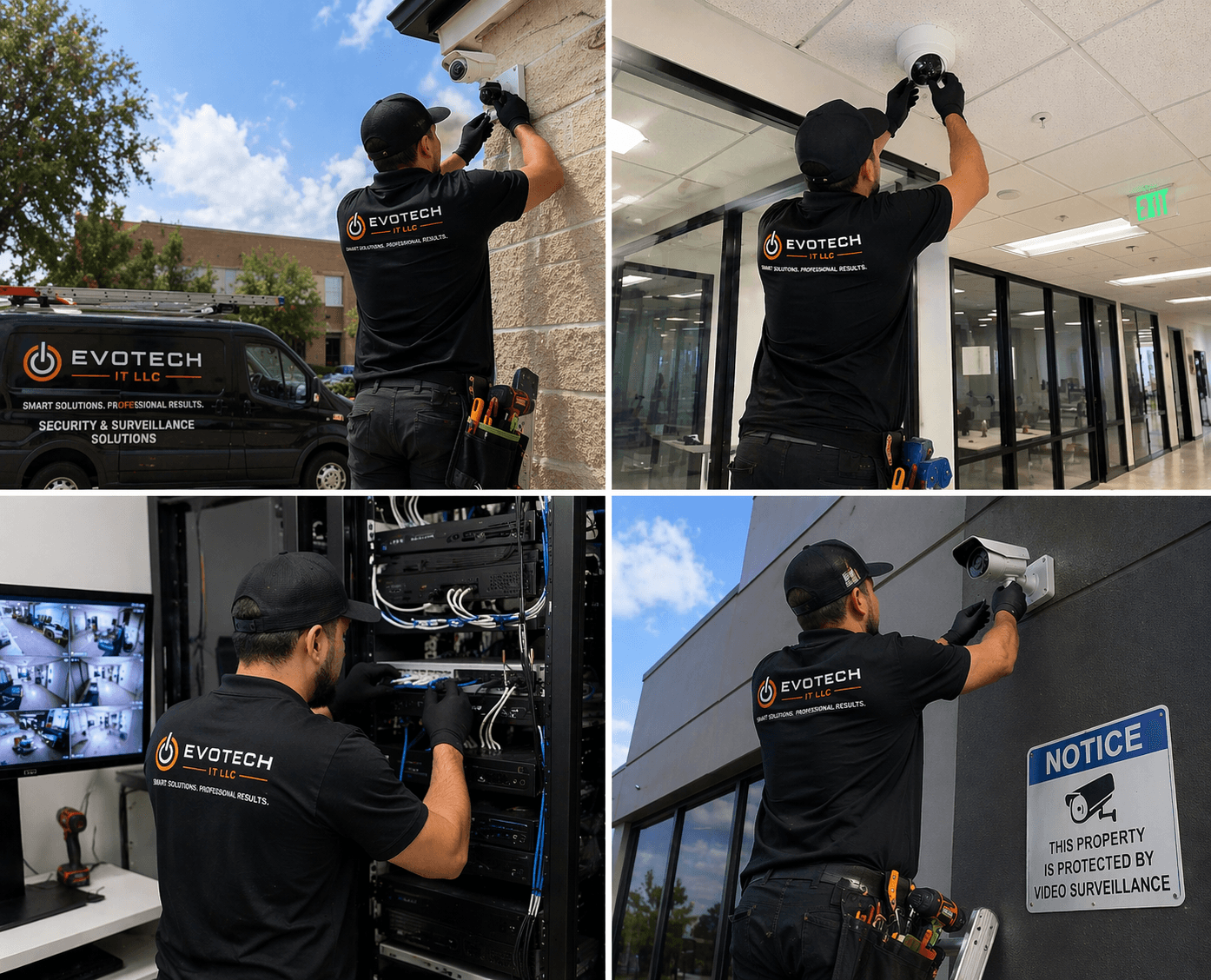
Intercom installation for multifamily properties, in Tomball
Intercom installation for multifamily properties in Tomball is a three-part question: what intercom installation involves, what multifamily properties need from it, and what Tomball changes about the install. A historic small-town core with masonry buildings and limited pathway.
Where an intercom differs meaningfully from a doorbell is scale and integration. A doorbell serves one entry and one household. An intercom serves entries where multiple people or multiple tenants need to answer, where a gate is involved, or where release should be tied into an access-control system that logs the event.
Two audiences, one building
A multifamily property runs two distinct technology environments. Residents have their own connectivity inside their units, generally provided by whatever service they select. The property operates everything else: common-area wireless, controlled entry, intercom, package rooms, amenity spaces, cameras, and the office network.
The property-operated side is what needs design. It has to work for a resident population that turns over continuously, be administrable by on-site staff who also turn over, and survive being used by everyone in the building without a support desk.
- Resident in-unit service separate from property-operated systems
- Continuous resident turnover requiring rapid credential issue and revocation
- On-site staff administering systems without specialist training
- Common areas, amenity spaces, and package rooms all needing coverage
What drives the cost of intercom installation here
Station count and run distance dominate.
- Number of entry stations and answering points
- Cable and conduit runs, especially to gates
- Weather protection and mounting hardware
- Door or gate release hardware and any lock changes
- Access-control integration
- Surge protection on outdoor runs
Tomball: what the location changes
What separates a Tomball scope from the rest of the city is concrete and local. A historic small-town core with masonry buildings and limited pathway. Growing retail and medical buildouts with suspended-grid ceilings and tenant-improvement conditions. Larger properties and outbuildings toward the northern edge, bringing longer runs. That short list is what actually drives the design in this pocket, and it is why photographs or a brief site visit beat a floor plan — the plan follows the building's real constraints, not the neighborhood name on the map.
- A historic small-town core with masonry buildings and limited pathway
- Growing retail and medical buildouts with suspended-grid ceilings and tenant-improvement conditions
- Larger properties and outbuildings toward the northern edge, bringing longer runs
- Slab-foundation residential across established and newer subdivisions
- Gulf Coast humidity requiring rated exterior housings and sealed penetrations
Getting it done in Tomball
Intercom commissioning is mostly listening and looking, from both ends.
The property network carries cameras, door controllers, intercom, the leasing office, and common-area wireless. These belong on separate segments from each other — common-area guest wireless in particular should reach the internet and nothing else, since it is used by residents, visitors, and anyone within range of an amenity space.
Getting Tomball work done means planning around the site as it actually is. Slab-foundation residential across established and newer subdivisions. Gulf Coast humidity requiring rated exterior housings and sealed penetrations. Both matter as much as the design to how and when the work happens. The scope is drawn from the real property, the coverage is stated as a service area rather than an office, and unverifiable specifics about Tomball are kept off the page on purpose.
Frequently asked questions
Is intercom installation for multifamily properties different in Tomball?
The sector needs stay the same, but the install changes with the place. In Tomball, the conditions above — not the multifamily properties label — decide routes, mounting, and equipment placement, which is why this page pairs all three.
Can an intercom release the door as well as show who is there?
Yes, and that is usually the point. The release is wired to the door's lock hardware, and the choice of lock determines power-loss behaviour. Where the door is also part of an access-control system, the two should be coordinated so the release is logged and the systems do not conflict over the same hardware.