Conference-room AV for medical offices, in Richmond
Conference-room AV for medical offices in Richmond is a three-part question: what conference-room av involves, what medical offices need from it, and what Richmond changes about the install. High proportion of new residential and commercial construction, making rough-in timing the dominant scheduling factor.
The complaint that ends meetings early is almost always audio. Remote participants tolerate a mediocre picture indefinitely and abandon a call with poor sound within minutes. So microphone coverage — enough pickup for everyone in the room, positioned for the actual seating, in a room whose acoustics do not fight it — is the first design decision, ahead of the display.
Controlled areas and uninterruptible systems
A medical office has a clear division between public, staff, and controlled areas, and the technology follows that division. Waiting areas need guest connectivity that reaches nothing internal. Treatment rooms need reliable connectivity for clinical systems. Records areas and medication storage need controlled access with a usable audit trail.
The other defining characteristic is that some systems cannot simply be taken down for an afternoon. Practice management, imaging, and anything connected to patient scheduling has a real cost when interrupted, so cutover planning matters more here than in most commercial environments.
- Distinct public, staff, and controlled zones with different requirements
- Clinical systems that cannot tolerate unplanned interruption
- Records and medication areas requiring access control with audit records
- Patient scheduling constraining when work can happen in treatment areas
Where conference-room av goes wrong — and how it's avoided
Meeting rooms fail in ways that are obvious in hindsight.
- Buying a larger display before solving the audio
- Fitting one microphone to a room seating twelve
- Mounting the camera above the display so the room is viewed from above
- Ignoring a glass-walled room's acoustics
- Leaving joining complex enough that meetings start late
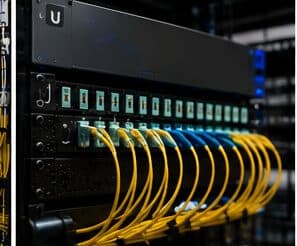
- Running cables across the table because connectivity was not designed in
Richmond: what the location changes
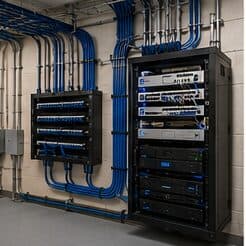
High proportion of new residential and commercial construction, making rough-in timing the dominant scheduling factor. In Richmond, that is where the plan begins, because it changes cable paths, device placement, and access-point counts before anything else does. Larger lots producing long runs to gates, outbuildings, and driveway camera positions that approach or exceed copper distance limits. Slab-on-grade construction with the rough-in window falling between electrical and drywall. None of these are generic checklist items — each moves the design in a direction a citywide assumption would miss, and the honest recommendation always depends on what this particular property allows.
- High proportion of new residential and commercial construction, making rough-in timing the dominant scheduling factor
- Larger lots producing long runs to gates, outbuildings, and driveway camera positions that approach or exceed copper distance limits
- Slab-on-grade construction with the rough-in window falling between electrical and drywall
- Conduit and sleeve decisions made during rough-in determining what is possible for the following decade
- Detached structures common enough that between-building links are a routine design question rather than an exception
Getting it done in Richmond
Rooms are commissioned from the far end, because that is where the problems are audible.
Clinical systems belong on their own segment, separate from staff general-purpose devices, separate again from patient guest access, and separate from building systems such as cameras and door controllers. This limits what any single compromised device can reach and makes the network far easier to reason about when something misbehaves.
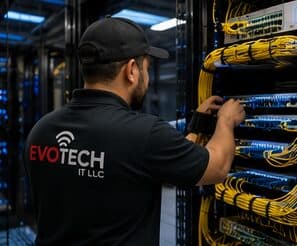
On site, the schedule and working method turn on conditions like these. Conduit and sleeve decisions made during rough-in determining what is possible for the following decade. Detached structures common enough that between-building links are a routine design question rather than an exception. Both shape how and when a crew can actually operate, which is why EVOTECH scopes each Richmond job from the property itself rather than assuming one approach fits every address. Coverage is stated as a service area, never an office claim, and anything about Richmond that cannot be verified is left out instead of invented.
Popular services nearby
Frequently searched near this area — the pages people look for most.
Frequently asked questions
Is conference-room av for medical offices different in Richmond?
The sector needs stay the same, but the install changes with the place. In Richmond, the conditions above — not the medical offices label — decide routes, mounting, and equipment placement, which is why this page pairs all three.
Why do remote participants say the room sounds echoey?
Reflections. Glass, hard tables, and bare walls send sound back into the microphone alongside the speech, and the far end hears the room. Adding some soft surface — panels, carpet, fabric furnishings — usually improves intelligibility more than changing microphones, because it addresses the cause rather than compensating for it.