Network troubleshooting for medical offices, in Pearland
Network troubleshooting for medical offices in Pearland is a three-part question: what network troubleshooting involves, what medical offices need from it, and what Pearland changes about the install. Newer residential subdivisions with wide floor plans and builder-installed structured cable of variable quality.
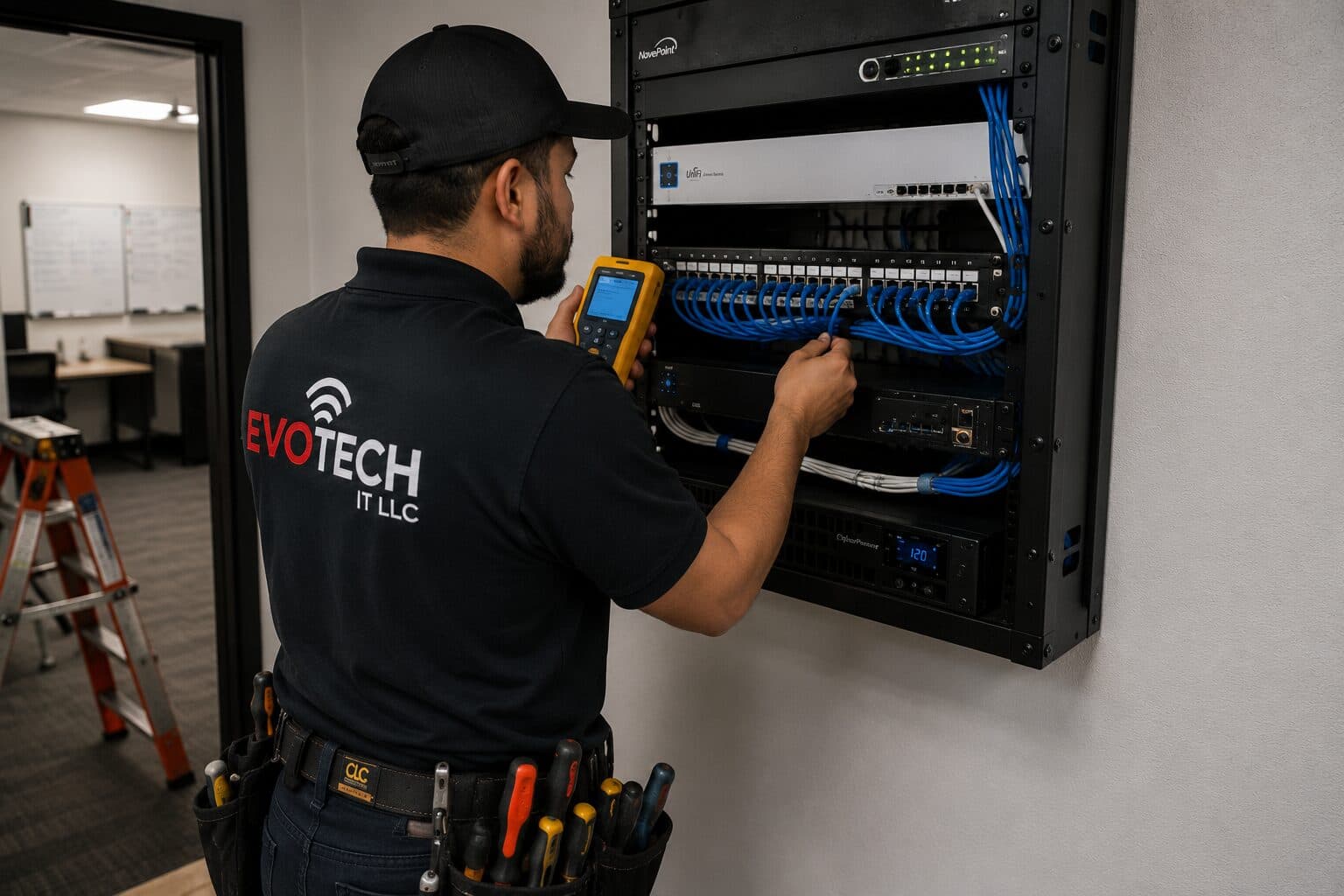
Effective troubleshooting is a process of elimination against a specific, reproducible symptom. 'The internet is slow' is not yet a diagnosis — slow for whom, on which devices, wired or wireless, at what times, to which destinations. Those answers usually point at a layer before any equipment is touched.
Segmentation and clinical connectivity
Clinical systems belong on their own segment, separate from staff general-purpose devices, separate again from patient guest access, and separate from building systems such as cameras and door controllers. This limits what any single compromised device can reach and makes the network far easier to reason about when something misbehaves.
For clinical equipment that moves large files — imaging in particular — wired connections are worth insisting on where the equipment supports them. Wireless is fine for tablets and general staff use, but a modality pushing studies across a congested wireless cell produces exactly the kind of intermittent slowness that is difficult to diagnose and disruptive to a clinic day.
Guest access in a waiting area should be isolated from everything internal and rate-limited. It is a courtesy, and it should be architecturally incapable of touching anything clinical.
- Clinical, staff, guest, and building-system traffic on separate segments
- Wired connections for imaging and other high-throughput clinical equipment
- Waiting-area guest access isolated and capped
- Access points placed for coverage in treatment rooms without relying on corridor spill
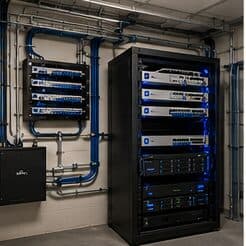
- Equipment room secured, since it holds the systems everything depends on
Where network troubleshooting goes wrong — and how it's avoided
Troubleshooting goes wrong mainly by skipping the narrowing step.
- Replacing the router first because it is the most visible device
- Changing several things at once, so the actual cause stays unknown
- Accepting 'the internet is slow' without narrowing scope and timing
- Ignoring switch error counters that already identify the faulty port
- Blaming wireless for a saturated circuit or an oversubscribed uplink
- Fixing the symptom without documenting the cause, so it recurs unrecognised
Pearland: what the location changes
Newer residential subdivisions with wide floor plans and builder-installed structured cable of variable quality. In Pearland, that is where the plan begins, because it changes cable paths, device placement, and access-point counts before anything else does. Expanding medical office space with controlled-area access requirements and clinical scheduling constraints. Food-service commercial space with kitchen environments and narrow after-hours working windows. None of these are generic checklist items — each moves the design in a direction a citywide assumption would miss, and the honest recommendation always depends on what this particular property allows.
- Newer residential subdivisions with wide floor plans and builder-installed structured cable of variable quality
- Expanding medical office space with controlled-area access requirements and clinical scheduling constraints
- Food-service commercial space with kitchen environments and narrow after-hours working windows
- Slab-on-grade residential foundations making attic routing the standard retrofit path
- Newer commercial construction generally offering suspended-grid ceilings and usable pathway
Getting it done in Pearland
The test that matters is the one that reproduces the original complaint, run again after the change.
Work in treatment areas is scheduled around patient sessions, which typically means early mornings, evenings, or non-clinical days. Corridors and public areas are more flexible but still need containment and clean working practice.
On site, the schedule and working method turn on conditions like these. Slab-on-grade residential foundations making attic routing the standard retrofit path. Newer commercial construction generally offering suspended-grid ceilings and usable pathway. Both shape how and when a crew can actually operate, which is why EVOTECH scopes each Pearland job from the property itself rather than assuming one approach fits every address. Coverage is stated as a service area, never an office claim, and anything about Pearland that cannot be verified is left out instead of invented.
Frequently asked questions
Is network troubleshooting for medical offices different in Pearland?
The sector needs stay the same, but the install changes with the place. In Pearland, the conditions above — not the medical offices label — decide routes, mounting, and equipment placement, which is why this page pairs all three.
Why is the network slow only in the afternoon?
Time-correlated symptoms usually mean capacity rather than a fault. Something is consuming the shared resource at that time — backups, updates, more people on site, or a scheduled process. Measuring at the gateway during the slow period, and comparing it to a quiet period, distinguishes a saturated circuit from an internal bottleneck quickly.