Data-jack installation for medical offices, in Pearland
Data-jack installation for medical offices in Pearland is a three-part question: what data-jack installation involves, what medical offices need from it, and what Pearland changes about the install. Newer residential subdivisions with wide floor plans and builder-installed structured cable of variable quality.
A data jack is the terminated outlet at the end of a horizontal run. It looks trivial, and it is the single most common place for a link to lose performance, because it is where the pairs get untwisted, where a punch-down can be shallow, and where the wrong component category quietly caps the channel.
Segmentation and clinical connectivity
Clinical systems belong on their own segment, separate from staff general-purpose devices, separate again from patient guest access, and separate from building systems such as cameras and door controllers. This limits what any single compromised device can reach and makes the network far easier to reason about when something misbehaves.
For clinical equipment that moves large files — imaging in particular — wired connections are worth insisting on where the equipment supports them. Wireless is fine for tablets and general staff use, but a modality pushing studies across a congested wireless cell produces exactly the kind of intermittent slowness that is difficult to diagnose and disruptive to a clinic day.
Guest access in a waiting area should be isolated from everything internal and rate-limited. It is a courtesy, and it should be architecturally incapable of touching anything clinical.
- Clinical, staff, guest, and building-system traffic on separate segments
- Wired connections for imaging and other high-throughput clinical equipment
- Waiting-area guest access isolated and capped
- Access points placed for coverage in treatment rooms without relying on corridor spill
- Equipment room secured, since it holds the systems everything depends on
Where data-jack installation goes wrong — and how it's avoided
The mistakes here are small motions with long consequences.
- Stripping back far more jacket than needed and untwisting pairs generously
- Mixing T568A and T568B between the two ends of a run
- Cutting cable to exact length with no service loop
- Mounting a plate directly to drywall with no bracket
- Reusing a jack of unknown category because it was already on the shelf
Pearland: what the location changes
In Pearland, the plan is built outward from the conditions that are actually here. Newer residential subdivisions with wide floor plans and builder-installed structured cable of variable quality. Expanding medical office space with controlled-area access requirements and clinical scheduling constraints. Food-service commercial space with kitchen environments and narrow after-hours working windows. Each one changes where cable can run, where equipment can sit, and how coverage is shaped, which is why a walkthrough settles a Pearland scope faster than any generic estimate.
- Newer residential subdivisions with wide floor plans and builder-installed structured cable of variable quality
- Expanding medical office space with controlled-area access requirements and clinical scheduling constraints
- Food-service commercial space with kitchen environments and narrow after-hours working windows
- Slab-on-grade residential foundations making attic routing the standard retrofit path
- Newer commercial construction generally offering suspended-grid ceilings and usable pathway
Getting it done in Pearland
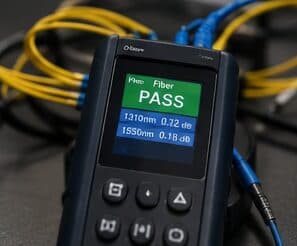
A jack is only finished when the link tests clean. Wire map catches scheme errors and split pairs; a full certification confirms the termination preserved enough margin for the rated category.
Work in treatment areas is scheduled around patient sessions, which typically means early mornings, evenings, or non-clinical days. Corridors and public areas are more flexible but still need containment and clean working practice.
Getting Pearland work done means planning around the site as it actually is. Slab-on-grade residential foundations making attic routing the standard retrofit path. Newer commercial construction generally offering suspended-grid ceilings and usable pathway. Both matter as much as the design to how and when the work happens. The scope is drawn from the real property, the coverage is stated as a service area rather than an office, and unverifiable specifics about Pearland are kept off the page on purpose.
Frequently asked questions
Is data-jack installation for medical offices different in Pearland?
The sector needs stay the same, but the install changes with the place. In Pearland, the conditions above — not the medical offices label — decide routes, mounting, and equipment placement, which is why this page pairs all three.
Why did a link start failing after a jack was replaced?
Usually untwist or category mismatch. If more pair was untwisted at the punch-down than the standard allows, crosstalk performance drops, and a link that previously passed with small margin can fail. If the replacement jack is a lower category than the cable, the whole channel is capped at the lower rating. Both show up immediately in a certification test.