Data-jack installation for medical offices, in Friendswood
Data-jack installation for medical offices in Friendswood is a three-part question: what data-jack installation involves, what medical offices need from it, and what Friendswood changes about the install. Established suburban homes on larger lots with mature landscaping.
Most data-jack work is one of three things: adding new outlets to existing runs that were left coiled in a wall, replacing damaged or worn jacks, or re-terminating outlets that fail a test. The third is the most common on inherited buildings.
Separation, access, and continuity
Three priorities dominate. Separate the networks so patient-facing guest access cannot reach clinical systems. Control access to the areas that require it, with records that show who entered and when. Plan any cutover so clinical operations are not interrupted mid-session.
Everything else — coverage quality, cable tidiness, camera placement — matters, but these three are the ones with consequences beyond inconvenience.
- Guest, staff, clinical, and building-system networks kept separate
- Access control on records, medication, and treatment areas as appropriate
- Cutovers scheduled around clinical sessions, not around installer convenience
- Wired connections for imaging and other equipment that depends on throughput
- Equipment position secured against casual access
What drives the cost of data-jack installation here
Jack work prices mostly on count and access.
- Number of outlets and ports per outlet
- Whether existing cable is present and usable
- Bracket or box installation in finished walls
- Component grade and whether shielding is required
- Testing and documentation requested
Friendswood: what the location changes
What separates a Friendswood scope from the rest of the city is concrete and local. Established suburban homes on larger lots with mature landscaping. Wider and multi-storey plans needing multiple wired access points. Slab-foundation construction with attic-to-interior-wall retrofit routing. That short list is what actually drives the design in this pocket, and it is why photographs or a brief site visit beat a floor plan — the plan follows the building's real constraints, not the neighborhood name on the map.
- Established suburban homes on larger lots with mature landscaping
- Wider and multi-storey plans needing multiple wired access points
- Slab-foundation construction with attic-to-interior-wall retrofit routing
- Detached structures and outdoor areas needing dedicated coverage
- Mature trees affecting outdoor wireless and camera framing
Getting it done in Friendswood
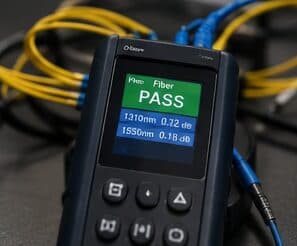
A jack is only finished when the link tests clean. Wire map catches scheme errors and split pairs; a full certification confirms the termination preserved enough margin for the rated category.
Camera coverage in medical settings is deliberately limited in scope. Entrances, corridors leading to controlled areas, medication storage approaches, parking areas, and after-hours coverage of the perimeter are the usual placements. Treatment areas are not camera locations, and this is worth stating plainly during design so the boundary is explicit.
Getting Friendswood work done means planning around the site as it actually is. Detached structures and outdoor areas needing dedicated coverage. Mature trees affecting outdoor wireless and camera framing. Both matter as much as the design to how and when the work happens. The scope is drawn from the real property, the coverage is stated as a service area rather than an office, and unverifiable specifics about Friendswood are kept off the page on purpose.
Frequently asked questions
Is data-jack installation for medical offices different in Friendswood?
The sector needs stay the same, but the install changes with the place. In Friendswood, the conditions above — not the medical offices label — decide routes, mounting, and equipment placement, which is why this page pairs all three.
Why did a link start failing after a jack was replaced?
Usually untwist or category mismatch. If more pair was untwisted at the punch-down than the standard allows, crosstalk performance drops, and a link that previously passed with small margin can fail. If the replacement jack is a lower category than the cable, the whole channel is capped at the lower rating. Both show up immediately in a certification test.