Gate & license-plate cameras for home offices, in Rosenberg
Gate & license-plate cameras for home offices in Rosenberg is a three-part question: what gate & license-plate cameras involves, what home offices need from it, and what Rosenberg changes about the install. Warehousing and light-industrial buildings along the highway corridor, with metal construction that reflects wireless signal and needs proper cable support.
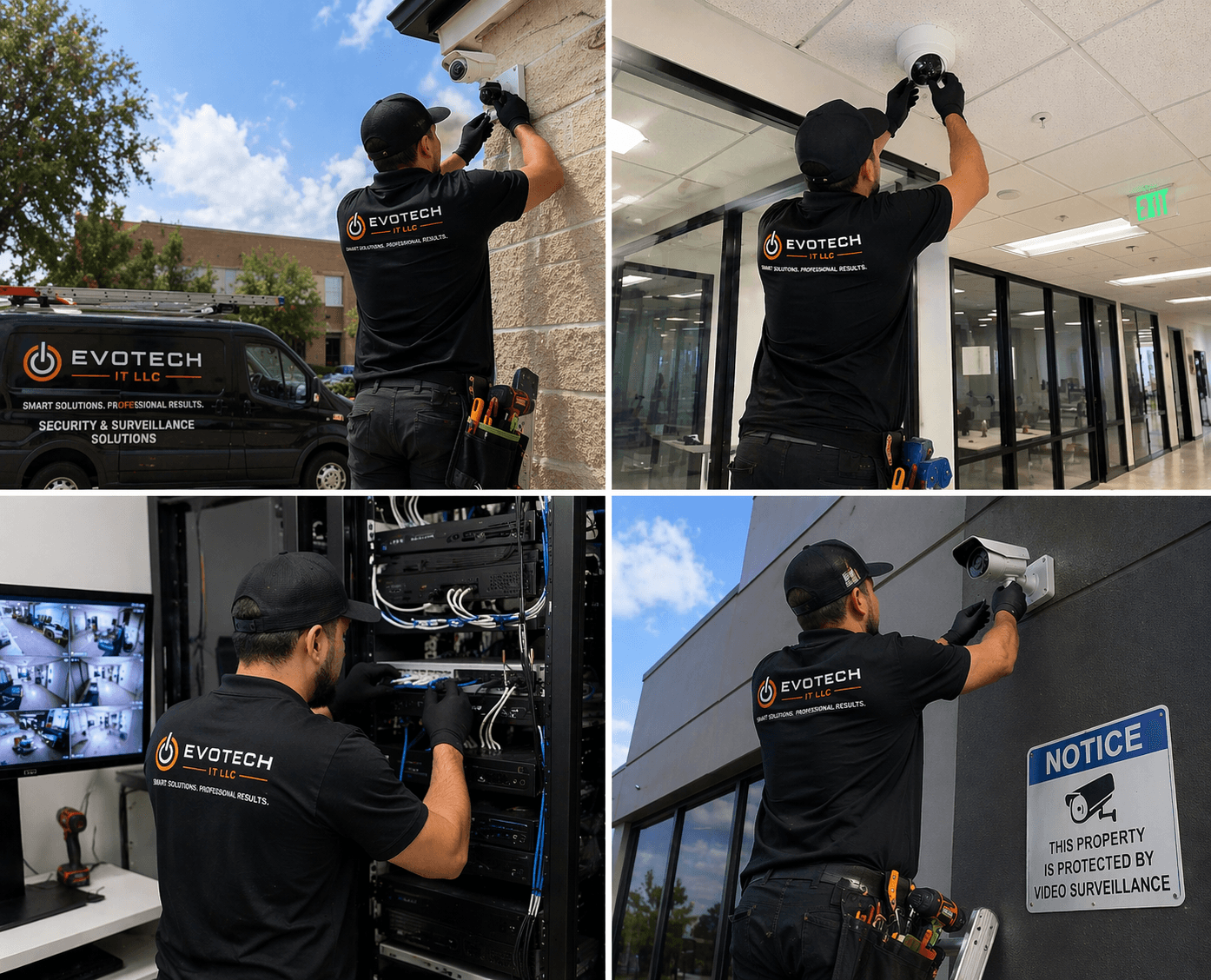
The other half of the job is getting to the gate. Entry points are often far from the building, so power and a reliable connection to a gate or driveway position have to be planned — frequently a fiber or intermediate-powered run rather than a stretched copper one — along with mounting that gives the right angle and distance for the plate.
The house is competing with the work
A home office shares its connection with everything else in the house, and household demand is highest during exactly the hours that matter least to the household and most to the person working. Streaming, gaming, backups, and connected devices all contend for the same circuit and, if the office is on wireless, for the same airtime.
The second factor is position. Home offices frequently end up in a spare bedroom at the far corner of the house, which is often the worst wireless position in the building — furthest from the router, through the most walls.
- Household traffic peaking during working hours
- Office often located at the far edge of wireless coverage
- Video calls being the least tolerant workload in the house
- Work equipment sharing a flat network with household devices
Where gate & license-plate cameras goes wrong — and how it's avoided
Entry camera systems fail when one camera is asked to do two jobs.
- Expecting one camera to both show the scene and read plates
- A slow shutter smearing plates on moving vehicles
- Uncontrolled infrared blowing out the reflective plate
- Field of view too wide to resolve a plate
- Stretching copper to a gate beyond its reach
- Skipping the overview camera and losing context
Rosenberg: what the location changes
What separates a Rosenberg scope from the rest of the city is concrete and local. Warehousing and light-industrial buildings along the highway corridor, with metal construction that reflects wireless signal and needs proper cable support. An older rail-town commercial core with masonry buildings and limited existing pathway. Newer suburban subdivisions on slab foundations following the regional attic-routing pattern. That short list is what actually drives the design in this pocket, and it is why photographs or a brief site visit beat a floor plan — the plan follows the building's real constraints, not the neighborhood name on the map.
- Warehousing and light-industrial buildings along the highway corridor, with metal construction that reflects wireless signal and needs proper cable support
- An older rail-town commercial core with masonry buildings and limited existing pathway
- Newer suburban subdivisions on slab foundations following the regional attic-routing pattern
- Dust exposure in industrial and distribution environments, affecting rack and equipment placement
- Gulf Coast humidity and driven-rain events requiring rated exterior housings and sealed penetrations
Getting it done in Rosenberg
Entry cameras are verified against their objectives, day and night.
A wired connection to the desk eliminates the variables that cause most home-office call problems: signal strength, interference from neighbouring networks, and contention with household devices for airtime. In slab-foundation construction the run typically goes up into the attic and down an interior wall, which is why the destination wall matters more than the distance.
Getting Rosenberg work done means planning around the site as it actually is. Dust exposure in industrial and distribution environments, affecting rack and equipment placement. Gulf Coast humidity and driven-rain events requiring rated exterior housings and sealed penetrations. Both matter as much as the design to how and when the work happens. The scope is drawn from the real property, the coverage is stated as a service area rather than an office, and unverifiable specifics about Rosenberg are kept off the page on purpose.
Frequently asked questions
Is gate & license-plate cameras for home offices different in Rosenberg?
The sector needs stay the same, but the install changes with the place. In Rosenberg, the conditions above — not the home offices label — decide routes, mounting, and equipment placement, which is why this page pairs all three.
Can one camera watch the gate and read plates?
Rarely well. Reading a plate needs a fast shutter, a narrow view, a shallow angle, and controlled infrared — settings that make the plate legible also make the wider scene dark. A general overview camera cannot resolve a plate on a moving vehicle. The reliable approach is two cameras: one for the scene, one dedicated to plates.