In-wall cable concealment for home offices, in League City
In-wall cable concealment for home offices in League City is a three-part question: what in-wall cable concealment involves, what home offices need from it, and what League City changes about the install. Coastal proximity raising the weight on exterior sealing, rated housings, and surge protection.
Concealing the cables behind a wall-mounted TV or AV setup is what turns it from a device with wires hanging down into something that looks built-in. The signal cables — HDMI, network, speaker — can be routed inside the wall to a recessed box behind the display, but power is different: a standard power cord must never be run inside a wall. Power is handled with a recessed outlet behind the display or an in-wall rated power solution, which keeps the installation safe and to code.
Wire the desk, then fix the coverage
The single highest-value change for a home office is a wired connection to the desk. It removes wireless variability entirely for the machine that matters, and it is usually one cable run.
After that: an access point positioned to serve the office area properly for the devices that stay wireless, and enough separation that work equipment is not sharing a flat network with everything else in the house.
- One wired run to the primary work position
- An access point positioned for the office end of the house
- Work equipment separated from household and guest devices
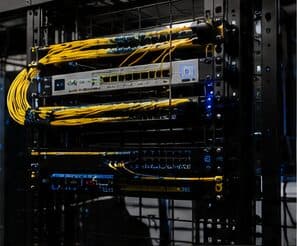
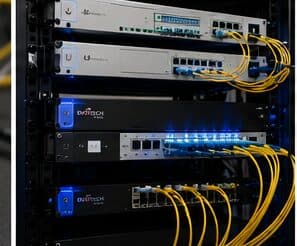
- Equipment position with power and ventilation, not a sealed cabinet
- Wired connections for stationary devices elsewhere that compete for airtime
Where in-wall cable concealment goes wrong — and how it's avoided
Concealment goes wrong on power and on the wall's contents.
- Running a standard power cord inside the wall
- Forcing a fish tape past fire blocking and damaging the finish or wall
- Not planning patch-and-paint before cutting access
- Leaving no service loop for future work
- Assuming a clean path exists without checking the construction
- Compromising the wall's fire integrity to hide a cable
League City: what the location changes
In League City, the plan is built outward from the conditions that are actually here. Coastal proximity raising the weight on exterior sealing, rated housings, and surge protection. Storm-season resilience planning, favouring UPS and failover where uptime matters. Newer suburban slab-foundation homes with multi-room coverage needs. Each one changes where cable can run, where equipment can sit, and how coverage is shaped, which is why a walkthrough settles a League City scope faster than any generic estimate.
- Coastal proximity raising the weight on exterior sealing, rated housings, and surge protection
- Storm-season resilience planning, favouring UPS and failover where uptime matters
- Newer suburban slab-foundation homes with multi-room coverage needs
- Growing medical and retail commercial space
- Gulf Coast humidity and driven-rain events as a routine design factor
Getting it done in League City
Concealment is judged by a clean result and a safe, code-compliant power path.
Home office projects frequently expand slightly, because the same attic access and the same equipment position serve other things. A doorbell run, a camera at the driveway approach, a wired connection to a television, and an access point for the upstairs are all much cheaper done in the same visit than separately.
Getting League City work done means planning around the site as it actually is. Growing medical and retail commercial space. Gulf Coast humidity and driven-rain events as a routine design factor. Both matter as much as the design to how and when the work happens. The scope is drawn from the real property, the coverage is stated as a service area rather than an office, and unverifiable specifics about League City are kept off the page on purpose.
Frequently asked questions
Is in-wall cable concealment for home offices different in League City?
The sector needs stay the same, but the install changes with the place. In League City, the conditions above — not the home offices label — decide routes, mounting, and equipment placement, which is why this page pairs all three.
Can the power cord be hidden in the wall too?
Not the standard cord — running one inside a wall is against code and a genuine hazard. Power is concealed correctly with a recessed outlet behind the display or a rated in-wall power-relocation kit, which puts the outlet where the TV needs it without burying a cord. The signal cables can go in the wall; power is handled the right way.