Ethernet installation for home offices, in Katy
Ethernet installation for home offices in Katy is a three-part question: what ethernet installation involves, what home offices need from it, and what Katy changes about the install. Housing stock skewed toward newer, larger single-family construction with wide floor plans that exceed single-router coverage.
The wired connection itself is worth the effort for specific reasons: desktops and consoles that never have to compete for airtime, ceiling access points fed by cable rather than repeating a wireless signal, cameras and doorbells powered over the same run, and a television that streams without depending on Wi-Fi conditions.
Wire the desk, then fix the coverage
The single highest-value change for a home office is a wired connection to the desk. It removes wireless variability entirely for the machine that matters, and it is usually one cable run.
After that: an access point positioned to serve the office area properly for the devices that stay wireless, and enough separation that work equipment is not sharing a flat network with everything else in the house.
- One wired run to the primary work position
- An access point positioned for the office end of the house
- Work equipment separated from household and guest devices
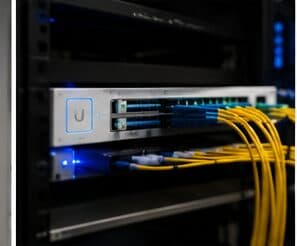
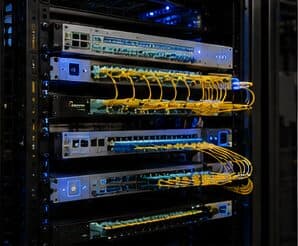
- Equipment position with power and ventilation, not a sealed cabinet
- Wired connections for stationary devices elsewhere that compete for airtime
Where ethernet installation goes wrong — and how it's avoided
Retrofit mistakes are usually decided at the planning stage, not the pull.
- Choosing an equipment position with no power or no ventilation
- Running a single cable to a location that will obviously need two
- Terminating in a wall plate with no slack, leaving no room to re-terminate
- Routing cable across recessed lighting fixtures in the attic
- Skipping labeling because the run count is small — the same tracing cost applies later
Katy: what the location changes
The starting point for any Katy job is one local fact. Housing stock skewed toward newer, larger single-family construction with wide floor plans that exceed single-router coverage. That single condition shapes where cable can run, where equipment can sit, and how coverage is laid out — more than any spec sheet does. Two more conditions weigh on it. Structured media panels commonly present but frequently located in a garage or perimeter utility space rather than centrally. Builder-installed cable often terminated to a panel but not extended to ceiling positions suitable for access points. Together they make the route specific to this pocket, which is why a short walkthrough or a few clear photos settle the scope faster than a floor plan can.
- Housing stock skewed toward newer, larger single-family construction with wide floor plans that exceed single-router coverage
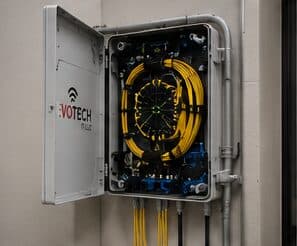
- Structured media panels commonly present but frequently located in a garage or perimeter utility space rather than centrally
- Builder-installed cable often terminated to a panel but not extended to ceiling positions suitable for access points
- Slab foundations with accessible attics, making attic-to-interior-wall routing the standard retrofit path
- Suburban commercial development in retail pads and medical suites with suspended-grid ceilings and comparatively straightforward pathway
Getting it done in Katy
Every run gets a wire-map and length check at minimum, which catches the errors that actually happen in retrofit work: a reversed pair at a hastily terminated jack, a split pair, or a run longer than it looked.
Home office projects frequently expand slightly, because the same attic access and the same equipment position serve other things. A doorbell run, a camera at the driveway approach, a wired connection to a television, and an access point for the upstairs are all much cheaper done in the same visit than separately.
Getting Katy work done means planning around the site as it actually is. Slab foundations with accessible attics, making attic-to-interior-wall routing the standard retrofit path. Suburban commercial development in retail pads and medical suites with suspended-grid ceilings and comparatively straightforward pathway. Both matter as much as the design to how and when the work happens. The scope is drawn from the real property, the coverage is stated as a service area rather than an office, and unverifiable specifics about Katy are kept off the page on purpose.
Frequently asked questions
Is ethernet installation for home offices different in Katy?
The sector needs stay the same, but the install changes with the place. In Katy, the conditions above — not the home offices label — decide routes, mounting, and equipment placement, which is why this page pairs all three.
Can Ethernet be added without cutting into walls?
Often yes, when the destination is an interior wall reachable from an attic or crawl space and there is no blocking in the cavity. When there is no viable cavity path, the choices are a small access cut that then gets patched, a surface raceway, or moving the device to a wall that can be reached. Which one makes sense is worth deciding before work starts rather than mid-pull.