TV mounting for home offices, in Brookshire
TV mounting for home offices in Brookshire is a three-part question: what tv mounting involves, what home offices need from it, and what Brookshire changes about the install. Large warehousing and distribution buildings along the I-10 corridor.
The mount has to transfer the display's weight into something structural. In wood-framed walls that means lag bolts into studs. In masonry it means appropriate anchors set into solid material rather than mortar joints. In metal-stud walls — common in commercial buildings — standard wood-stud technique does not apply, and larger displays generally need backing or a purpose-made metal-stud anchoring system.
The house is competing with the work
A home office shares its connection with everything else in the house, and household demand is highest during exactly the hours that matter least to the household and most to the person working. Streaming, gaming, backups, and connected devices all contend for the same circuit and, if the office is on wireless, for the same airtime.
The second factor is position. Home offices frequently end up in a spare bedroom at the far corner of the house, which is often the worst wireless position in the building — furthest from the router, through the most walls.
- Household traffic peaking during working hours
- Office often located at the far edge of wireless coverage
- Video calls being the least tolerant workload in the house
- Work equipment sharing a flat network with household devices
Where tv mounting goes wrong — and how it's avoided
Mounting mistakes range from cosmetic to genuinely unsafe.
- Anchoring an articulating mount into drywall or a single stud
- Treating metal studs like wood framing
- Setting masonry anchors into mortar joints
- Running a standard power cord inside the wall
- Mounting before running signal cable, leaving no route afterwards
- Choosing height for the wall's convenience rather than the seating
- Using indoor hardware on a covered patio and watching it corrode
Brookshire: what the location changes
In Brookshire, the plan is built outward from the conditions that are actually here. Large warehousing and distribution buildings along the I-10 corridor. Metal construction that reflects wireless signal and complicates coverage. Building footprints frequently exceeding the 100 m copper channel limit. Each one changes where cable can run, where equipment can sit, and how coverage is shaped, which is why a walkthrough settles a Brookshire scope faster than any generic estimate.
- Large warehousing and distribution buildings along the I-10 corridor
- Metal construction that reflects wireless signal and complicates coverage
- Building footprints frequently exceeding the 100 m copper channel limit
- Unconditioned operational areas affecting equipment placement
- Long cable runs and yard/dock areas needing distinct approaches
Getting it done in Brookshire
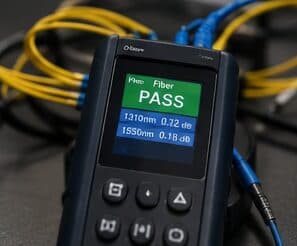
Verification is mechanical and visual, done before the installation is called finished.
A wired connection to the desk eliminates the variables that cause most home-office call problems: signal strength, interference from neighbouring networks, and contention with household devices for airtime. In slab-foundation construction the run typically goes up into the attic and down an interior wall, which is why the destination wall matters more than the distance.
On site, the schedule and working method turn on conditions like these. Unconditioned operational areas affecting equipment placement. Long cable runs and yard/dock areas needing distinct approaches. Both shape how and when a crew can actually operate, which is why EVOTECH scopes each Brookshire job from the property itself rather than assuming one approach fits every address. Coverage is stated as a service area, never an office claim, and anything about Brookshire that cannot be verified is left out instead of invented.
Popular services nearby
Frequently searched near this area — the pages people look for most.
Frequently asked questions
Is tv mounting for home offices different in Brookshire?
The sector needs stay the same, but the install changes with the place. In Brookshire, the conditions above — not the home offices label — decide routes, mounting, and equipment placement, which is why this page pairs all three.
Can a TV be mounted on a metal-stud wall?
Yes, but not with wood-stud technique. Metal studs are thin and will not hold lag bolts under sustained load. The reliable approaches are plywood backing behind the drywall — easy during construction, more involved afterwards — or an anchoring system made for metal studs and rated for the display weight. This matters most with articulating arms, which multiply the load considerably.