Gate & license-plate cameras for churches, in Webster
Gate & license-plate cameras for churches in Webster is a three-part question: what gate & license-plate cameras involves, what churches need from it, and what Webster changes about the install. A concentration of medical suites with controlled areas and clinical scheduling.
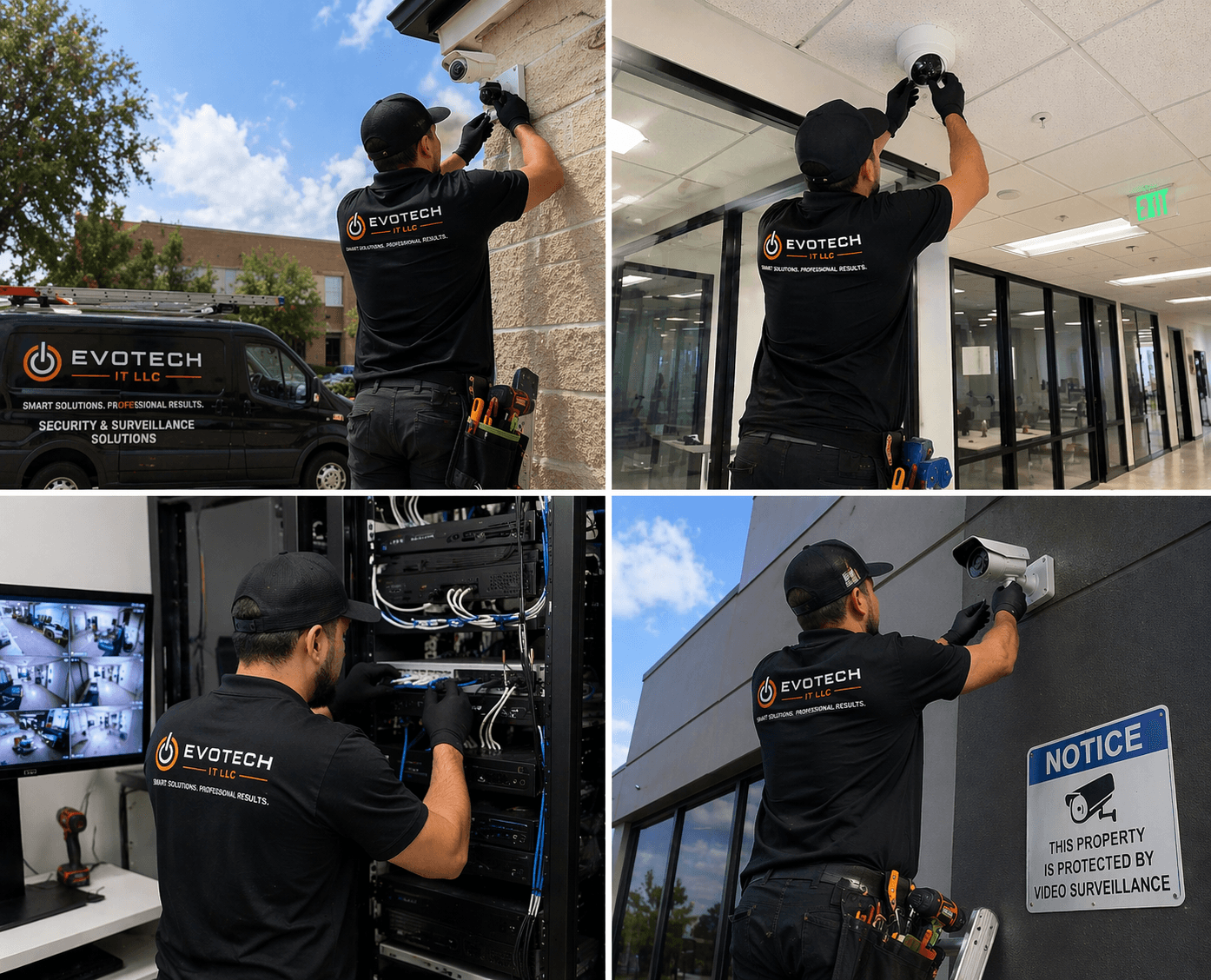
Watching a gate or driveway and reading the license plates that come through it are two different objectives, and they usually need two different cameras. An overview camera shows the scene — who arrived, what happened — with a wide, well-lit view. A license-plate camera is tuned narrowly for one thing: a fast shutter to freeze a moving plate, a tight field of view and angle aimed at where plates appear, and controlled infrared so the reflective plate is legible at night rather than blown out.
Old buildings, tight schedules, and additions
Church buildings frequently comprise an original structure plus additions from several eras, each with different construction and no consistent pathway. Masonry walls, hard-lid ceilings, and limited access are common, and pathway discovery is often a genuine part of the project rather than a formality.
Scheduling is constrained by use rather than by business hours. Sanctuaries are in use on weekends and often several weekday evenings, and classrooms follow their own schedule. Work windows tend to be weekday daytimes, which is the opposite of most commercial installations.
- Additions from different eras with inconsistent construction
- Masonry and hard-lid areas limiting pathway options
- Weekday daytime work windows rather than evenings
- Volunteer availability affecting handover and training
- Budget staging across phases more common than a single project
Where gate & license-plate cameras goes wrong — and how it's avoided
Entry camera systems fail when one camera is asked to do two jobs.
- Expecting one camera to both show the scene and read plates
- A slow shutter smearing plates on moving vehicles
- Uncontrolled infrared blowing out the reflective plate
- Field of view too wide to resolve a plate
- Stretching copper to a gate beyond its reach
- Skipping the overview camera and losing context
Webster: what the location changes
In Webster, the plan is built outward from the conditions that are actually here. A concentration of medical suites with controlled areas and clinical scheduling. Retail and hospitality venues requiring guest and payment segmentation. Multi-tenant buildings with base-building rules on riser and core access. Each one changes where cable can run, where equipment can sit, and how coverage is shaped, which is why a walkthrough settles a Webster scope faster than any generic estimate.
- A concentration of medical suites with controlled areas and clinical scheduling
- Retail and hospitality venues requiring guest and payment segmentation
- Multi-tenant buildings with base-building rules on riser and core access
- Tenant-improvement buildouts with suspended-grid ceilings and usable pathway
- Slab-foundation residential secondary to the commercial base
Getting it done in Webster
Entry cameras are verified against their objectives, day and night.
The first design priority is that the routine operation is genuinely simple: a small number of clearly labeled controls that start the normal service configuration. Everything complex sits behind that, available to whoever maintains the system but not required for weekly use.
Getting Webster work done means planning around the site as it actually is. Tenant-improvement buildouts with suspended-grid ceilings and usable pathway. Slab-foundation residential secondary to the commercial base. Both matter as much as the design to how and when the work happens. The scope is drawn from the real property, the coverage is stated as a service area rather than an office, and unverifiable specifics about Webster are kept off the page on purpose.
Popular services nearby
Frequently searched near this area — the pages people look for most.
Frequently asked questions
Is gate & license-plate cameras for churches different in Webster?
The sector needs stay the same, but the install changes with the place. In Webster, the conditions above — not the churches label — decide routes, mounting, and equipment placement, which is why this page pairs all three.
Can one camera watch the gate and read plates?
Rarely well. Reading a plate needs a fast shutter, a narrow view, a shallow angle, and controlled infrared — settings that make the plate legible also make the wider scene dark. A general overview camera cannot resolve a plate on a moving vehicle. The reliable approach is two cameras: one for the scene, one dedicated to plates.