Wi-Fi installation for churches, in Sugar Land
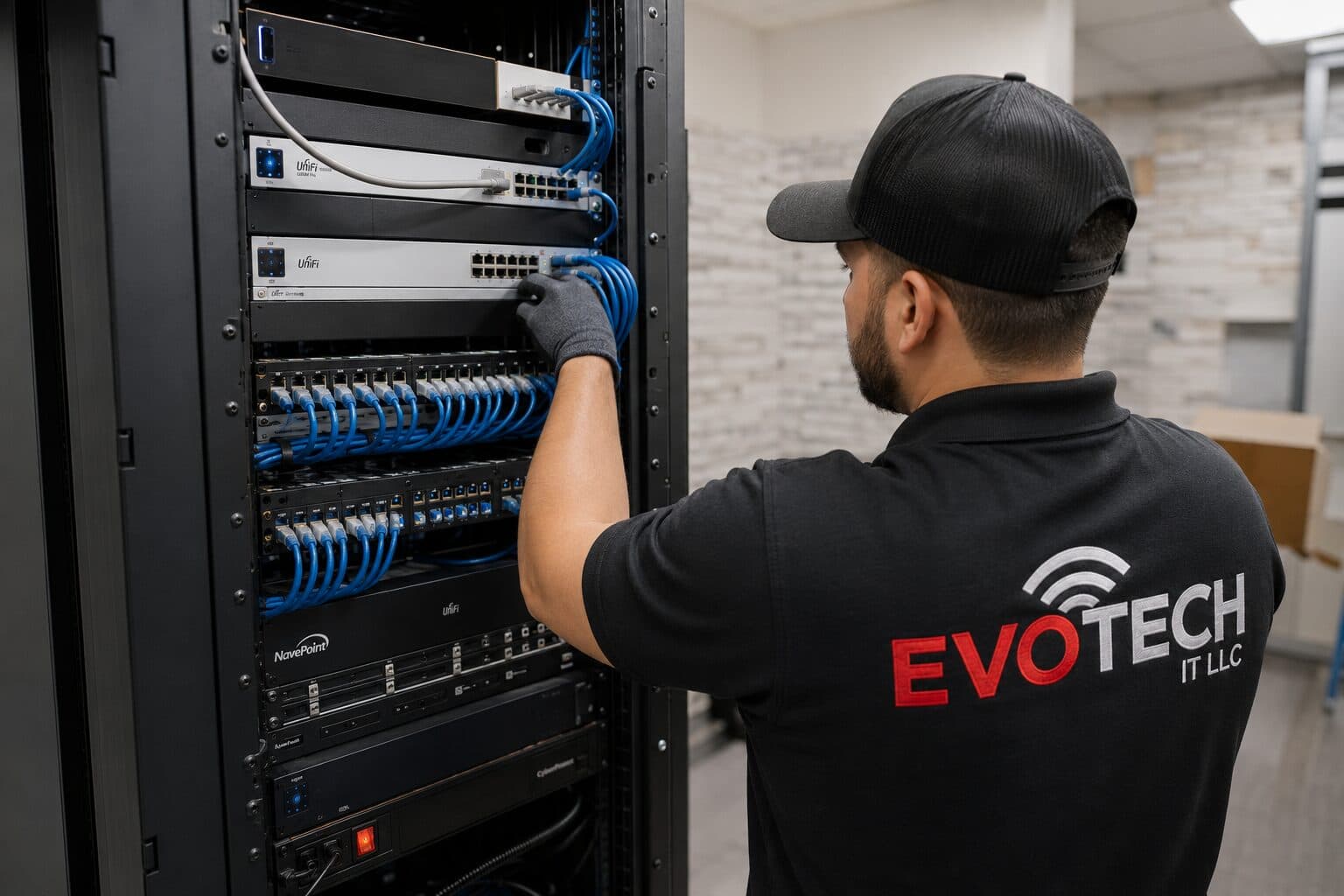
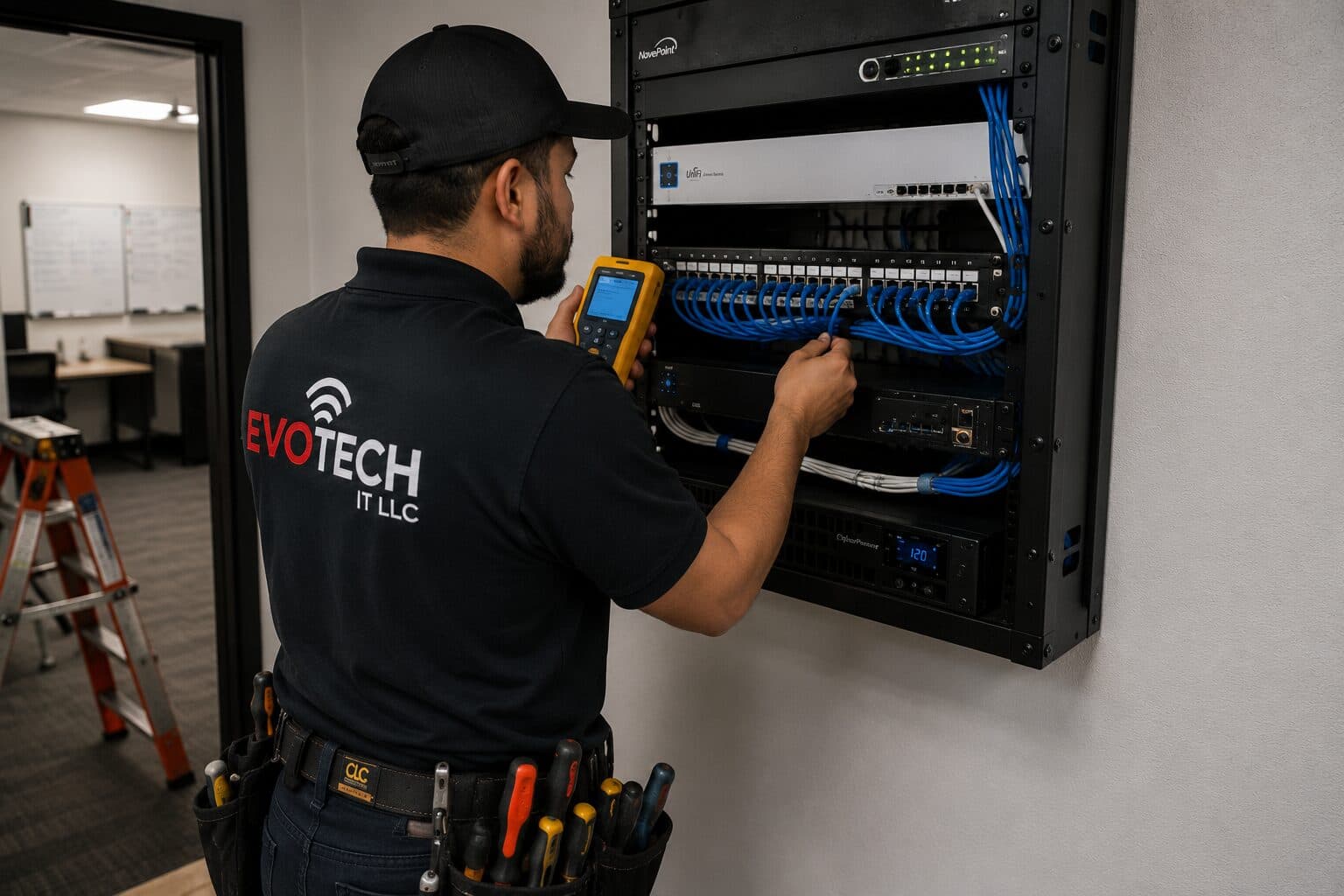
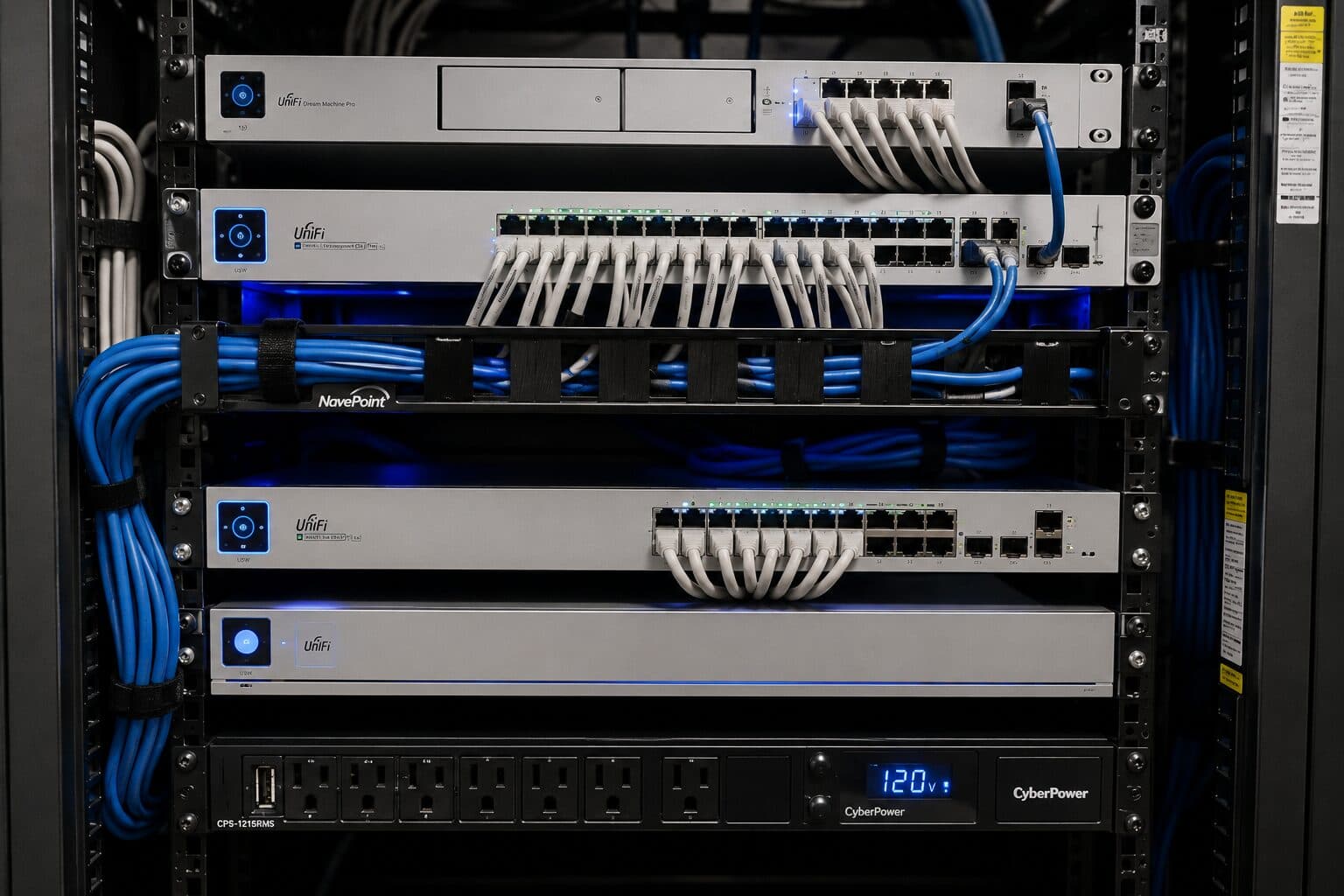
Wi-Fi installation for churches in Sugar Land is a three-part question: what wi-fi installation involves, what churches need from it, and what Sugar Land changes about the install. Commercial base weighted toward professional offices and medical suites rather than industrial space.
Good Wi-Fi comes from deciding where signal needs to be strong, then placing access points so that each area gets a solid signal from one AP without excessive overlap from others. The target most designs work to is around -67 dBm at the edge of each coverage area for voice and video, with signal comfortably above the local noise floor. Placement follows from that number and from the walls between the AP and the users.
Access control and modest camera coverage
Church buildings are used by many people at many different times, which makes key management genuinely burdensome and access control genuinely useful. Credential access with schedules — different groups having access to different areas at different times — solves a problem that physical keys solve badly.
Camera coverage is usually focused on entrances, children's-ministry areas' approaches, offices, parking areas, and equipment storage. As in clinical settings, the boundary matters: worship spaces and children's classrooms are not general camera locations, and agreeing that explicitly during design prevents awkward conversations later.
- Credential access with per-group schedules replacing widely copied keys
- Entrance, office, and equipment storage coverage
- Parking area coverage for evening and weekend use
- Children's area approaches rather than interiors
- Access records that show who entered outside normal hours
What drives the cost of wi-fi installation here
Wireless cost is mostly cabling and access-point count, with survey depth as the third variable.
- Number of access points the coverage design requires
- Cable runs to each AP position and the difficulty of those runs
- Ceiling type and mounting hardware, especially at height
- Switch capacity and PoE budget to power the APs
- Survey depth, from a walkthrough to a full measured survey
- Whether outdoor or warehouse coverage is included
Sugar Land: what the location changes
In Sugar Land, the plan is built outward from the conditions that are actually here. Commercial base weighted toward professional offices and medical suites rather than industrial space. Multi-tenant buildings where base-building rules govern riser access, core penetrations, and after-hours work. Suspended-grid ceilings common in office suites, with hard-lid areas in reception and clinical spaces. Each one changes where cable can run, where equipment can sit, and how coverage is shaped, which is why a walkthrough settles a Sugar Land scope faster than any generic estimate.
- Commercial base weighted toward professional offices and medical suites rather than industrial space
- Multi-tenant buildings where base-building rules govern riser access, core penetrations, and after-hours work
- Suspended-grid ceilings common in office suites, with hard-lid areas in reception and clinical spaces
- Retail centres with storefront glazing that complicates entrance camera placement due to daylight backlighting
- Master-planned commercial development producing comparatively consistent, newer construction
Getting it done in Sugar Land
A wireless installation is validated by walking it. Signal level, signal-to-noise ratio, and the channel each AP settled on are measured at the places people actually work, not from the middle of the room.
The defining constraint in church technology is who operates it. Systems are typically run by volunteers who rotate, may have limited technical background, and are operating live in front of a congregation. A system that requires specialist knowledge to start is a system that will fail publicly.
On site, the schedule and working method turn on conditions like these. Retail centres with storefront glazing that complicates entrance camera placement due to daylight backlighting. Master-planned commercial development producing comparatively consistent, newer construction. Both shape how and when a crew can actually operate, which is why EVOTECH scopes each Sugar Land job from the property itself rather than assuming one approach fits every address. Coverage is stated as a service area, never an office claim, and anything about Sugar Land that cannot be verified is left out instead of invented.
Popular services nearby
Frequently searched near this area — the pages people look for most.
Frequently asked questions
Is wi-fi installation for churches different in Sugar Land?
The sector needs stay the same, but the install changes with the place. In Sugar Land, the conditions above — not the churches label — decide routes, mounting, and equipment placement, which is why this page pairs all three.
Why does a call drop when walking between rooms?
That is a roaming symptom. Either the coverage areas do not overlap enough, so the device holds a fading signal past the point of usefulness, or they overlap heavily on the same channel, so the handoff happens into a congested cell. Both are fixed by adjusting placement, power, and the channel plan rather than by adding another access point at the same settings.