NVR installation for churches, in Richmond
NVR installation for churches in Richmond is a three-part question: what nvr installation involves, what churches need from it, and what Richmond changes about the install. High proportion of new residential and commercial construction, making rough-in timing the dominant scheduling factor.
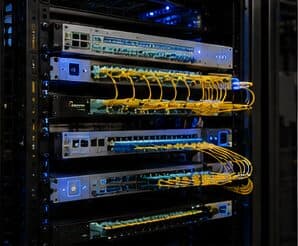
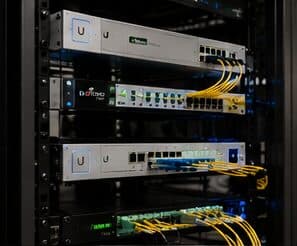
The most common disappointment is discovering that a system advertised as recording for a month is actually holding eight days, because the calculation assumed motion-only recording and the cameras are recording continuously, or assumed a compression efficiency the scene does not achieve. Doing the arithmetic before purchase, with the intended settings, avoids that.
Access control and modest camera coverage
Church buildings are used by many people at many different times, which makes key management genuinely burdensome and access control genuinely useful. Credential access with schedules — different groups having access to different areas at different times — solves a problem that physical keys solve badly.
Camera coverage is usually focused on entrances, children's-ministry areas' approaches, offices, parking areas, and equipment storage. As in clinical settings, the boundary matters: worship spaces and children's classrooms are not general camera locations, and agreeing that explicitly during design prevents awkward conversations later.
- Credential access with per-group schedules replacing widely copied keys
- Entrance, office, and equipment storage coverage
- Parking area coverage for evening and weekend use
- Children's area approaches rather than interiors
- Access records that show who entered outside normal hours
Where nvr installation goes wrong — and how it's avoided
Recorder mistakes usually surface weeks later, which is what makes them expensive.
- Sizing storage from a marketing retention figure rather than a calculation
- Assuming motion-only recording and then configuring continuous
- Fitting general-purpose drives to a continuous-write workload
- Putting the recorder in a sealed cabinet where it overheats
- Forwarding a port directly to the recorder for remote viewing
- Leaving default credentials and never creating individual accounts
- Never testing an export until an incident requires one
Richmond: what the location changes
What separates a Richmond scope from the rest of the city is concrete and local. High proportion of new residential and commercial construction, making rough-in timing the dominant scheduling factor. Larger lots producing long runs to gates, outbuildings, and driveway camera positions that approach or exceed copper distance limits. Slab-on-grade construction with the rough-in window falling between electrical and drywall. That short list is what actually drives the design in this pocket, and it is why photographs or a brief site visit beat a floor plan — the plan follows the building's real constraints, not the neighborhood name on the map.
- High proportion of new residential and commercial construction, making rough-in timing the dominant scheduling factor
- Larger lots producing long runs to gates, outbuildings, and driveway camera positions that approach or exceed copper distance limits
- Slab-on-grade construction with the rough-in window falling between electrical and drywall
- Conduit and sleeve decisions made during rough-in determining what is possible for the following decade
- Detached structures common enough that between-building links are a routine design question rather than an exception
Getting it done in Richmond
Verification means letting the system run and measuring, because the calculation is a projection until real footage lands on the disk.
The defining constraint in church technology is who operates it. Systems are typically run by volunteers who rotate, may have limited technical background, and are operating live in front of a congregation. A system that requires specialist knowledge to start is a system that will fail publicly.
Execution in Richmond is planned around real conditions, not a template. Conduit and sleeve decisions made during rough-in determining what is possible for the following decade. Detached structures common enough that between-building links are a routine design question rather than an exception. These decide the sequence, the access, and the method as much as the design does. EVOTECH describes Richmond as coverage rather than a place it occupies, and omits any area detail it cannot confirm — building and site conditions only, no invented landmarks or promised arrival times.
Popular services nearby
Frequently searched near this area — the pages people look for most.
Frequently asked questions
Is nvr installation for churches different in Richmond?
The sector needs stay the same, but the install changes with the place. In Richmond, the conditions above — not the churches label — decide routes, mounting, and equipment placement, which is why this page pairs all three.
How much storage is needed for 30 days of footage?
It is a calculation, not a fixed number: per-camera bitrate multiplied by hours recorded per day multiplied by thirty, summed across cameras. Resolution, frame rate, recording mode, and how busy each scene is all move the result substantially. Two eight-camera systems can differ by a factor of three for the same retention target.