Access-control installation for churches, in Pasadena
Access-control installation for churches in Pasadena is a three-part question: what access-control installation involves, what churches need from it, and what Pasadena changes about the install. Older industrial and service-corridor commercial stock, with rugged operational environments harder on equipment than office settings.
An access-control system manages who may open which door and when, and records each attempt. The immediate operational benefit over keys is revocation: a lost credential is disabled in seconds instead of prompting a rekey. The secondary benefit is the audit record, which turns 'who was here on Saturday' into a query rather than a guess.
Built for volunteers, used intermittently
The defining constraint in church technology is who operates it. Systems are typically run by volunteers who rotate, may have limited technical background, and are operating live in front of a congregation. A system that requires specialist knowledge to start is a system that will fail publicly.
The second constraint is the building. Sanctuaries are large, often with high ceilings and hard reflective surfaces, and were frequently not designed with audio or cable pathways in mind. Older buildings add masonry walls, limited ceiling access, and additions built across several decades.
- Volunteer operators rotating through the roles
- Live use with no opportunity to troubleshoot mid-service
- Large, acoustically challenging main spaces
- Buildings extended over time with inconsistent construction and pathways
- Many small rooms used intermittently rather than continuously
What drives the cost of access-control installation here
Door hardware and its condition drive access-control cost more than the electronics.
- Door count and hardware condition
- Lock type and whether frames need modification
- Closer repair or replacement
- Controller capacity and panel location
- Cable runs from controller to each opening
- Credential technology and quantity issued
- Fire-alarm interface coordination
- Camera or visitor-management integration
Pasadena: what the location changes
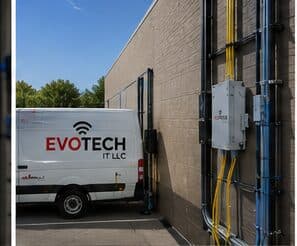
In Pasadena, the plan is built outward from the conditions that are actually here. Older industrial and service-corridor commercial stock, with rugged operational environments harder on equipment than office settings. Metal and mixed-construction buildings requiring proper cable support and camera housings rated for the environment. Established residential neighbourhoods predating structured wiring, needing genuine retrofit. Each one changes where cable can run, where equipment can sit, and how coverage is shaped, which is why a walkthrough settles a Pasadena scope faster than any generic estimate.
- Older industrial and service-corridor commercial stock, with rugged operational environments harder on equipment than office settings
- Metal and mixed-construction buildings requiring proper cable support and camera housings rated for the environment
- Established residential neighbourhoods predating structured wiring, needing genuine retrofit
- Coastal-adjacent humidity and driven rain requiring durable exterior sealing
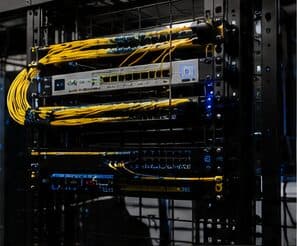
- Network rooms that grew organically and need remediation rather than expansion
Getting it done in Pasadena
Access-control commissioning is about failure modes, not just successful entry.
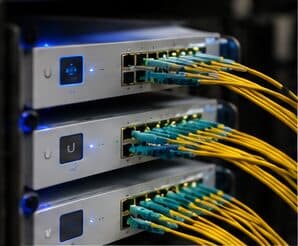
Church networks often have to cover a surprising spread: a sanctuary, classrooms, offices, a fellowship hall, and sometimes separate buildings. Where separate structures are involved, the link between them should be fiber rather than copper, both for distance and because a copper run between buildings carries genuine electrical risk.
Getting Pasadena work done means planning around the site as it actually is. Coastal-adjacent humidity and driven rain requiring durable exterior sealing. Network rooms that grew organically and need remediation rather than expansion. Both matter as much as the design to how and when the work happens. The scope is drawn from the real property, the coverage is stated as a service area rather than an office, and unverifiable specifics about Pasadena are kept off the page on purpose.
Popular services nearby
Frequently searched near this area — the pages people look for most.
Frequently asked questions
Is access-control installation for churches different in Pasadena?
The sector needs stay the same, but the install changes with the place. In Pasadena, the conditions above — not the churches label — decide routes, mounting, and equipment placement, which is why this page pairs all three.
What is the difference between fail-safe and fail-secure?
It describes what happens when power is lost. Fail-safe hardware — typically a magnetic lock — releases and the door becomes passable. Fail-secure hardware — typically a standard electric strike — stays locked, though the door can still be opened from the inside by its mechanical hardware. Which is correct for a given opening depends on its role and on applicable life-safety requirements, so it is a design decision rather than a preference.