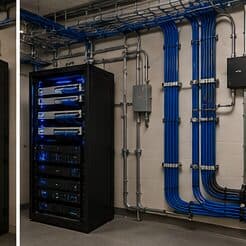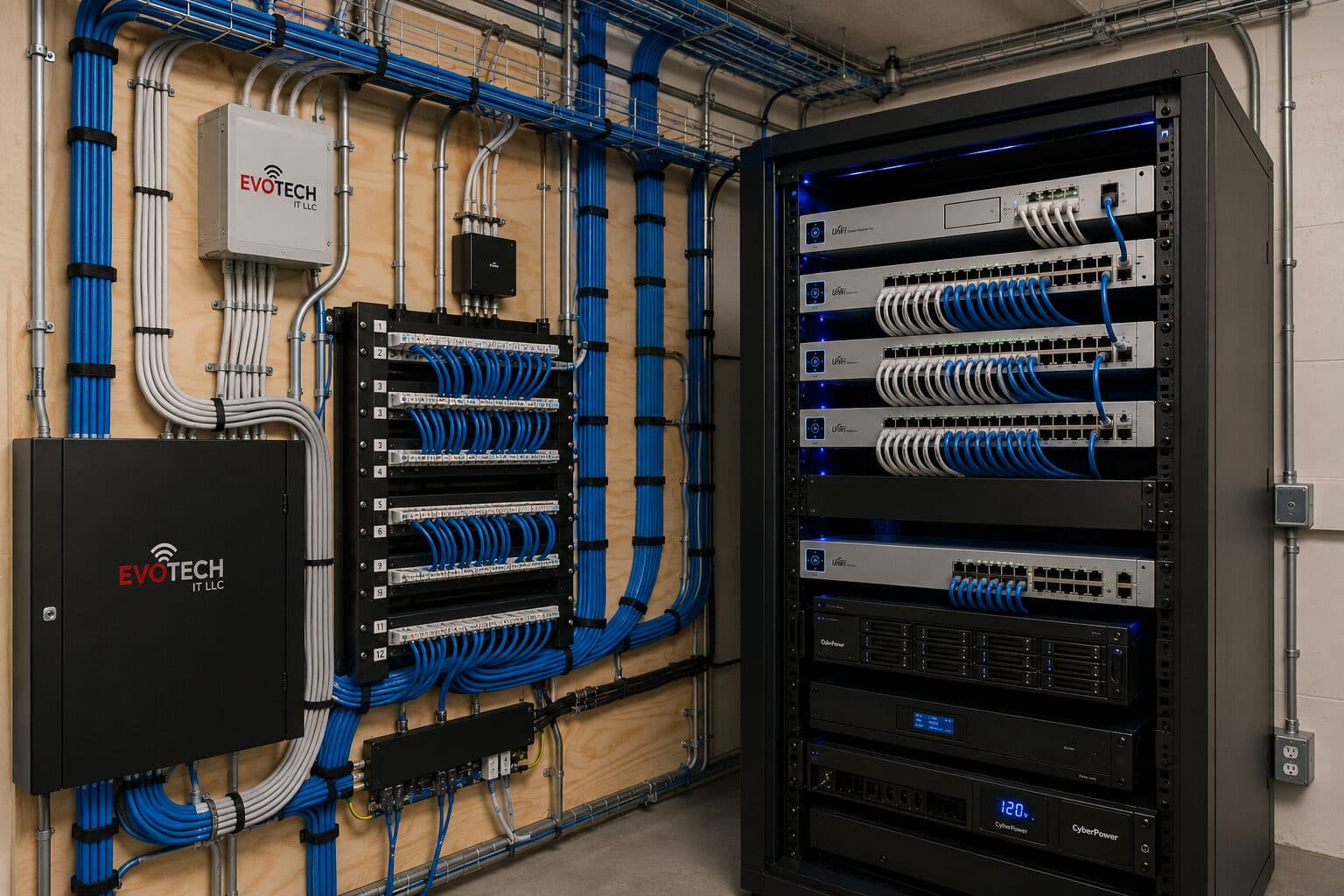
In-wall cable concealment for churches, in Cypress
In-wall cable concealment for churches in Cypress is a three-part question: what in-wall cable concealment involves, what churches need from it, and what Cypress changes about the install. Large newer residential floor plans that exceed single-position wireless coverage.
Concealing the cables behind a wall-mounted TV or AV setup is what turns it from a device with wires hanging down into something that looks built-in. The signal cables — HDMI, network, speaker — can be routed inside the wall to a recessed box behind the display, but power is different: a standard power cord must never be run inside a wall. Power is handled with a recessed outlet behind the display or an in-wall rated power solution, which keeps the installation safe and to code.
Built for volunteers, used intermittently
The defining constraint in church technology is who operates it. Systems are typically run by volunteers who rotate, may have limited technical background, and are operating live in front of a congregation. A system that requires specialist knowledge to start is a system that will fail publicly.
The second constraint is the building. Sanctuaries are large, often with high ceilings and hard reflective surfaces, and were frequently not designed with audio or cable pathways in mind. Older buildings add masonry walls, limited ceiling access, and additions built across several decades.
- Volunteer operators rotating through the roles
- Live use with no opportunity to troubleshoot mid-service
- Large, acoustically challenging main spaces
- Buildings extended over time with inconsistent construction and pathways
- Many small rooms used intermittently rather than continuously
What changes in-wall cable concealment from job to job
Scope depends on the wall and the run.
- Wall construction: drywall, masonry, metal stud, or fireplace
- Fire blocking, insulation, and bracing in the cavity
- Distance from the display to the outlet or equipment
- Whether a recessed outlet must be added
- Number of cables to conceal
- Finish expectations and any patch-and-paint
Cypress: what the location changes
In Cypress, the plan is built outward from the conditions that are actually here. Large newer residential floor plans that exceed single-position wireless coverage. Community and worship facilities with large main spaces and high ceilings requiring distributed coverage. Retail centres with substantial footprints and mixed ceiling construction between units. Each one changes where cable can run, where equipment can sit, and how coverage is shaped, which is why a walkthrough settles a Cypress scope faster than any generic estimate.
- Large newer residential floor plans that exceed single-position wireless coverage
- Community and worship facilities with large main spaces and high ceilings requiring distributed coverage
- Retail centres with substantial footprints and mixed ceiling construction between units
- Renovation and remodel work common, with pathway discovery a genuine part of the project rather than a formality
- Slab foundations with attic access as the standard residential retrofit route
Getting it done in Cypress
Concealment is judged by a clean result and a safe, code-compliant power path.
Church networks often have to cover a surprising spread: a sanctuary, classrooms, offices, a fellowship hall, and sometimes separate buildings. Where separate structures are involved, the link between them should be fiber rather than copper, both for distance and because a copper run between buildings carries genuine electrical risk.
Getting Cypress work done means planning around the site as it actually is. Renovation and remodel work common, with pathway discovery a genuine part of the project rather than a formality. Slab foundations with attic access as the standard residential retrofit route. Both matter as much as the design to how and when the work happens. The scope is drawn from the real property, the coverage is stated as a service area rather than an office, and unverifiable specifics about Cypress are kept off the page on purpose.
Popular services nearby
Frequently searched near this area — the pages people look for most.
Frequently asked questions
Is in-wall cable concealment for churches different in Cypress?
The sector needs stay the same, but the install changes with the place. In Cypress, the conditions above — not the churches label — decide routes, mounting, and equipment placement, which is why this page pairs all three.
Can the power cord be hidden in the wall too?
Not the standard cord — running one inside a wall is against code and a genuine hazard. Power is concealed correctly with a recessed outlet behind the display or a rated in-wall power-relocation kit, which puts the outlet where the TV needs it without burying a cord. The signal cables can go in the wall; power is handled the right way.