Low-voltage installation for churches, in Baytown
Low-voltage installation for churches in Baytown is a three-part question: what low-voltage installation involves, what churches need from it, and what Baytown changes about the install. An industrial and refining base with rugged operational environments.
Low-voltage work covers the systems that run on cable rather than mains power: data, wireless, cameras, door access, intercoms, and audio-visual. In a new build or a fit-out these systems share pathways, share an equipment position, and increasingly share a network — so planning them together during rough-in costs far less than adding each one separately after the walls close.
Simple to operate, then everything else
The first design priority is that the routine operation is genuinely simple: a small number of clearly labeled controls that start the normal service configuration. Everything complex sits behind that, available to whoever maintains the system but not required for weekly use.
After that: audio intelligibility in the main space, display visibility from the back, coverage across the campus including classrooms and offices, and access control for a building that many people use at many different times.
- A simple, labeled routine operation that volunteers can run confidently
- Speech intelligibility prioritised over volume in the main space
- Displays sized and positioned for the furthest seats
- Wireless coverage across sanctuary, classrooms, offices, and fellowship areas
- Access control suited to many users and irregular schedules
What drives the cost of low-voltage installation here
Scope breadth and schedule conditions drive low-voltage cost more than any single system does.
- Number of systems and total device count
- Pathway construction and whether tray or conduit is required
- Rated penetrations and firestopping
- Number of separate mobilisations the schedule forces
- Occupied versus unoccupied working conditions
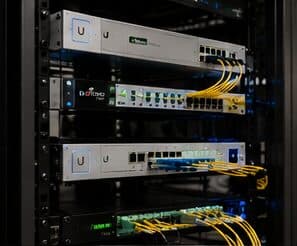
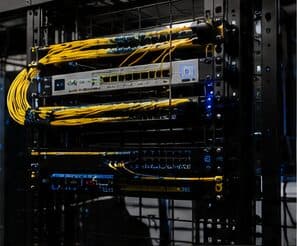
- Equipment room build-out
- Commissioning and documentation depth
Baytown: what the location changes
In Baytown, the plan is built outward from the conditions that are actually here. An industrial and refining base with rugged operational environments. Older commercial stock needing pathway remediation and rack cleanup. Newer retail development with more straightforward conditions. Each one changes where cable can run, where equipment can sit, and how coverage is shaped, which is why a walkthrough settles a Baytown scope faster than any generic estimate.
- An industrial and refining base with rugged operational environments
- Older commercial stock needing pathway remediation and rack cleanup
- Newer retail development with more straightforward conditions
- Coastal humidity and driven rain requiring durable exterior sealing and surge protection
- Slab-foundation residential following the regional pattern
Getting it done in Baytown
Each system is commissioned on its own terms, but the low-voltage handover is the point where they are verified together.
Church buildings are used by many people at many different times, which makes key management genuinely burdensome and access control genuinely useful. Credential access with schedules — different groups having access to different areas at different times — solves a problem that physical keys solve badly.
On site, the schedule and working method turn on conditions like these. Coastal humidity and driven rain requiring durable exterior sealing and surge protection. Slab-foundation residential following the regional pattern. Both shape how and when a crew can actually operate, which is why EVOTECH scopes each Baytown job from the property itself rather than assuming one approach fits every address. Coverage is stated as a service area, never an office claim, and anything about Baytown that cannot be verified is left out instead of invented.
Popular services nearby
Frequently searched near this area — the pages people look for most.
Frequently asked questions
Is low-voltage installation for churches different in Baytown?
The sector needs stay the same, but the install changes with the place. In Baytown, the conditions above — not the churches label — decide routes, mounting, and equipment placement, which is why this page pairs all three.
When should low-voltage work happen in a construction schedule?
Rough-in sits after electrical and framing and before insulation and drywall. Finish work — terminations, device mounting, and commissioning — happens after paint and ceilings. The risk is that upstream delays compress the rough-in window, so having device locations and pathway plans settled in advance is what keeps that window usable.